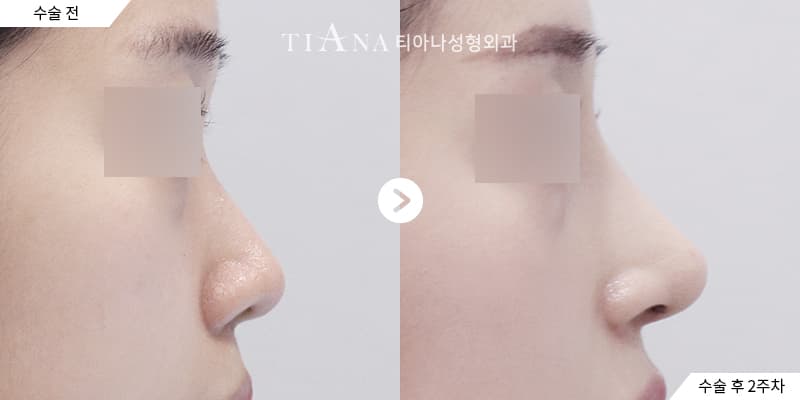
Asian Rhinoplasty Korea: How Many Nights You Need
For asian rhinoplasty korea plans, the number to build around is 7 to 14 nights in Seoul: the surgery usually adds height to the bridge and support to a soft tip, and stitches and the splint come off around day 5 to 7. The question most people from the US, UK, Canada or Australia raise next is the flight home: how swollen will I look at the gate, and who checks my nose once I'm back? TIANA Plastic Surgery in Gangnam performs only rhinoplasty and revision rhinoplasty, with no eyelid surgery, contouring or liposuction, so the whole visit is planned around one operation: your nose, which the clinic blog covers topic by topic.
By the end of this guide, your questions about rhinoplasty should turn into a clear next step.
Send a front and side photo on WhatsApp and we will reply with a free first assessment. Online consultations with the surgeon are free too.
Send my photos on WhatsAppDr. Choi, who handles your case one-to-one from consultation through aftercare, reviews the photos you send over LINE, and the reply tells you which scope looks realistic (tip only, bridge and tip together, or a revision) and roughly how many nights that scope needs.
Why Asian noses are planned differently
Many East and Southeast Asian noses combine thicker skin, a lower bridge and smaller, softer tip cartilage. Surgery therefore tends to add structure rather than remove it. A review in Plastic and Reconstructive Surgery Global Open (Ishii, 2014) describes this pattern and explains why augmentation, often with cartilage grafts, dominates Asian rhinoplasty.

Thick skin matters because it hides fine detail. A tip that looks crisp under thin skin can still look rounded under thick skin unless the cartilage underneath is strong enough to show through. That is why the bridge and the tip are designed as one shape. At TIANA, a full rhinoplasty combines a bridge implant with tip work using septal cartilage, the patient's own cartilage or donor cartilage.
Three measurements usually move the plan more than any reference photo:
- Tip projection: how far the tip sits in front of the upper lip, seen in profile.
- Skin thickness at the tip: thicker skin needs firmer support underneath before any change becomes visible.
- The nasolabial angle: the angle between the columella and the upper lip, which decides whether a short or upturned nose needs septal extension.
TIANA also uses 3D-CT imaging to see the bone and nasal cavity in three dimensions. That matters when a bridge needs height and the airway still has to stay open.
Doctor's note
Rhinoplasty is delicate surgery where a fraction of a millimetre changes a face. That is why I dedicate my work to noses alone. When someone brings a photo of a Korean nose bridge they admire, I look at it next to their own bone structure and design what their anatomy can carry naturally. A nose that suits your face is the goal, and a dramatic change rarely is.
How many nights in Seoul does it take?
Seven to fourteen nights. The in-person consultation and surgery can happen on day 1, the first check comes on day 2 or 3, and stitches and the splint come off on day 5 to 7. Exactly where you land in that range shifts with the scope of surgery and how your swelling behaves.

| Day | At the clinic | For your trip |
|---|---|---|
| Day 1 | In-person consultation, any exams needed, design confirmed, surgery | Land the day before; keep the evening empty |
| Day 2–3 | Swelling check, medication, aftercare instructions | Stay near Gangnam; short walks only |
| Day 5–7 | Stitches out, splint off | The earliest realistic point to fly |
| Day 7+ | Ready to head home | Add 1–2 nights if the swelling still bothers you |
The calendar trap people miss is the clinic's opening hours. TIANA is open weekdays 10:00–19:00 and Saturdays 10:00–16:00, and closed on Sundays and Korean public holidays. If surgery falls on a Tuesday, day 5 to 7 lands on Saturday, Sunday and Monday, so the splint visit has to be Saturday or Monday.
The clinic sits at Bongeunsa-ro 108 in Gangnam. Staying within a short taxi ride keeps the day 2–3 check easy while your face is still puffy.
Wondering which type your nose is?
Share your profile and front photos — the surgeon will tell you which procedures your nose would actually need. No cost, no obligation.
Ask which procedure fits meWhat will you look like on the flight home?
Expect visible swelling. Most people find the major swelling settles within about 1 to 2 weeks, and the nose tends to look natural to other people at around 3 to 4 weeks, longer after a full rhinoplasty or a revision. The American Society of Plastic Surgeons notes that the nasal contour keeps refining for up to a year.
The NHS guidance on nose reshaping also expects bruising and swelling in the first weeks and advises against strenuous activity for a while. Practically, that means the photo in your passport and the face at the gate won't match perfectly on day 7, and that's normal.
TIANA offers high-concentration oxygen care, used to support recovery from post-operative swelling during your stay. For the flight itself, a short packing list helps:
- A cap and a face mask for the airport
- Button-front tops, so nothing gets pulled over your nose
- A neck pillow, so you can sleep with your head up
- Your medications and the aftercare instructions in your carry-on
For leave planning, many office workers add the 1 to 2 weeks of major swelling to the nights in Seoul and request their days off around that total.
Clinic address: 108 Bongeunsa-ro, Gangnam-gu, Seoul, South Korea
Follow-up after you fly home
Arrange it before you leave Seoul. During your stay, the same specialist handles you 1:1 from consultation to surgery and aftercare; once you're home, you need a plan for who looks at your nose if something seems off.
Three things make that plan work:
- A record of what was done. Write down the procedure name, whether an implant was used, which cartilage was used for the tip, the medications you were given and the date the splint came off. A local plastic surgeon reads all of that faster than a description from memory.
- A local contact. Know which plastic surgeon or ENT clinic near you could see you at short notice.
- A clear list of warning signs. Before your last visit, ask which symptoms mean you should get seen quickly and how photo check-ins work after you're home.
As general medical guidance, fever, spreading redness or warmth, bleeding that doesn't stop, or breathing that gets worse instead of better are reasons to see a doctor locally the same day rather than wait for a message reply.
Risks, and when waiting is the better plan
Rhinoplasty carries the risks of any operation: bleeding, infection, reactions to anaesthesia, changes in breathing, asymmetry and a shape that may need revision later. With augmentation, the Ishii review also discusses implant problems such as infection, visibility through thin skin and shifting. Thick skin sets a limit on how defined a tip can look, whatever the cartilage underneath.
TIANA has an anaesthesiology specialist on staff who manages anaesthesia during surgery, and 3D-CT imaging is used to read the bone and nasal cavity before the design is set. Neither removes risk. Whether you are a candidate, and for what scope, is decided at the in-person examination in Seoul.
Waiting is often wiser in a few situations:
- Your nose was operated on recently and the tissue hasn't settled yet. Revision and contracture cases are treated at TIANA, but timing matters.
- You can only take the bare minimum of nights, with no buffer for a slow-settling swelling.
- The plan in your head is one specific celebrity's nose rather than a nose that fits your own face.
- You're unwell, or have a medical condition that isn't under control, in the weeks before the trip.
What to have ready before you book flights
A short file makes the first conversation useful. Gather clear photos of your nose from the front, both sides and from below, in daylight and without filters. List any previous nose surgery or injectables with approximate dates, your current medications, and the travel window you can actually take. If you have a reference photo, include it, along with one sentence on what bothers you most about your nose now.
You can see the surgeon's background and the clinic's procedure list on TIANA's English site and Dr. Choi's profile. When your file is ready, send the photos and your dates on WhatsApp.
Frequently Asked Questions
Q1Is Asian rhinoplasty different from a Western nose job?
Both reshape the nose, but the usual goals differ. Western rhinoplasty often reduces a hump or narrows a bridge, while Asian rhinoplasty more often adds bridge height and strengthens a soft tip under thicker skin. The plan still follows your own anatomy rather than a regional template.
Q2Can I talk to the surgeon before I fly to Korea?
Yes. TIANA offers an online consultation over Google Meet with interpretation, and you can start by sending photos on WhatsApp. The in-person consultation on day 1 then confirms the design before surgery.
Q3Can I change only the tip of my nose?
Tip-only options exist: bulbous tip correction brings the tip cartilages together to narrow the tip, and minimal-incision tip work keeps recovery lighter. A side-profile photo shows whether the bridge also needs height for the tip change to look balanced.
Q4Does TIANA also do eyelid surgery or other procedures on the same trip?
No. TIANA performs only rhinoplasty and revision rhinoplasty, with no double eyelid surgery, facial contouring or liposuction. If you're planning other procedures, they would need to be arranged elsewhere.
Q5When is a deposit needed?
Not for the consultation. A deposit is requested only once you decide to book surgery, and its amount and the cancellation refund rules are explained before you book.
Thank you for reading to the end.
Take our free online consultation. We will walk you through the cost breakdown and how many nights to plan in Seoul.
Book a free online consultationThis article is general information about elective cosmetic surgery and is not a diagnosis. Results and recovery vary between individuals. Before-and-after photos are published with patient consent; surgery carries risks such as swelling and bruising and requires downtime. Final procedures and fees are decided after examination.