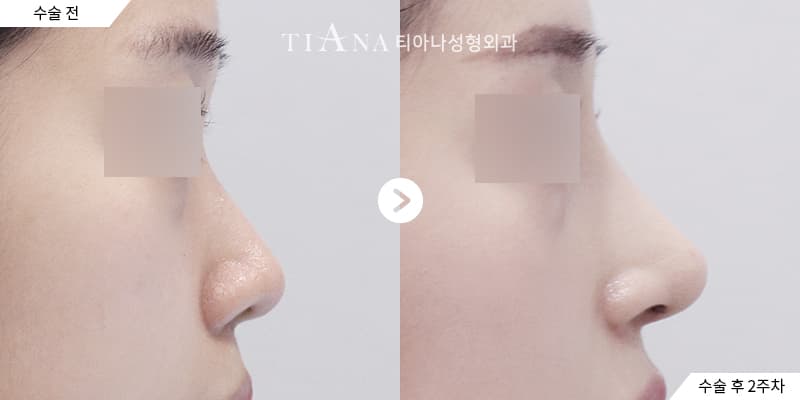
Bulbous nose job Korea with thick skin: who it suits
Bulbous nose job korea, in plain terms: surgery on the nose tip that reshapes and supports the tip cartilage, so a round, heavy-looking tip looks slimmer from the front and the side. At TIANA Plastic Surgery in Gangnam, a clinic that does rhinoplasty and revision rhinoplasty only, the tip is designed together with the bridge and the nasolabial angle. If your skin is thick and a surgeon at home said the change would be hard to see, the next worry is usually the trip itself: can you fly home before the splint and stitches come off? They usually come off around day 5 to 7, which is why stays of about 7 to 14 nights are planned.
By the end of this guide, your questions about rhinoplasty should turn into a clear next step.
Send a front and side photo on WhatsApp and we will reply with a free first assessment. Online consultations with the surgeon are free too.
Send my photos on WhatsAppWhere the roundness comes from shapes most of the plan:
| What makes the tip look round | What usually helps | What limits it |
|---|---|---|
| Wide or widely spaced tip cartilage | Reshaping the cartilage with sutures (bulbous tip refinement) | Very weak cartilage needs support added |
| Thick, heavy skin over the tip | Cartilage support that projects the tip | Skin shrinks slowly, so definition stays softer |
| A low bridge behind the tip | Full rhinoplasty: bridge implant plus tip support | A larger operation to recover from |
| A tip operated on before | Revision rhinoplasty | Scar tissue and how much cartilage is left |
You can check which row is yours before reading on. Send one front photo and one side photo on WhatsApp, in English, and add a line about any earlier nose surgery. The surgeon tells you which procedure your nose would actually need, tip refinement alone or a wider plan, so you know what the trip is built around before you book a flight.
What does a bulbous nose job actually change?
The tip cartilage changes. A bulbous tip usually comes from wide or widely spaced lower lateral cartilages, the two curved cartilages that shape the tip, often with thick skin on top. Surgery narrows and reshapes those cartilages and, when they are weak, adds support so the tip holds its new shape.

Most tip operations do two jobs. The domes of the cartilage are reshaped with sutures, sometimes with conservative trimming, so the front view narrows. Then the tip is supported, often with a small cartilage graft, so it projects a little and the skin has something firmer to drape over. Removing too much cartilage is a well-known route to a pinched or collapsed tip years later, which is why tip work today leans toward reshaping and support.
At TIANA, tip support can use septal cartilage, ear cartilage, rib cartilage or donor rib cartilage, as well as your own dermis and fascia, and tip surgery without an implant is also offered. For the anatomy in more depth, see what causes a bulbous tip and how tip surgery refines it.
Thick skin is the part people underestimate
Thick skin limits how sharp a tip can look. It hides the cartilage underneath and shrinks back slowly after surgery, so with thick skin the plan usually leans on support and projection more than on narrowing.

A review of Asian rhinoplasty in Plastic and Reconstructive Surgery Global Open (Ishii, 2014) describes features many noses share: thicker skin and soft tissue over the tip, relatively weak tip cartilage and a short columella. The same review discusses strengthening the tip with cartilage grafts. Many people searching for a bulbous nose job korea have exactly this mix, whatever their background.
Surgeons reading a round tip usually weigh three things together: how thick and oily the skin over the tip is, how wide and how strong the cartilage beneath it is, and how the tip sits against the bridge and the upper lip. A tip that looks bulbous because the bridge behind it is low needs a different plan from a tip that is genuinely wide. Before surgery at TIANA, 3D-CT imaging maps the bone and nasal structure, and the skin and cartilage are assessed at examination.
Skin also sets a ceiling on bridge height, which the post on how far skin lets a Korean nose bridge go covers.
Doctor's note
Rhinoplasty is delicate surgery where a fraction of a millimetre changes a face, and the tip is where that shows first. With thick skin, I would rather give you a tip that is clearly refined and still looks like yours than chase a sharpness your skin can't hold. A nose that suits your face matters more to me than a dramatic change.
If thick skin is your main worry, two photos show a lot: a side view in daylight and a close front view of the tip, with no filters. Send them on WhatsApp in English, with a line about any breathing trouble. The surgeon tells you which procedure your nose would actually need, so you see whether the plan leans on support, narrowing or both before you commit to the trip.
Wondering which type your nose is?
Share your profile and front photos — the surgeon will tell you which procedures your nose would actually need. No cost, no obligation.
Ask which procedure fits meWho is a good fit for tip refinement alone?
Tip refinement alone fits best when the bridge already suits your face, the roundness sits in the tip cartilage, you breathe well through your nose, and you want a slimmer tip without a new profile. Minimal-incision tip work or tip surgery without an implant may be enough, and minimal-incision procedures tend to recover faster.
Signs that point the other way: the tip also droops or turns up, the bridge is low enough that the tip looks heavy by contrast, or the tip has been operated on before. Those usually need a wider plan, covered in the next section. The guide to who a Korean nose job suits, by nose type sorts these combinations for other nose shapes too.
If a surgeon at home said your tip couldn't change much, that view most likely came from your skin, and it deserves weight. A second opinion can reasonably reach a different plan, such as more structural support, yet the same skin sits under both opinions.
When does the plan grow beyond the tip?
The plan grows when roundness isn't the only issue. A low bridge usually means full rhinoplasty, a bridge implant plus tip support designed as one profile. A short or upturned tip may need septal extension. A tip that was operated on before means revision rhinoplasty.
Septal extension fixes cartilage to the septum to set where the tip sits: how far it projects and how much it turns up. TIANA lists septal extension and columella work for short or upturned tips.
A round tip in front of a low bridge often looks heavier than it is. Raising the bridge with a silicone implant or your own tissue, and supporting the tip in the same operation, can slim the overall look without narrowing the tip much. The post on bulbous nose rhinoplasty for a round, wide tip goes further into wide tips, and how Korean nose jobs work and who they suit covers the wider menu.
Revision is its own category. TIANA performs revision rhinoplasty, including difficult cases such as contracture, and rib cartilage is used most often there, when earlier operations have left too little septal or ear cartilage.
What can go wrong, and who should wait?
Tip surgery carries the risks of any rhinoplasty. The American Society of Plastic Surgeons lists bleeding, infection, poor wound healing or scarring, numbness, difficulty breathing through the nose, and an appearance you're unhappy with that may need revision. With thick skin, a common disappointment is slower: swelling that hides the tip for months.
Risks and side effects to know
On timing, TIANA's guidance for tip work is that major swelling usually settles in about 1 to 2 weeks and most noses look natural in about 3 to 4 weeks. The ASPS adds that the nasal contour can take up to a year to fully refine, and thick-skinned tips tend to sit at the slow end of that range. Results vary between individuals, and suitability and the final plan are confirmed at examination in Seoul.
Over-narrowing is the other risk worth naming. Cutting away too much cartilage can leave a tip that looks pinched or weakens over time, so asking how your tip will be supported matters as much as asking how it will be narrowed.
It is usually wiser to wait if:
- you had nose surgery recently, because the tissue needs time to settle before a revision is planned;
- your nose is still growing or was injured recently;
- you want a sharp, thin tip that your skin is unlikely to show, and that gap hasn't been talked through yet.
The Seoul stay is planned around the splint
For a bulbous nose job korea trip, plan on about 7 to 14 nights in Seoul. The stitches and splint usually come off around day 5 to 7, and staying until then makes the trip smoother.
The same specialist handles each patient one to one from consultation to surgery and aftercare, and anesthesia is managed by a dedicated anesthesiology specialist.
Before you leave Seoul, ask what is normal at home in weeks two to six, which symptoms should prompt a message, and how to reach the clinic. The post on four limits worth knowing before you fly covers the rest of the trip planning.
Should a trend decide how your tip looks?
A trend photo shows someone else's skin, cartilage and face, so it makes a poor blueprint for yours. At TIANA the height and shape are chosen to fit your face, which matters most at the tip, where a millimetre is visible.
A reference photo is still useful. The surgeon matches the look you want with your anatomy and designs what can be achieved naturally. For the trend question in more depth, read five beliefs about Korean rhinoplasty trends.
What to send before you book anything
Send them on WhatsApp in English, together with your travel window and a note about any earlier surgery. The surgeon tells you which procedure your nose would actually need, and the schedule can be discussed with the team before you book flights.
Frequently Asked Questions
Q1Can a bulbous tip be refined without an implant?
Yes. TIANA offers tip surgery without an implant, and minimal-incision tip work when only a light refinement is needed. Whether that is enough comes down to how strong your cartilage is and how thick your skin is.
Q2Is bulbous tip refinement the same as tip plasty?
Tip plasty is the general name for surgery on the nose tip. Bulbous tip refinement is tip surgery aimed specifically at a round, heavy-looking tip, done alone or alongside bridge or septal work.
Q3How long does a thick-skinned tip stay swollen?
Major swelling usually settles in about 1 to 2 weeks, and most noses look natural in about 3 to 4 weeks.
Q4Will I need rib cartilage for a bulbous tip?
Often not. At TIANA, rib cartilage is used most often in revision and contracture surgery, when there isn't enough septal or ear cartilage left. Many tips are supported with septal or ear cartilage instead.
Q5Can a bulbous nose job also address breathing problems?
TIANA lists functional rhinoplasty among its procedures. If you have trouble breathing through your nose, mention it when you first get in touch so it is part of the plan from the start.
Thank you for reading to the end.
Take our free online consultation. We will walk you through the cost breakdown and how many nights to plan in Seoul.
Book a free online consultationThis article is general information about elective cosmetic surgery and is not a diagnosis. Results and recovery vary between individuals. Before-and-after photos are published with patient consent; surgery carries risks such as swelling and bruising and requires downtime. Final procedures and fees are decided after examination.