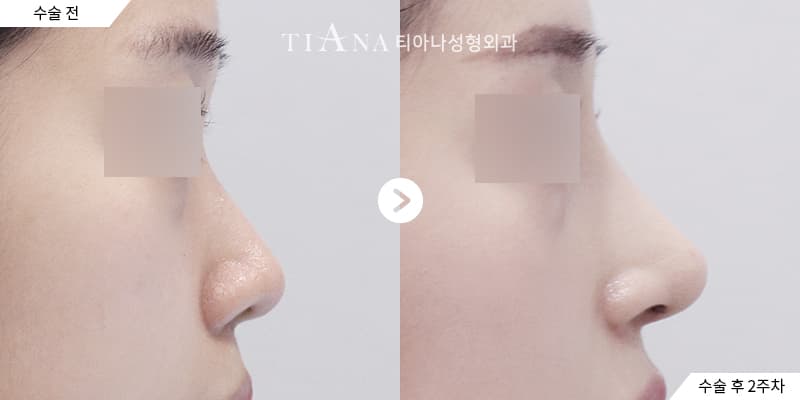
Bulbous nose rhinoplasty Korea for a round, wide tip
Bulbous nose rhinoplasty korea usually means narrowing a round nose tip by reshaping the tip cartilages and drawing them closer together, so the tip reads finer from the front and in profile.
By the end of this guide, your questions about rhinoplasty should turn into a clear next step.
Send a front and side photo on WhatsApp and we will reply with a free first assessment. Online consultations with the surgeon are free too.
Send my photos on WhatsAppMany people picture the surgeon simply shaving the tip down, yet a round tip is often as much about thick skin and soft tissue as about cartilage. If you're flying in for it, the practical worry tends to be the calendar: stitches and the cast usually come off around day 5 to 7, and the trip has to cover that before your flight home.
At TIANA Plastic Surgery in Gangnam, noses are the whole caseload: rhinoplasty and revision rhinoplasty, with no eyelids, contouring or liposuction. Diagnosis includes a 3D-CT scan that shows the bone and nasal passages in three dimensions, and one specialist stays with you from consultation through surgery to aftercare. You can read more about the clinic on the TIANA rhinoplasty in Korea page.
Before you book anything, send a front photo and a side-profile photo of your nose on WhatsApp, plus the month you're thinking of travelling. A deposit only comes up if you later decide to book surgery.
What makes a nose tip look bulbous?
Usually three things together: tip cartilages that are wide or spread apart, a thick layer of skin and fatty tissue over them, and a tip with little projection, so it reads wide instead of defined. Which of the three dominates decides what surgery can change.

The Asian nose often combines all three. A review of Asian rhinoplasty in Plastic and Reconstructive Surgery Global Open describes thicker nasal skin, more fibrofatty tissue and smaller, weaker lower lateral cartilages as typical features. That is why searches for an "asian bulbous nose" lead to different answers than a narrow, thin-skinned tip would. Cartilage that is weak can't hold a sharper shape against heavy skin without support.
A round tip is also not automatically a problem. Some people arrive with a soft, slightly full tip that suits a rounder face, and the honest conversation is about proportion with the bridge, the cheeks and the lips. If you've been reading threads where one photo decides whether a result is good, the questions people keep raising on rhinoplasty forums are worth reading alongside this.
Three ways to narrow a round tip, side by side
The approach follows the cause. A round tip on a bridge you like is handled differently from a round tip sitting under a low, flat bridge.

| Approach | What it changes | Tends to suit |
|---|---|---|
| Bulbous tip correction (tip narrowing) | Tip cartilages drawn together so the tip slims from front and side | A round tip with a bridge you're happy with |
| Non-incision tip refinement | Tip shaped through minimal incisions, with a lighter recovery load | Mild roundness and a need for shorter downtime |
| Full rhinoplasty | Bridge (implant) and tip (septal, own or donor cartilage) designed together | A round tip plus a low, flat bridge |
Two related situations change the plan. If the tip is round and also turned up, so the nostrils show from the front, septal extension can lower the tip and adjust its height and the nose-lip angle.
Whether the work is done closed or open is a separate question from which of these three you need; the post on closed rhinoplasty myths in Korea covers that split.
Nose filler comes up a lot in the same searches. Filler adds volume; it cannot take width away from a round tip, and a systematic review of nonsurgical rhinoplasty in Plastic and Reconstructive Surgery reports rare but serious vascular complications. For width at the tip, the change has to come from the cartilage.
Wondering which type your nose is?
Share your profile and front photos — the surgeon will tell you which procedures your nose would actually need. No cost, no obligation.
Ask which procedure fits meWho suits tip surgery, and who should hold off?
The clearest candidates have a round tip caused mainly by wide cartilage, with skin of thin to moderate thickness. Thick, oily skin still allows improvement, though the change is more modest and takes longer to show.
On examination, surgeons generally judge the skin by how it feels when the tip is gently pinched, how large the pores are, and whether the cartilage edges can be felt at all. Thin skin shows every contour, which helps definition but also shows small irregularities. Thick skin hides irregularities but blunts definition. Neither is better; they set different limits.
People who may do better waiting or choosing a smaller change:
- Anyone wanting a very narrow, pinched tip under thick skin, because the skin cannot shrink to match.
- Anyone with an active skin flare-up or infection on the nose.
- Anyone who has had nose surgery before and is unsure what was used, until the details are known. Revision is a different operation, and contracture cases need their own assessment.
The post on when less change is the safer choice goes further into this.
Doctor's note
With a round tip, the first question is how much of the roundness is skin. Cartilage can be reshaped; thick skin can only drape over the new frame. I would rather design a tip that settles naturally with your face than push for a sharpness the skin cannot hold, because a forced result is how people end up needing a second operation.
Dr. Choi Hang-seok, Head Surgeon
How many nights in Seoul does tip surgery take?
Plan about 7 to 14 nights in Seoul, depending on the procedure and how you heal. The fixed point is stitch and cast removal, usually around day 5 to 7.
The usual sequence for a bulbous nose rhinoplasty korea trip:
- Day 1: in-person consultation, any tests needed, design confirmed, then surgery.
- Days 2 to 3: swelling check, prescriptions and aftercare instructions.
- Days 5 to 7: stitches out and cast removed after the progress check.
- Day 7 onward: flight home, with one or two extra nights suggested if the swelling bothers you.
The clinic is open weekdays 10:00 to 19:00 and Saturdays 10:00 to 16:00, closed on Sundays and public holidays, so land with your consultation day falling Monday to Saturday.
Most people find the major swelling settles in about 1 to 2 weeks, and a natural look takes roughly 3 to 4 weeks, longer for full rhinoplasty or revision. The tip is the last part to refine; the American Society of Plastic Surgeons notes the final contour can take up to a year. High-concentration oxygen care is offered after surgery to support recovery from swelling.
For how those nights can be split, see how long to stay for Korean rhinoplasty.
If your leave is the tight part, send your possible travel dates and a side-profile photo on WhatsApp. You'll get a reply in English, and you can ask how cast-off day lines up with your return flight and which consultation slots fall on open days.
Risks and side effects of bulbous tip surgery
Tip surgery carries the general risks of any rhinoplasty, plus a few tied to the tip itself. The ASPS risk page lists anaesthesia risks, infection, bleeding, poor wound healing, breathing difficulty, numbness, skin discoloration, prolonged swelling, an appearance you're unhappy with, and the possibility of revision surgery.
Tip-specific points to weigh:
- Lingering swelling at the tip, especially with thick skin, so the tip can look fuller than planned for months.
- Asymmetry as cartilage heals, since small differences between sides show at the tip first.
- Over-narrowing, which can pinch the tip and affect airflow through the nostrils.
- Visible edges under thin skin.
An anaesthesiologist is on staff for anaesthesia management during surgery, and the 3D-CT scan maps the bone and nasal passages before the plan is set. Healing still differs from person to person. Your candidacy, and the approach, are decided at the in-person examination. The limits worth knowing before you fly covers the travel side of these risks.
What to have ready for your first message
Four things make the first exchange useful: clear photos, your history, one sentence about what bothers you, and your dates.
- Photos from the front, the side and from slightly below, in daylight and without makeup or filters.
- Any record of previous nose surgery or filler, including roughly when.
- What bothers you, in your own words: width from the front, a round profile, a tip that droops in photos.
- The dates you could travel and how many nights you can take off.
If you're still comparing clinics, the checks for choosing a rhinoplasty surgeon in Korea give you questions to put to anyone, including us.
When you have those photos and a rough window, send them on WhatsApp with one line about whether you want the tip only or the bridge too. You'll get a reply in English and a time to talk it through on Google Meet, so the first face-to-face look at your nose happens before you buy a ticket. If you'd rather call the clinic in Seoul, the number is +82-2-552-7744.
Frequently Asked Questions
Q1Can a bulbous nose be fixed without surgery?
Filler can add height to the bridge or tip, but it adds volume and cannot remove width from a round tip. Narrowing the tip needs the cartilage itself reshaped. Filler in the nose also carries rare but serious vascular risks, described in the published reviews of nonsurgical rhinoplasty.
Q2Will an Asian bulbous nose look operated on after tip surgery?
That depends mostly on how far the design pushes against the skin. With thicker skin and softer cartilage, a moderate narrowing that matches the bridge and face usually reads as natural, while a very pinched tip tends to look done. The design is set around your face, not a trend.
Q3Is it worth operating on a round tip if my skin is thick?
Often yes, with realistic expectations. Thick skin limits how sharp the tip can become and keeps swelling around longer, so the improvement is real but more modest and slower to show. Supporting the cartilage matters more in these noses.
Q4Can I have bulbous tip surgery if I've already had a nose job?
Yes, revision rhinoplasty is part of what TIANA does, including more difficult cases such as contracture. Bring whatever you know about the earlier operation, since what was used and how the tissue healed shapes the plan.
Thank you for reading to the end.
Take our free online consultation. We will walk you through the cost breakdown and how many nights to plan in Seoul.
Book a free online consultationThis article is general information about elective cosmetic surgery and is not a diagnosis. Results and recovery vary between individuals. Before-and-after photos are published with patient consent; surgery carries risks such as swelling and bruising and requires downtime. Final procedures and fees are decided after examination.