
Upturned Nose: Causes and How Septal Extension Helps
An upturned nose is a nose whose tip points upward, so the nostrils show clearly from the front. Some people like the look. Others feel it makes the nose seem short or the face look unbalanced, and they want to know whether surgery can change it.
By the end of this guide, your questions about rhinoplasty should turn into a clear next step.
Send a front and side photo on WhatsApp and we will reply with a free first assessment. Online consultations with the surgeon are free too.
Send my photos on WhatsAppThe short answer: an upturned nose is usually caused by a short septum, weak tip support, or scar tissue after a previous surgery. Septal extension uses cartilage to lengthen and support the tip, so its length and angle can be set to fit your face. The right plan depends on why your nose turns up.
What Is an Upturned Nose?
An upturned nose has a tip that rotates upward. From the side, the angle between the nose and the upper lip, called the nasolabial angle, looks wide. From the front, more of the nostrils are visible than the person would like.
It often appears together with a short nose. The two are related but not identical: a short nose is about length, while an upturned nose is about direction.
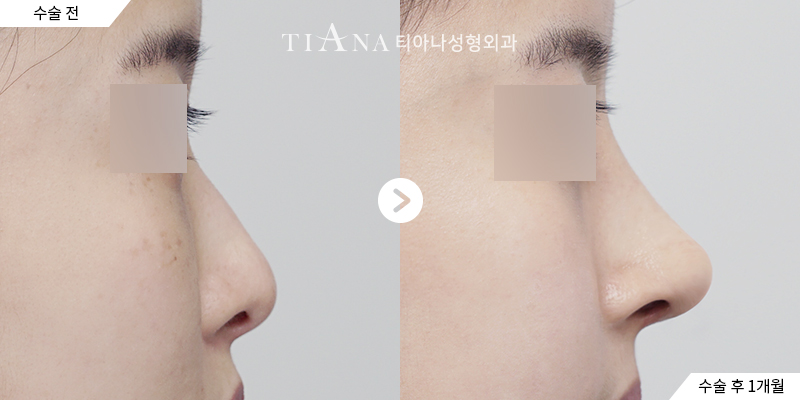 Results vary between individuals.
Common signs
- The nostrils are clearly visible when looking straight at the face
- The tip seems to point toward the ceiling in side profile
- The nose looks short compared with the rest of the face
- Photos taken from slightly below make the nose look wider
What Causes an Upturned Nose?
The tip position depends on the septum, the tip cartilages and the soft tissue around them. When one of these is short or weak, the tip rotates upward. The table below shows the most common causes.
| Cause | What it means | Typical approach |
|---|---|---|
| Naturally short septum | The central support of the nose is short | Septal extension to lengthen the tip |
| Weak tip support | The tip cartilages cannot hold the tip down | Cartilage support plus angle adjustment |
| Low bridge with a short nose | The whole nose looks small and upturned | Bridge and tip planned together |
| Contracture after surgery | Scar tissue pulls the tip upward | Revision rhinoplasty, planned carefully |
Key point: Two noses can look equally upturned for different reasons. The cause decides the surgery, so a proper examination comes first.
The American Society of Plastic Surgeons notes that rhinoplasty can change the angle between the nose and the upper lip as well as the size and shape of the tip (ASPS rhinoplasty overview). That angle is the core of upturned nose correction.
Wondering which type your nose is?
Share your profile and front photos — the surgeon will tell you which procedures your nose would actually need. No cost, no obligation.
Ask which procedure fits meHow Septal Extension Corrects an Upturned Nose
At TIANA, an upturned or short nose is usually treated with septal extension and columella shaping. Cartilage is used to extend and support the tip, which lets the surgeon lower the tip and adjust its height and the nasolabial angle.
Choosing the cartilage
The cartilage can come from the septum, from elsewhere in your own body, or from a donor. Which one is used depends on how much septal cartilage you have and how much support the tip needs.
Patients who have had surgery before may have less septal cartilage left. This is one reason the plan is only finalized after examination, not from photos alone.
Setting length and angle
Nose tip lowering is not about making the nose as long as possible. The goal is a length and angle that suit your face. The surgeon plans the tip with the bridge, because a bridge that is too low or too high changes how long the nose looks.
When the bridge is also low
Many people with an upturned nose also have a low bridge. In that case, a full rhinoplasty designs the bridge and tip together so the profile line runs smoothly.
If the bridge is already a good height, the surgery can stay focused on the tip. Keeping the scope to what you actually need usually means a simpler recovery.
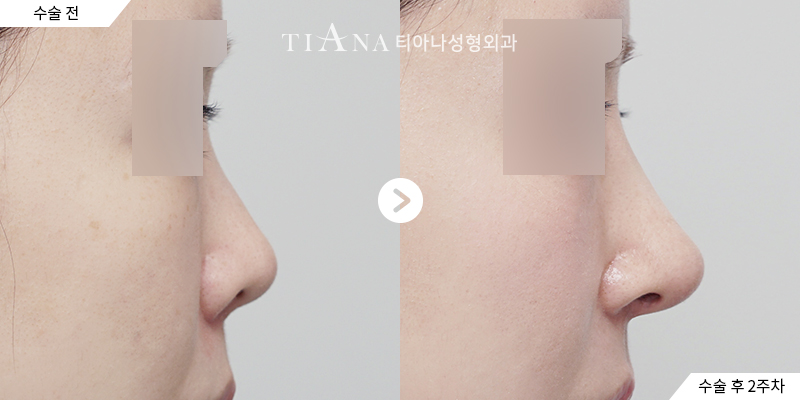 Results vary between individuals.
Upturned Nose After a Previous Surgery
Sometimes a nose that looked fine right after rhinoplasty slowly turns up over the following months. This can be a sign of contracture: scar tissue tightens and pulls the tip upward, and the nose may also feel firm.
Revision for contracture is more complex than a first surgery. The tissue has already been operated on, so the correction has to stay within what that tissue can safely support. TIANA handles revision rhinoplasty, including contracture cases, and plans these corrections carefully rather than aggressively.
Before a revision consultation: Have your previous surgery details ready if possible, such as when it was done and what implant or cartilage was used. It helps the surgeon understand your nose.
TIANA uses 3D-CT diagnosis to check the bone and nasal structure before surgery. Together with an in-person examination, this shows how much cartilage and support are available.
What to tell your surgeon
Be specific about what bothers you. "My nostrils show too much in photos" and "my nose looks short from the side" can lead to different plans, even on the same nose.
It also helps to bring one or two photos of noses you like, as long as you treat them as a direction rather than a target. Your surgeon can explain which parts of that look your skin, cartilage and face can realistically support.
Is Short Nose Correction Right for You?
Septal extension suits people who want a longer, more balanced tip and are looking for a natural result. It needs a realistic goal, because the skin and existing tissue limit how far the tip can be lowered.
Use this checklist before your consultation.
| Question to ask yourself | Why it matters |
|---|---|
| Is the problem length, angle, or both? | Shapes the septal extension plan |
| Has my nose had surgery before? | Revision needs a separate assessment |
| Does my nose feel firm or tight? | Can point to contracture |
| Is my bridge low as well? | May mean a full rhinoplasty |
| Can I stay in Seoul for 7 to 14 nights? | Fits the typical recovery schedule |
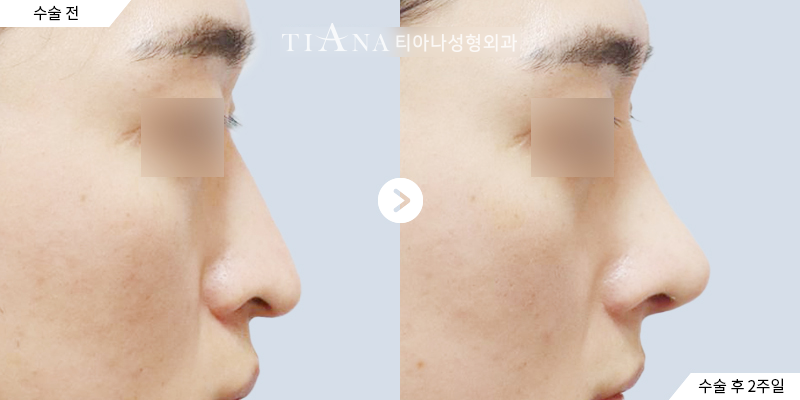 Results vary between individuals.
Recovery and Your Stay in Seoul
Most patients stay about 7 to 14 nights. Major swelling usually settles in 1 to 2 weeks, and the nose tends to look natural in about 3 to 4 weeks. A full rhinoplasty or a revision can take longer.
- Day 1: Consultation, examination and surgery
- Days 2 to 3: Swelling check and aftercare guidance
- Days 5 to 7: Stitches and splint removed
- After day 7: Fly home, or add 1 to 2 nights if needed
An anesthesiologist is on staff for surgery, and high-concentration oxygen care supports recovery from swelling. Your surgeon sees you one-to-one from consultation through aftercare. See the Seoul stay guide for planning your trip.
Summary
- An upturned nose has a tip that points upward, often with a short nose.
- Common causes are a short septum, weak tip support, or contracture after surgery.
- Septal extension uses cartilage to lengthen the tip and set the nasolabial angle.
- A nose that turned up after surgery needs a careful revision plan.
- Plan to stay about 7 to 14 nights in Seoul.
TIANA Plastic Surgery is a clinic dedicated only to rhinoplasty and revision rhinoplasty. Read more in our short and upturned nose guides, see what affects the cost, or check the common questions. Then send one front and one side photo on WhatsApp for a free video consultation on Google Meet.
Frequently Asked Questions
Q1What is the difference between an upturned nose and a short nose?
They often appear together. A short nose has a short distance from the bridge to the tip, while an upturned nose describes a tip that points upward. Septal extension can address both by changing the length and the angle of the tip.
Q2What cartilage is used for septal extension?
Septal extension uses cartilage to extend and support the tip. Depending on your nose, it can be septal cartilage, other cartilage from your own body, or donor cartilage. Which one suits you is decided after examination.
Q3My nose turned up after a previous rhinoplasty. Can it be corrected?
A tip that lifts after surgery can be a sign of contracture, where scar tissue pulls the tip upward. TIANA handles revision rhinoplasty, including contracture cases, and plans the correction carefully within what your tissue allows.
Q4Will lowering the tip make my nose look long?
The aim is a balanced length, not a long nose. Your surgeon sets the tip length together with the bridge height and the angle between the nose and upper lip so the nose fits your face from the front and side.
Q5How long is recovery after upturned nose surgery?
Most patients stay in Seoul about 7 to 14 nights. Major swelling usually settles in 1 to 2 weeks, and the nose looks natural in about 3 to 4 weeks. Revision cases can take longer, and everyone heals differently.
Thank you for reading to the end.
Take our free online consultation. We will walk you through the cost breakdown and how many nights to plan in Seoul.
Book a free online consultationThis article is general information about elective cosmetic surgery and is not a diagnosis. Results and recovery vary between individuals. Before-and-after photos are published with patient consent; surgery carries risks such as swelling and bruising and requires downtime. Final procedures and fees are decided after examination.