Is Rhinoplasty Safe? The Risks and Who Should Wait
Is rhinoplasty safe at 54, with blood-pressure tablets in your bag and a long flight each way?
30-second check
Check what your bridge needs
Pick what applies. Related procedures appear, and you can send your answers straight to WhatsApp. No name or email needed.
Pick at least one concern to see the related procedures.
Send this on WhatsAppWhatsApp opens with your answers already typed. Then send 5 photos (front, both 45-degree angles, both sides) and, if you have one, a photo of the nose you would like.
Not opening? Copy the message and open WhatsAppFor a healthy adult whose conditions are under control, yes: rhinoplasty is an established operation and serious complications are uncommon. What makes it safer is mostly preparation: a full medicine list, blood thinners paused only with your own doctor's agreement, a change your skin and bone can carry, and staying until the cast comes off.
Hello, I'm Dr. Choi Hang-seok, Head Surgeon at TIANA Plastic Surgery in Seoul.
I operate only on noses, and an anaesthesiologist is on staff. Before planning, a 3D-CT shows me the nasal bones and passages, and I see you one-to-one from the consultation through surgery and aftercare. If you're arranging this for a parent who would rather talk in another language, a medical interpreter for that language is provided at no extra charge.
Start by sending the five standard photos on WhatsApp with a typed list of every medicine and supplement you take, and ask whether anything on that list would change the plan. If you're writing for a parent, you can send it on their behalf.
What actually goes wrong after rhinoplasty?
Most problems are minor and temporary, a few are serious but rare, and the most common lasting problem is a shape you're unhappy with, which can mean a second operation.
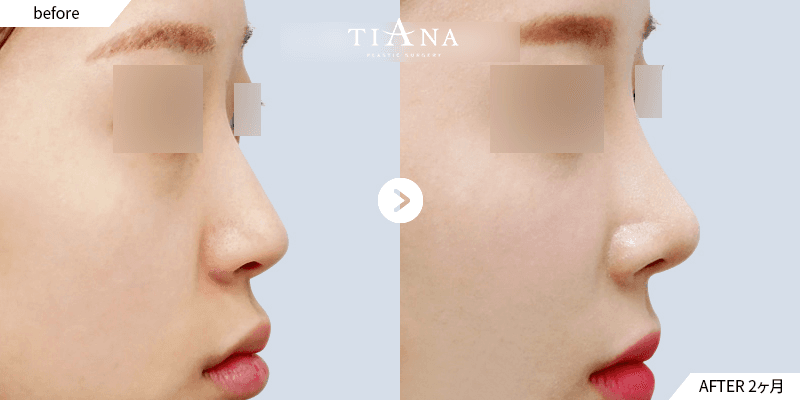
Risks and side effects to know
Guidance from the American Society of Plastic Surgeons lists the recognized risks: bleeding, infection, anaesthesia risks, difficulty breathing through the nose, numbness, a hole in the septum (septal perforation), skin discoloration and swelling, pain that may persist, poor wound healing or scarring, and an appearance you don't like that may need revision.
I'd group them like this:
- Common and temporary: swelling, bruising, a stuffy nose and a numb tip. These are part of normal healing.
- Less common: infection, bleeding after the first day, an uneven result, or a nose that breathes worse than before.
- Rare but serious: a septal perforation, an implant that becomes infected or presses through thin skin, and blood clots linked to a long flight soon after surgery.
The implant point matters more as we age. A review of Asian rhinoplasty describes how widely silicone implants are used to raise the bridge, and the problems they can bring, such as infection, shifting and extrusion (Ishii, 2014). Skin over the bridge thins over the years, and thin skin is where an implant edge shows or wears through.
Why age and medicines change the picture
Age alone doesn't rule you out. So is rhinoplasty safe for someone in their fifties? Usually, provided the body around the nose is ready for it.
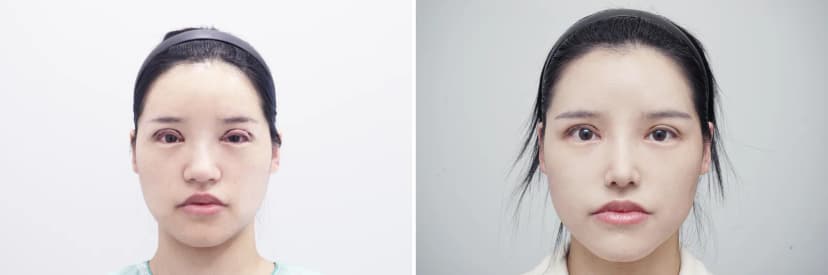
Example case (bulbous tip, long nose): front view before surgery (left) and 2 weeks after (right). Procedures: silicone bridge implant, tip with septal and donor rib cartilage, bulbous tip refinement, long-nose correction, osteotomy. Results vary between individuals; swelling, bruising, asymmetry and infection are possible risks. Shared with the patient's consent.
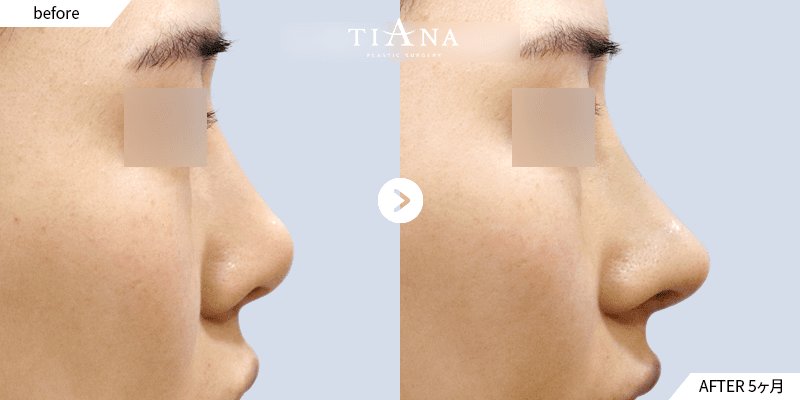
- Skin. Thinner skin over the bridge shows implant edges more easily. With thin skin, I lean toward a smaller lift, or toward cartilage from the septum, ear or rib, or the patient's own dermis or fascia instead of silicone.
- Blood pressure. Spikes during and after surgery raise the chance of bleeding and swelling. It should be stable on your usual treatment for some weeks before you travel.
- Blood thinners and supplements. Aspirin, other blood thinners, fish oil, vitamin E and ginkgo all make bleeding more likely. Never stop them on your own: for some people, such as those with a heart stent, stopping is more dangerous than the bleeding risk.
- Diabetes. High blood sugar slows healing and raises the infection risk, so good control matters before any elective operation.
- Smoking. It cuts blood flow to the skin that has to heal over the new shape.
Say you're 56. The hump on your nose has become more noticeable with age, you take tablets for blood pressure, and your doctor prescribed a daily low-dose aspirin a few years ago. I'd want a letter from that doctor on whether the aspirin can pause, and for how long. I'd keep the change modest, smoothing the hump in proportion to your face rather than building a new bridge, and I'd suggest staying the full 14 nights so the inner stitches come out in Seoul. That is the reasoning behind why a smaller change is often the safer one.
Doctor's note
A nose changes the whole face with very small differences, which is why I only do noses. At this age, I'd rather leave you with a nose that blends in than push the skin toward a shape it has to fight. A smaller change heals more predictably.
Wondering which type your nose is?
Share your front, 45-degree and side photos — the surgeon will tell you which procedures your nose would actually need. No cost, no obligation.
Ask which procedure fits meWho should wait, or skip rhinoplasty?
Is rhinoplasty safe for everyone who wants it? No, and saying so is part of doing it safely. These are reasons to wait or reconsider:
- High blood pressure, diabetes, or a heart or lung condition that isn't controlled or hasn't been cleared by your own doctor.
- Blood thinners that your prescribing doctor says cannot be paused.
- A cold, a sinus infection or a skin infection close to the surgery date.
- Nose surgery in roughly the past year. Tissues are still settling, and many surgeons prefer to wait before operating again; there's more on whether it's too soon for a revision.
- Expectations no operation can meet, such as wanting someone else's nose, or hoping a new nose will settle something that isn't about the nose.
If one of these applies, the answer is usually not never. It's not yet, or a smaller plan.
If your doctor at home has put anything in writing about your heart, blood pressure or blood thinners, photograph that letter and send it on WhatsApp with the dates you're considering.
What makes a trip abroad for nose surgery safer
Before you book, three points from the US CDC's guidance on medical travel are worth following: see your own doctor well before the trip, carry copies of your medical records, and remember that flying soon after surgery raises the risk of blood clots.
In practical terms for a Seoul trip:
- Plan 7 to 14 nights. The cast and outer stitches come off around day 7 and the inner stitches around day 14.
- If you fly home on day 7, you leave with a referral letter and a surgery certificate, so a doctor at home can remove the inner stitches and knows what was done.
- On the flight, take an aisle seat, walk every hour or two, drink water, and ask your own doctor whether compression stockings suit you.
- Have someone with you for the first night after surgery, whether a partner, an adult child or a friend.
- Book a hotel near the clinic at 108 Bongeunsa-ro, Gangnam-gu, so the early follow-up checks are a short trip.
Online rankings say very little about any of this, and the questions worth asking that forum rankings leave out cover what to check instead. The clinic's English page on rhinoplasty in Korea sets out the stay and the photo consultation in one place.
If you want to see how real noses changed and how many months after surgery each photo was taken, browse TIANA's rhinoplasty case gallery before your consultation.
What should you do if something feels wrong at home?
Go by the type of problem, and don't wait to see whether it passes.
- Chest pain, sudden breathlessness, or a swollen and painful calf: emergency care at once, wherever you are.
- Fever, spreading redness, pain that is getting worse rather than better, or bleeding that won't stop: see a local doctor the same day and bring your referral letter and surgery certificate.
- A shape that looks uneven while swelling is still going down: usually a matter of time, not urgency.
In every case, send a photo on WhatsApp as well. Recovery after you leave is guided from your progress photos, and your aftercare stays with the surgeon who operated. Healing speed and the final result differ between people, and if the shape isn't right once the tissues have settled, we're set up for revisions. For the slower and the urgent side effects side by side, read which side effects are normal, slow or urgent after flying home.
If you're still deciding whether to go at all, one WhatsApp message with your age, your main health conditions and the part of your nose that bothers you is enough to begin, and you can ask before booking anything. Ask which of these risks apply to you. In Seoul, the 3D-CT shows me the bone, the septum and the airway before we choose between an implant and your own cartilage, and that choice is where age and skin make the biggest difference.
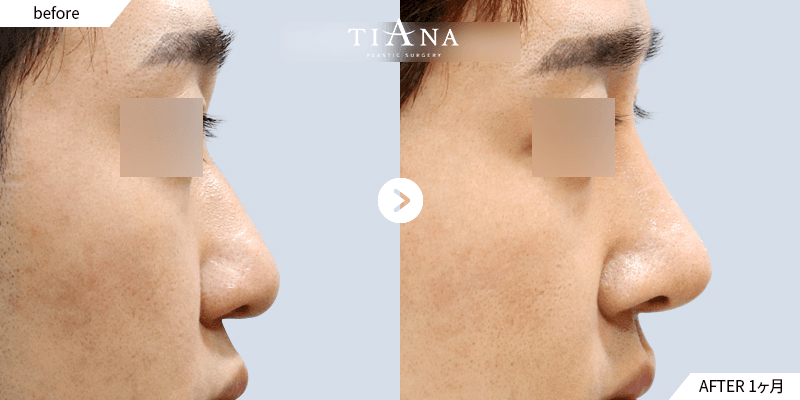
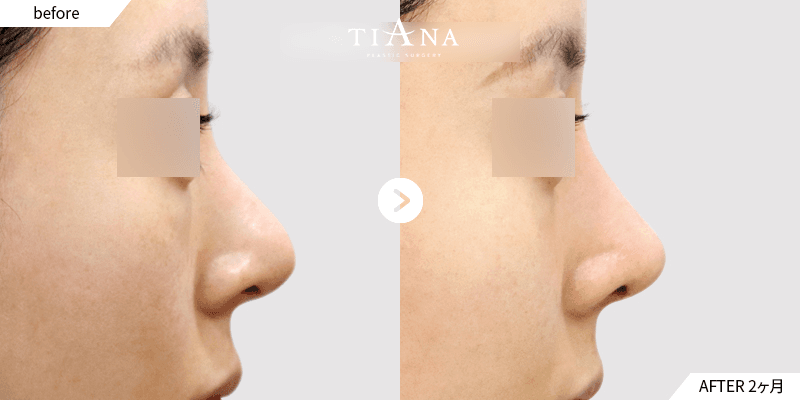
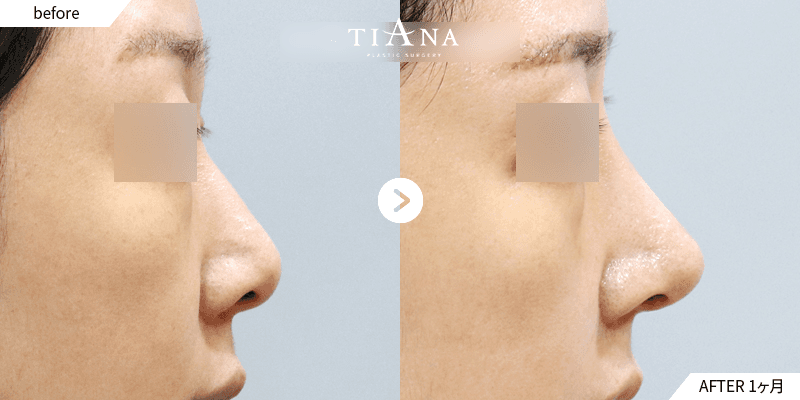
Cases close to this concern
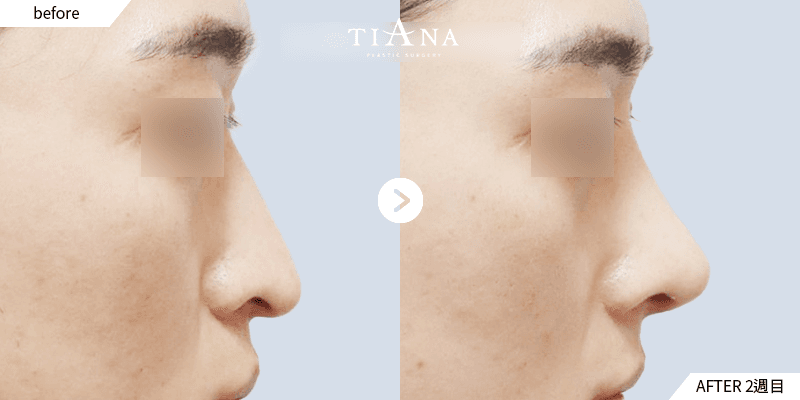
Before and after at TIANA (shared with patient consent) 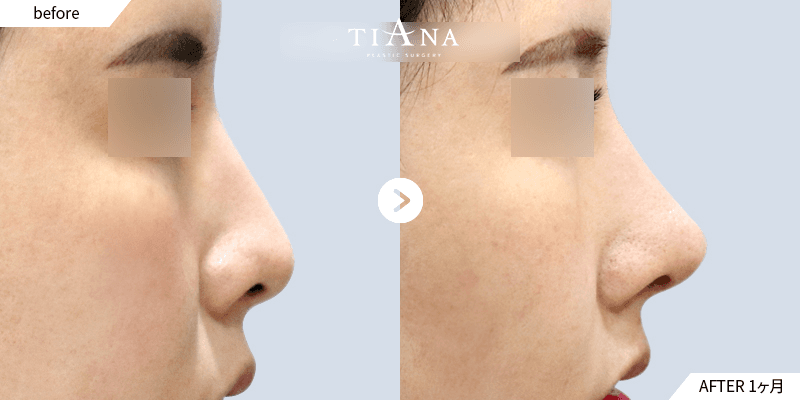
Before and after at TIANA (shared with patient consent) 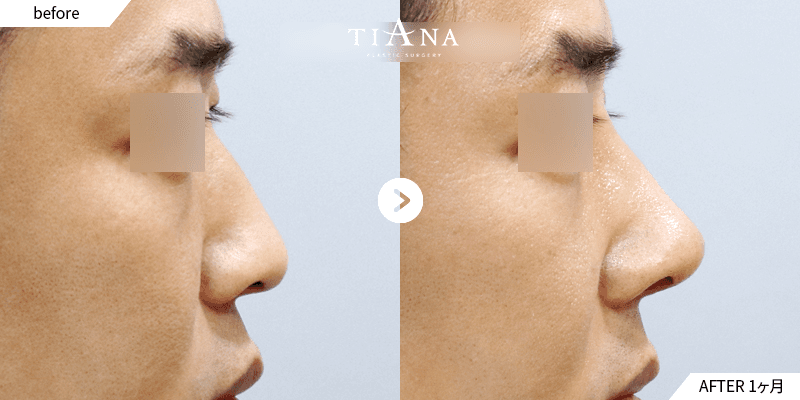
Before and after at TIANA (shared with patient consent) 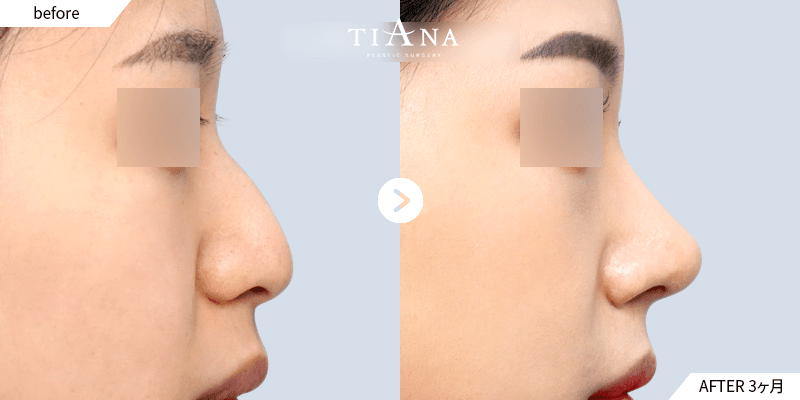
Before and after at TIANA (shared with patient consent)
* Results vary between individuals. Photos show TIANA patients.
Korean patients talk about their surgery
Videos from Korean patients who had surgery at TIANA (Korean, YouTube). Patients from Japan, Taiwan and English-speaking countries also contact us every month on LINE and WhatsApp.


Read TIANA reviews on Google Maps
From first message to flying home
Photo consult on WhatsApp
Send 5 photos and a photo of the nose you would like. The free reply in English explains the likely scope and how the estimate is worked out.
Video consult (optional)
On Google Meet you talk with the surgeon first, then the consultation manager explains the estimate. Free, with an interpreter.
Visit and 3D-CT
A 3D-CT scan and the surgeon's examination confirm the final plan and fee. An interpreter joins the consultation.
Surgery
The surgeon who consulted you performs the surgery and also manages the anesthesia.
Day 7 and day 14
The splint and outer stitches come off around day 7, the inner stitches around day 14. After you fly home, send progress photos on WhatsApp.
Frequently asked questions
Q1Is anaesthesia riskier after 50?
Anaesthesia risk depends more on your heart, lungs and medicines than on age itself. Bring recent test results and your medicine list. An anaesthesiologist is on staff at TIANA, and asking at booking which pre-surgery tests you should do at home saves time in Seoul.
Q2Should I stop my aspirin before rhinoplasty?
Only if the doctor who prescribed it agrees. Aspirin taken after a heart stent or for clot prevention can be more dangerous to stop than to continue, so that decision belongs with your own doctor, ideally in writing.
Q3Can a silicone implant be used if my skin is thin?
Sometimes, with a smaller implant. Thin skin shows implant edges more easily, so alternatives such as cartilage from the septum, ear or rib, or your own dermis or fascia, are often considered for older or thinner noses.
Q4What happens if I need a revision later?
We're set up for revisions, including contracted noses where rib cartilage is often needed. A second operation should wait until the tissues have fully settled, which for many people means about a year.
Q5Can my adult child handle the messages for me?
Yes. A family member can send the photos and questions on WhatsApp on your behalf, and a medical interpreter for your language is provided at no extra charge for the consultation if you prefer to speak in it.
Thank you for reading to the end.
Send 5 photos (front, 45-degree and side) on WhatsApp for a free photo consultation. We reply in English with the likely scope of surgery and how the estimate is worked out.
Send my photos on WhatsAppThis article is general information about elective cosmetic surgery and is not a diagnosis. Results and recovery vary between individuals. Before-and-after photos are published with patient consent; surgery carries risks such as swelling and bruising and requires downtime. Final procedures and fees are decided after examination.