Nose tip plasty Korea: is the tip alone enough?
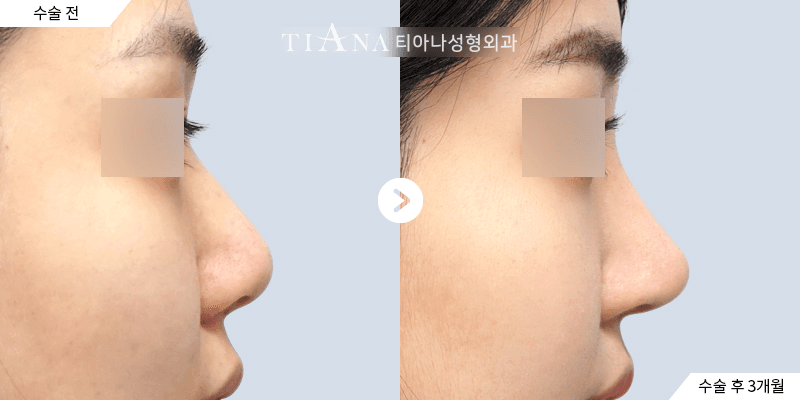
Nose tip plasty Korea, in plain terms: surgery on the lower part of the nose that reshapes the tip's width, height and angle, usually without touching the bridge. Whether that is enough for you comes down to things a selfie can't show: how strong your tip cartilage is, how thick the skin over it is, and how high your bridge already sits. If a surgeon at home told you tip work "won't show much" on your skin, that's the worry this page is for: flying to Seoul for a tip-only plan and finding out it was the wrong size of operation.
By the end of this guide, your questions about rhinoplasty should turn into a clear next step.
Send 5 photos (front, 45-degree and side) on WhatsApp and we will reply in English with a free first assessment: the likely scope of surgery and how the estimate is worked out.
Send my photos on WhatsAppTIANA performs only rhinoplasty and revision rhinoplasty, and I handle your consultation, surgery and aftercare myself. For tip work that continuity matters, because the surgeon who judges your skin and cartilage before the operation is the one shaping them on the day.
If you've been given that "won't show" verdict, send 5 photos (front, 45-degree and side) on WhatsApp, taken in daylight at eye level, and ask the one question that keeps coming back: does my bridge need to be part of this plan?
Clinic address: ソウル特別市 江南区 奉恩寺路108
What does tip surgery actually change?
The shape of your tip comes mostly from two small curved cartilages, one on each side, sitting under the skin like a pair of thin wings. Tip surgery reshapes, repositions or supports those cartilages, using sutures and small cartilage grafts. It can narrow a round tip, lift a low one, bring a short tip down or raise one that droops. It can't make the skin itself thinner.

I've written separately about what tip plasty involves on the operating day. This page is about fit, because that's where a tip plan goes right or wrong. Here is how the common tip concerns map onto what the operation works on:
| What bothers you | What the plan works on |
|---|---|
| A round, heavy-looking tip | Bulbous tip refinement, so the tip looks slimmer from the front and side |
| A low or flat tip | Tip projection built with septal, own or donor cartilage |
| A short or upturned tip | Septal extension and columella work to bring the tip down |
| A long or drooping tip | Adjusting tip height and angle |
If your concern sits in more than one row, the plan usually grows to cover both, and that is the first sign a tip-only operation may be too small. Our English rhinoplasty page groups the procedures by concern and nose type if you want to see where tip work sits among them.
Who is a tip-only plan right for?
A tip-only plan suits you when your bridge already sits where you want it and the problem lives below it. Look at your own side photo. If the line from between your eyes down toward the tip looks fine to you and only the last centimeter bothers you, the tip is probably the right target.
Skin is the second filter. Reviews of Asian rhinoplasty describe thicker skin and softer tip cartilage as common features (Ishii, 2014). Thick skin drapes over reshaped cartilage the way a heavy blanket drapes over furniture: the outline shows, the fine detail softens. When the skin is thick, I'd rather give the tip more support than cut more cartilage away, because a weakened framework under heavy skin tends to look duller, not slimmer.
The bridge is the third. If your bridge is low, lifting only the tip can leave a nose that looks raised at the end and flat above it. I work to avoid that tip-only look, so when the bridge is also low, the conversation moves to full rhinoplasty, where a bridge implant and tip support are designed as one profile.
Previous surgery changes the picture again. If your tip was operated on before, the work becomes revision surgery, and scar tissue and the amount of cartilage left decide what's possible. We perform revision rhinoplasty, including contracture cases. If you've been reading forum threads about rhinoplasty in Korea, these three filters are usually why two similar-looking tips ended up with very different plans.
Wondering which type your nose is?
Share your profile and front photos — the surgeon will tell you which procedures your nose would actually need. No cost, no obligation.
Ask which procedure fits meMinimal-incision work or cartilage support
Tip plasty at TIANA ranges from minimal-incision tip work, including tip surgery without an implant, to tip support built with cartilage. The lighter end fits a tip that needs refinement and has cartilage strong enough to hold a new shape. Minimal-incision procedures tend to recover faster, which counts when your leave is short.
A tip that needs real projection, or has to be brought down, needs something to stand on. The options are septal cartilage, ear cartilage, rib cartilage or donor rib cartilage, and your own dermis or fascia. A septal extension graft, for example, is cartilage fixed to the septum so the tip has a stable post to rest on (Archives of Plastic Surgery, 2014). How much cartilage you have, and whether you've had surgery before, decide which tissue makes sense.
Before surgery, 3D-CT imaging maps your bone and nasal structure, and Dr. Choi manages the anesthesia as well.
Doctor's note
A tip is a few millimeters of tissue, and a few millimeters change the whole face. That is why I don't design the tip by itself. I plan it with the nasolabial angle, where your nose meets your upper lip, and with your bridge, because a tip that looks right in a close-up can look stuck on from the side. If the reference photo you bring asks for more than your bone and skin can carry, I'd rather show you where the achievable version ends than chase the photo.
Nose tip plasty Korea: how long should you stay?
Plan on 7 to 14 nights in Seoul. The splint and stitches usually come off around day 7 (it varies, and we confirm the timing at surgery), and staying at least until then makes the trip easier. For tip surgery, major swelling usually settles in about 1 to 2 weeks, and most noses look natural to other people in about 3 to 4 weeks.
The tip is the last part of the nose to finish. The American Society of Plastic Surgeons notes that initial swelling goes down within a few weeks, while the final contour can take up to a year to refine (ASPS). The tip you see on the flight home is an early draft.
We're open 10:00 to 19:00 on weekdays and 10:00 to 16:00 on Saturdays, and closed on Sundays and public holidays, so count that in if your splint day lands on a weekend. For the first 24 hours, what a rhinoplasty review skips about day one walks through the hours after surgery, and a big nose Korean rhinoplasty trip, week by week shows how a wider plan spreads across the stay.
Risks and side effects to know
Swelling, bruising around the eyes and a blocked feeling in the nose are expected in the first days. The tip often feels numb or stiff for several weeks. These are part of healing and usually fade on their own.
Less often, healing doesn't go to plan. The ASPS lists bleeding, infection, anesthesia risks, poor wound healing, difficulty breathing through the nose, a hole in the septum, persistent swelling and an appearance you're unhappy with, along with the chance of needing a second operation (ASPS). With tip work, surgeons also watch for asymmetry between the two sides and for a tip that drops or lifts as scar tissue contracts.
As general medicine, it's wiser to wait if your nose is still growing, if you're pregnant or breastfeeding, if there's an infection or breakout on your nose, if you take blood thinners that can't safely be paused, or if you had nose surgery recently and the tissue hasn't settled.
If something worries you once you're home, act on the urgent signs first: fever, spreading redness, heavy bleeding or trouble breathing need a local doctor or emergency department, and then let us know. The CDC's medical tourism guidance suggests arranging follow-up care at home before you travel and carrying copies of your records (CDC). Recovery differs from person to person, and whether tip plasty suits your nose is settled at the in-person exam.
What should you send first?
If you came here searching "nose tip plasty Korea" with a tip-only plan in mind, three photos say more than a long description: one from the front, one from the side, and one from below looking up at the nostrils, all in daylight and without makeup. Add a line about any earlier nose surgery or injections. Send them on WhatsApp in English, with the question this page started with: is the tip alone enough for my face?
Frequently Asked Questions
Q1Can tip surgery be done without an implant?
Yes. Tip surgery without an implant is one of the options at TIANA. Whether your tip can hold its new shape without added support comes down to your cartilage and skin, which are checked at the examination.
Q2Is bulbous tip refinement the same thing as tip plasty?
Tip plasty is the general name for surgery on the nose tip. Bulbous tip refinement is tip surgery aimed at a round, heavy-looking tip, so it is one kind of tip plasty.
Q3Will people be able to tell I had my tip done?
In the first weeks, swelling makes the tip look fuller than it will later. The aim is a tip that sits with your face from the front and the side, which is why it is designed together with the bridge and the nasolabial angle.
Q4I had tip surgery elsewhere and the tip lifted. Can it be corrected?
TIANA performs revision rhinoplasty, including contracture cases. Rib cartilage, your own or donor, is used most often in revision and contracture surgery, where earlier operations have left too little cartilage. Bring the details of your previous operation to the consultation.
Thank you for reading to the end.
Send 5 photos (front, 45-degree and side) on WhatsApp for a free photo consultation. We reply in English with the likely scope of surgery and how the estimate is worked out.
Send my photos on WhatsAppThis article is general information about elective cosmetic surgery and is not a diagnosis. Results and recovery vary between individuals. Before-and-after photos are published with patient consent; surgery carries risks such as swelling and bruising and requires downtime. Final procedures and fees are decided after examination.