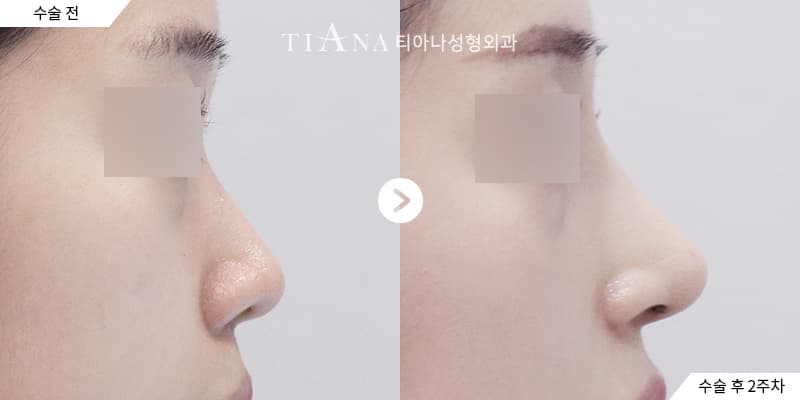
Nose tip reduction Korea: what a smaller tip risks
Nose tip reduction Korea, mapped onto a calendar: plan 7 to 14 nights in Seoul, with the splint and stitches usually coming off around day 7. That fits inside two weeks of leave. What no leave covers is the last stretch of healing: a tip that's been made smaller keeps refining for months after you fly home, and most of the risk of a short trip sits in that stretch.
By the end of this guide, your questions about rhinoplasty should turn into a clear next step.
Send 5 photos (front, 45-degree and side) on WhatsApp and we will reply in English with a free first assessment: the likely scope of surgery and how the estimate is worked out.
Send my photos on WhatsAppI perform only rhinoplasty and revision rhinoplasty at TIANA, and I handle your consultation, surgery and aftercare myself. With a reduction that matters, because the surgeon who decides how much to take away is also the one doing your aftercare.
If your leave dates are already fixed, send them on WhatsApp with 5 photos of your nose (front, 45-degree and side), and ask the question that decides a short trip: can my tip be reduced within these dates, or does my nose need a wider plan?
Clinic address: ソウル特別市 江南区 奉恩寺路108
What does a smaller tip actually involve?
Most tip reductions work on the cartilage, not the skin. Surgeons usually narrow a wide tip by trimming the upper edge of the tip cartilages and drawing the two domes closer with sutures, and they lower a tip that sticks out by repositioning cartilage so it sits further back. The skin then has to shrink onto the smaller framework, and how far it shrinks is outside anyone's full control.

At TIANA, refining a round, heavy tip is planned together with the bridge and the nasolabial angle, where the nose meets the upper lip. A long or drooping tip is a different job, and there the plan adjusts tip height and angle. If yours is mainly round and wide, how bulbous tip surgery narrows a round tip goes into that version.
When the whole nose looks big, the tip is often only part of the story. A hump on the bridge or a wide bony bridge can make a nose read larger from the side and the front, and those are corrected with hump reduction and osteotomy. Reducing the tip alone can leave a hump looking more prominent.
Where reduction stops: skin, support and breathing
Skin sets the first limit. Reviews of Asian rhinoplasty describe thick skin as a common feature (Ishii, 2014), and thick skin doesn't contract as much as the cartilage under it can be reduced. Take away too much framework under heavy skin and the gap can fill with scar tissue, leaving the area above the tip fuller than you hoped.
Support sets the second. The tip cartilages also hold the nostril rims open when you breathe in. Over-reduce them and the tip can look pinched, or the nostrils can narrow on a deep breath. So when a tip needs to get smaller, I'd rather reshape with sutures and remove less than carve the framework thin.
Proportion is the third. Lowering a tip that sticks out makes the bridge look higher, and from below the nostril base can look wider. A reduction planned on its own can fix the front view and spoil the side, which is why I don't plan the tip apart from the profile. Whether a reduction can be done through a closed approach is a separate question, and where closed rhinoplasty stops covers it.
Wondering which type your nose is?
Share your profile and front photos — the surgeon will tell you which procedures your nose would actually need. No cost, no obligation.
Ask which procedure fits meNose tip reduction Korea: how long does it keep you in Seoul?
| When | What's typical | Where this comes from |
|---|---|---|
| Your stay | 7 to 14 nights in Seoul | TIANA stay guidance |
| Around day 7 | Splint and stitches come off | TIANA stay guidance |
| Weeks 1 to 2 | Major swelling usually settles | TIANA tip surgery guidance |
| Weeks 3 to 4 | Most noses look natural to others | TIANA tip surgery guidance |
| Up to a year | Final contour refines | ASPS |
The last row comes from the American Society of Plastic Surgeons, whose recovery guidance says initial swelling goes down within a few weeks while the final nasal contour can take up to a year (ASPS). Minimal-incision procedures tend to recover faster.
Two calendar details catch short trips. We're closed on Sundays and public holidays and open 10:00 to 16:00 on Saturdays, so check which weekday your day 7 lands on before you book the flight. And a splint changes the first week: plan short outings and early nights, and if you wear glasses, ask how long to keep them off your nose.
When I'd tell you to wait
Some reasons to postpone are about your body. As general medicine, wait if your nose is still growing, if you're pregnant or breastfeeding, if there's an infection or breakout on the nose, or if you take blood thinners that can't safely be paused. Smokers heal more slowly. Many surgeons also prefer to wait around a year after previous nose surgery before operating on the same nose again, because the tissue is still changing.
Others are about your calendar: a wedding, an interview or a photo shoot within about four weeks of surgery, or a return flight booked before the splint is off.
And some are about the goal. If what bothers you is really a hump or a low bridge, a smaller tip can make the nose look less balanced. Who a Korean nose job suits, by nose type helps sort that out, and when to say not yet to tip surgery covers more of the timing side.
Risks and side effects to know
For the first days, expect swelling, bruising and a stuffy nose that has you breathing through your mouth at night. A reduced tip often feels firm and numb for weeks, and while it's swollen it can look bigger than it did before surgery.
The ASPS safety page lists the risks every rhinoplasty carries, from bleeding, infection and anesthesia complications to poor healing, breathing difficulty, septal perforation and a result that needs revision (ASPS). The NHS lists similar risks for nose reshaping, including breathing difficulty and a nose that doesn't look the way you expected (NHS). With reduction specifically, the ones to understand are a pinched tip, a nostril rim that collapses when you breathe in, asymmetry, and scar thickening above the tip under thick skin.
Before surgery, 3D-CT imaging maps your bone and nasal structure, and Dr. Choi manages the anesthesia as well. Recovery and results differ between people, and the in-person exam decides whether reduction is right for your nose.
What if the tip looks wrong after you fly home?
In the first weeks, one side of the tip is often more swollen than the other, and the whole tip can look heavier than it will later. Unevenness from swelling usually fades over months. A shape that is still clearly off once the swelling has gone is a different matter, and that's when revision is discussed; we perform revision rhinoplasty, including contracture cases.
Some signs can't wait for that conversation. Fever, spreading redness, discharge, heavy bleeding or trouble breathing need a local doctor or emergency department first, and then let us know. The CDC's medical tourism guidance suggests lining up follow-up care at home before you travel and taking copies of your medical records with you (CDC). Set that up before you book; on a short trip it's the step most easily left out.
How do I know a smaller tip will suit my face?
Doctor's note
The question I'd ask you first is which view bothers you: the front, the side, or from below. A tip that looks too wide from the front and a tip that sticks out in profile are reduced in different ways, and fixing the wrong one helps neither. I match the image you have in mind with your bone structure and plan what your nose can reach, aiming for a tip that sits quietly in your face from the front and the side. A smaller tip that draws the eye is still the wrong tip.
Our rhinoplasty page in English lays out the procedures by concern and nose type if you want to see where reduction sits among them.
If "nose tip reduction Korea" is what brought you here, send 5 photos (front, 45-degree and side) plus one from below on WhatsApp, and write in one line which of those three views bothers you most. English is fine, and if you've had nose surgery before, add when it was.
Frequently Asked Questions
Q1Will a smaller tip make my nostrils look wider?
It can. Lowering a tip that sticks out can make the nostril base look wider from below, which is one reason the tip is planned together with the side profile and the rest of the lower nose.
Q2How soon can I fly home after tip reduction?
Most people plan the return flight after the splint and stitches come off, usually around day 7, within a 7 to 14 night stay. Discuss your exact schedule before booking flights.
Q3Can tip reduction be combined with correcting a hump?
Yes. When a nose looks big, the surgeon may combine bulbous tip refinement with hump reduction and osteotomy, working on the features that actually make the nose look large.
Q4My tip was operated on before. Can it still be reduced?
That becomes revision surgery, which TIANA performs, including contracture cases. When earlier operations have left too little cartilage, rib cartilage, your own or donor, is one of the options for rebuilding support.
Q5Can I ask questions in English before I travel?
Yes. You can message TIANA in English on WhatsApp.
Thank you for reading to the end.
Send 5 photos (front, 45-degree and side) on WhatsApp for a free photo consultation. We reply in English with the likely scope of surgery and how the estimate is worked out.
Send my photos on WhatsAppThis article is general information about elective cosmetic surgery and is not a diagnosis. Results and recovery vary between individuals. Before-and-after photos are published with patient consent; surgery carries risks such as swelling and bruising and requires downtime. Final procedures and fees are decided after examination.