Ethnic Rhinoplasty: What It Is, Who It Suits, Risks
Ethnic rhinoplasty is nose surgery planned around the anatomy and facial balance of your heritage. The goal is a better nose that still looks like it belongs on your face. It differs from other rhinoplasty mainly in planning, because skin thickness, cartilage strength and bridge height decide what the surgery can achieve.
30-second check
Check which procedure fits your nose
Pick what applies. Related procedures appear, and you can send your answers straight to WhatsApp. No name or email needed.
Pick at least one concern to see the related procedures.
Send this on WhatsAppWhatsApp opens with your answers already typed. Then send 5 photos (front, both 45-degree angles, both sides) and, if you have one, a photo of the nose you would like.
Not opening? Copy the message and open WhatsAppAre you worried that a surgeon will hand you someone else's nose? That is the concern behind this search, and it's a reasonable one.
Hello, I'm Dr. Choi Hang-seok, Head Surgeon at TIANA Plastic Surgery in Gangnam, Seoul. TIANA performs only rhinoplasty and revision rhinoplasty, and I handle each patient one-to-one from consultation through surgery, anesthesia and aftercare.
What does "ethnic rhinoplasty" actually mean?
The term covers rhinoplasty for patients whose features differ from the narrow, high-bridged nose that older surgical textbooks treated as the default. It's commonly used for Asian, African-descent, Middle Eastern and Hispanic patients.
The label is imperfect, because no ethnic group has one nose. Two people from the same family can need different surgery. The term is still useful for one reason: it reminds the surgeon to start from your anatomy and your face, not from a template.
The American Society of Plastic Surgeons describes rhinoplasty as surgery that changes the shape or function of the nose. Ethnic rhinoplasty uses those same tools with a different starting point.
What makes the planning different?
Most of the difference comes down to three things.
| Factor | Why it matters | What it can change |
|---|---|---|
| Skin thickness | Thick skin hides fine changes in the cartilage underneath | Tip support may need strengthening before definition shows |
| Cartilage strength | Small or soft tip cartilages may not hold a new shape alone | Grafts are often added for support |
| Bridge height and width | A low or wide bridge sets the balance of the whole face | Implant, cartilage or bone narrowing may be considered |
Noses vary widely, so this table is a starting point. My examination and a 3D-CT scan show what is really there: the bones, the septum and how much usable cartilage you have.
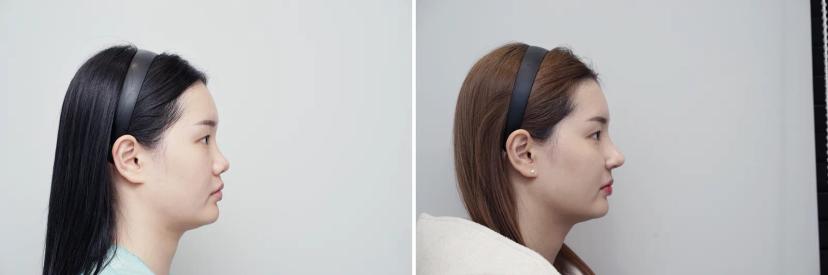
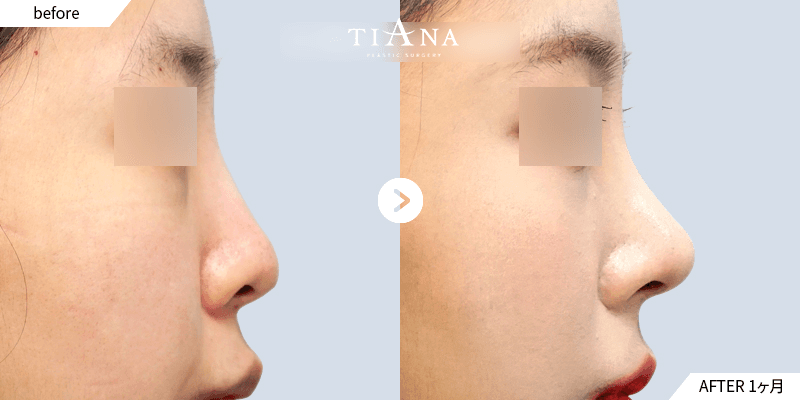
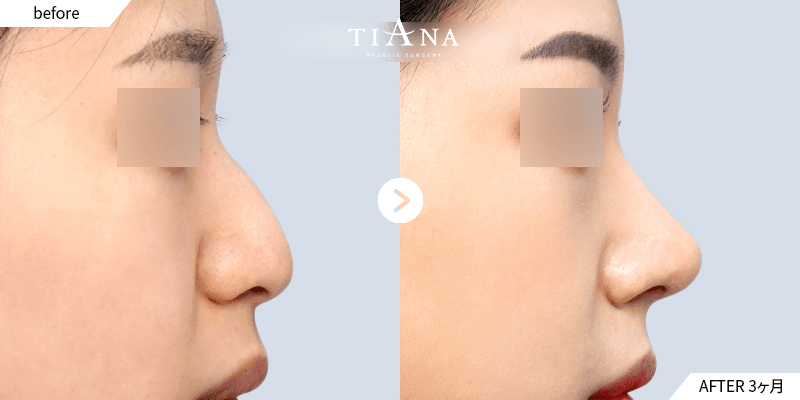
Example case (bulbous tip, short nose): side profile before surgery (left) and 3 months after (right). Procedures: silicone bridge implant, tip with septal and donor rib cartilage, bulbous tip refinement, short-nose correction, osteotomy, columella and nasolabial angle adjustment. Results vary between individuals; swelling, bruising, asymmetry and infection are possible risks. Shared with the patient's consent.
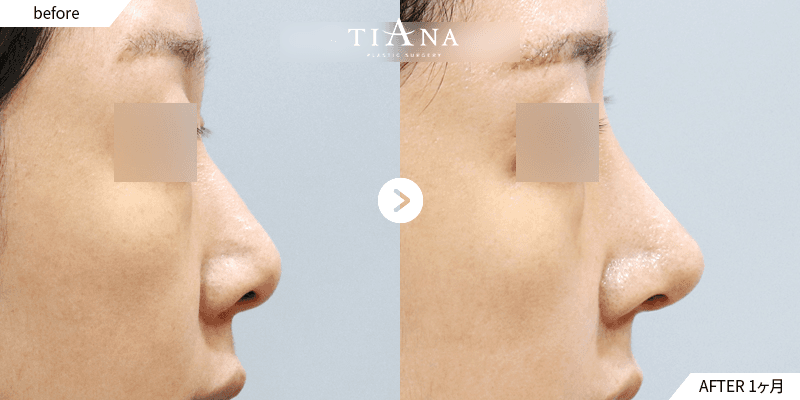
Wondering which type your nose is?
Share your front, 45-degree and side photos — the surgeon will tell you which procedures your nose would actually need. No cost, no obligation.
Ask which procedure fits meWhat are common goals by nose type?
These are patterns I'm often asked about. They aren't rules, and your goal may be different.
- Low bridge: adding height with an implant or cartilage, while keeping it in proportion to the forehead and eyes.
- Round tip under thick skin: building cartilage support so the tip can show more shape. For this concern, see bulbous nose rhinoplasty in Korea.
- Wide base or nostrils: alar base reduction, kept conservative so the nostrils stay natural.
- Short or upturned nose: a septal extension graft or other support to bring the tip down.
- Hump: reducing it without erasing the character of the profile.
If your main question is the height of the bridge, the Korean nose bridge page goes through the options.
Doctor's note
I ask patients two questions early: what bothers you, and what do you want to keep? The second answer often matters more. If you love your strong profile and only dislike your tip, the plan should stay at the tip.
How do you keep your features after surgery?
Keeping your features is a planning decision, made before the operation.
- Name what you want to keep. Your profile, the softness of your tip or your family resemblance.
- Match the nose to the rest of your face. Height that suits one forehead and chin can look out of place on another.
- Be careful with reference photos. They're useful for showing a direction. They can't show what your skin and cartilage will allow.
- Avoid over-narrowing. A nose made too narrow for its base and skin can look pinched and may affect breathing.
If your concern is surgeon choice in Korea, myths about ethnic rhinoplasty doctors in Korea covers it. Patients comparing destinations can read ethnic rhinoplasty in Korea vs Turkey. For African-descent patients, there is a separate article on common myths about African American rhinoplasty in Korea.
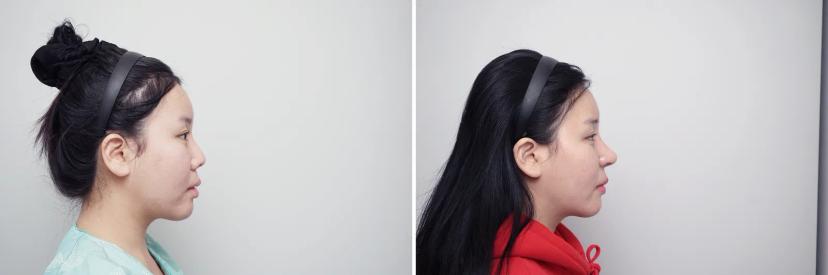
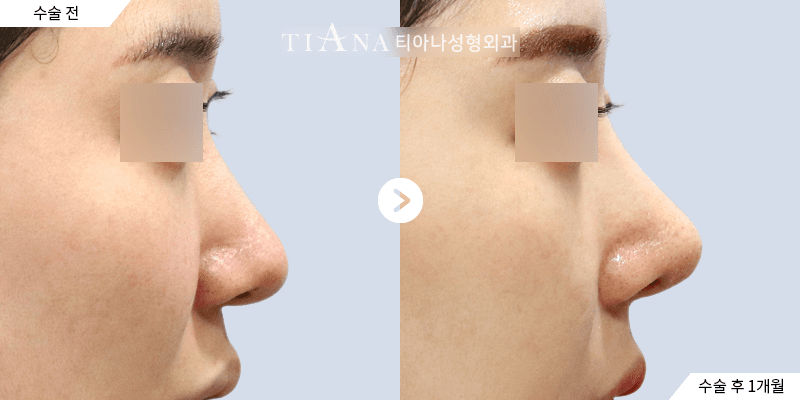
Example case (revision rhinoplasty): side view before surgery (left) and 2 weeks after (right). Procedures: revision rhinoplasty, silicone bridge implant, tip with septal and donor rib cartilage, bulbous tip refinement, short-nose correction, osteotomy. Results vary between individuals; swelling, bruising, asymmetry and infection are possible risks. Shared with the patient's consent.
What are the risks of ethnic rhinoplasty?
The risks are the same as for rhinoplasty in general, and a few matter more when thick skin or grafts are involved.
- Swelling, bruising and bleeding
- Infection, which matters more around implants and grafts
- Numbness of the tip
- Asymmetry, or a graft that shifts or warps
- Thick skin that shows less definition than you hoped for
- Contracture around an implant, which can pull the tip upward
- A blocked feeling, or breathing problems
- The need for revision in some cases
The American Society of Plastic Surgeons' safety page lists the general risks. Tell your surgeon about smoking, earlier nose surgery or injury, and any blood-thinning medicine or supplements.
How fast swelling settles varies between people, and a thick-skinned tip is usually the last part to show its shape. I'd rather follow your progress photos than give you a fixed number.
What should you ask an ethnic rhinoplasty surgeon?
| Question | What a good answer shows |
|---|---|
| Can I see cases with a nose and skin like mine? | Real experience with your anatomy |
| What will you keep, and what will you change? | The plan starts from your face |
| How will my skin limit the result? | Honest expectations |
| Which material do you recommend, and why? | A reason tied to your nose |
| Who manages the anesthesia and the aftercare? | Clear responsibility |
At TIANA, stitch removal is the part of the schedule that stays fixed. The splint and outer stitches come off around day 7 and the inner stitches around day 14. Plan 7 to 14 nights in Seoul, and at least 7. If you fly home around day 7, we give you a referral letter and a surgery certificate so a local doctor can remove the inner stitches. More reading is in all Asian rhinoplasty articles, and how the bridge and tip fit into one design is on TIANA's English rhinoplasty page.
Summary
- Ethnic rhinoplasty is nose surgery planned around your anatomy and facial balance.
- Skin thickness, cartilage strength and bridge height drive the plan.
- Decide what you want to keep before deciding what to change.
- Thick skin can limit how much fine definition shows.
- The final plan needs an examination and 3D-CT.
Send five photos on WhatsApp (front, both 45-degree angles and both side profiles), and tell us which features you want to keep. You'll get a reply in English about the likely scope, and you can book a free Google Meet video consultation from there.
Cases close to this concern
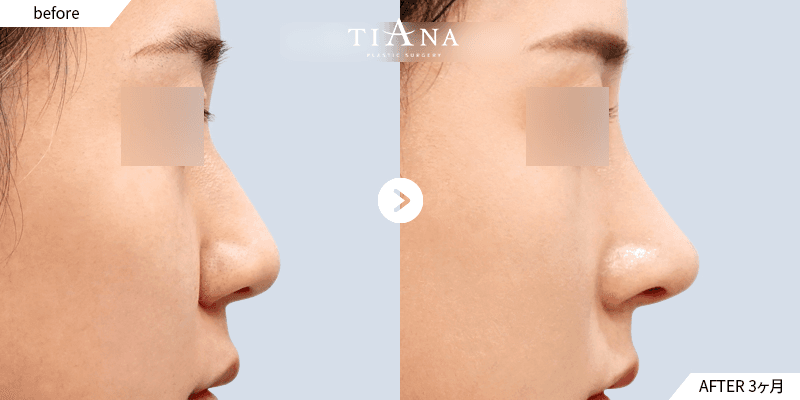
Drag the handle to compare before and after
TIANA case, shared with the patient's consent. Results vary.
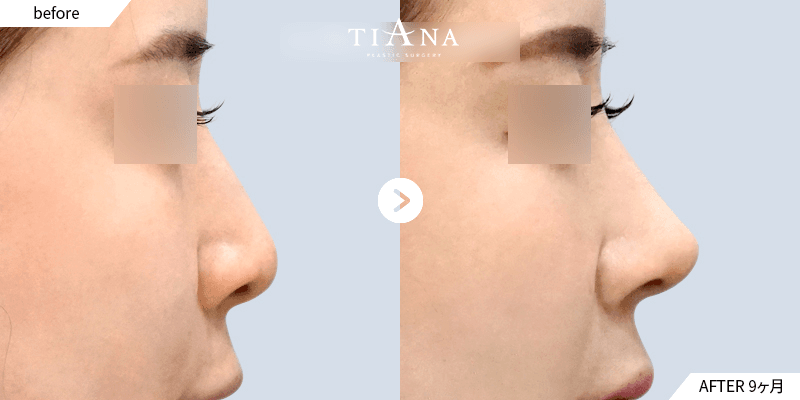
Before and after at TIANA (shared with patient consent) 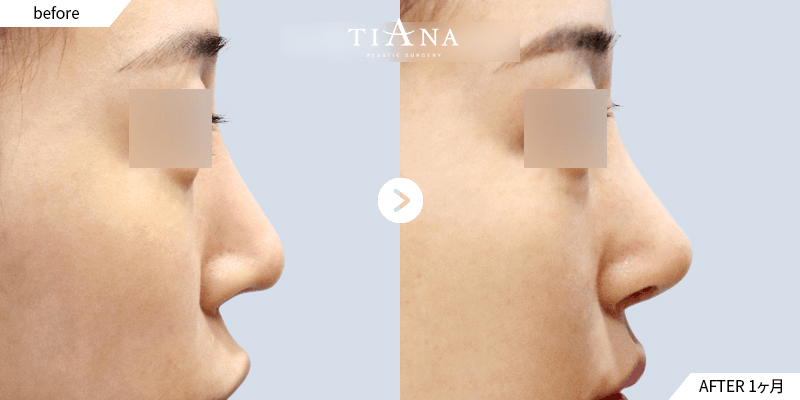
Before and after at TIANA (shared with patient consent) 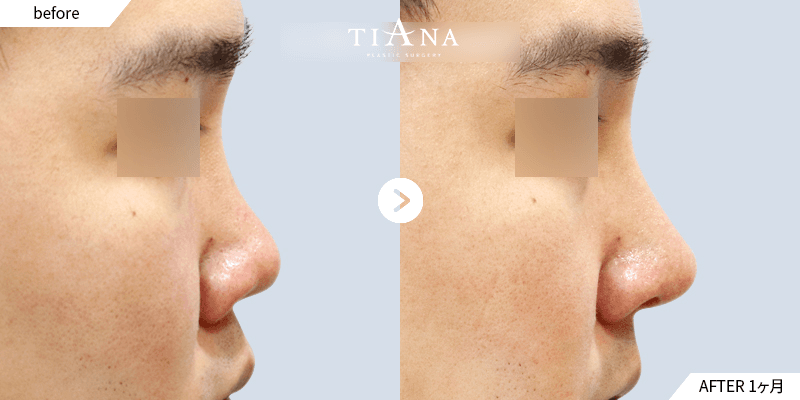
Before and after at TIANA (shared with patient consent)
* Results vary between individuals. Photos show TIANA patients.
See more cases →Korean patients talk about their surgery
Videos from Korean patients who had surgery at TIANA (Korean, YouTube). Patients from Japan, Taiwan and English-speaking countries also contact us every month on LINE and WhatsApp.


Read TIANA reviews on Google Maps
Start from your concern
Bridge concerns and what is considered
- Current shape
- Design direction (illustration)
Illustration only, not a result and not to scale.
What to consider
Silicone implant or own tissue
Low, flat bridge
From first message to flying home
Photo consult on WhatsApp
Send 5 photos and a photo of the nose you would like. The free reply in English explains the likely scope and how the estimate is worked out.
Video consult (optional)
On Google Meet you talk with the surgeon first, then the consultation manager explains the estimate. Free, with an interpreter.
Visit and 3D-CT
A 3D-CT scan and the surgeon's examination confirm the final plan and fee. An interpreter joins the consultation.
Surgery
The surgeon who consulted you performs the surgery and also manages the anesthesia.
Day 7 and day 14
The splint and outer stitches come off around day 7, the inner stitches around day 14. After you fly home, send progress photos on WhatsApp.
FROM THE SURGEON
A word from the surgeon

Bone, cartilage and skin thickness differ a lot between people, so the same operation name can need different steps.
Because I only treat noses, I can tell you at the consultation not just how far your nose can change, but where it is better not to push further.
Frequently asked questions
Q1What is ethnic rhinoplasty?
Ethnic rhinoplasty is nose surgery planned around the anatomy and facial balance of a patient's heritage, such as Asian, African-descent, Middle Eastern or Hispanic features. The aim is to improve the nose while keeping it in harmony with the face, not to replace it with one standard shape.
Q2Is ethnic rhinoplasty different from regular rhinoplasty?
The operation uses the same basic techniques. The planning differs because skin thickness, cartilage strength and bridge height vary, and those factors decide which grafts or implants are needed and how much change the skin can show.
Q3Will ethnic rhinoplasty make me look less like my family?
It shouldn't, if the goal is set clearly. Tell your surgeon which features you want to keep, and bring photos of yourself from several angles. A plan built around your own face usually changes the nose without removing the resemblance.
Q4Which material is used to build the bridge or tip?
It depends on your nose. At TIANA the options include silicone implants, septal, ear and rib cartilage (your own or donated) and dermis. The choice is made after examination and 3D-CT.
Q5Can I get an opinion before flying to Korea?
Yes. Send five photos on WhatsApp: front, both 45-degree angles and both side profiles. You can also book a free Google Meet video consultation with an interpreter (Dr. Choi first, then our consultation manager for the quote). The final plan is confirmed in Seoul after examination and 3D-CT.
Thank you for reading to the end.
Send 5 photos (front, 45-degree and side) on WhatsApp for a free photo consultation. We reply in English with the likely scope of surgery and how the estimate is worked out.
Send my photos on WhatsAppThis article is general information about elective cosmetic surgery and is not a diagnosis. Results and recovery vary between individuals. Before-and-after photos are published with patient consent; surgery carries risks such as swelling and bruising and requires downtime. Final procedures and fees are decided after examination.