Ethnic Rhinoplasty in Korea vs Turkey? Cost, Reviews
Weighing ethnic rhinoplasty in Korea vs Turkey because a surgeon at home told you there isn't much they can do with your nose?
By the end of this guide, your questions about rhinoplasty should turn into a clear next step.
Send 5 photos (front, 45-degree and side) on WhatsApp and we will reply in English with a free first assessment: the likely scope of surgery and how the estimate is worked out.
Send my photos on WhatsAppRead this before you pay a deposit anywhere.
You'll know what decides the cost, which review claims hold up, and how recovery fits your flight home, so you can choose by your nose and your budget.
Hello, I'm Dr. Choi Hang-seok, Head Surgeon at TIANA Plastic Surgery in Seoul and a board-certified plastic surgeon in Korea.
TIANA does rhinoplasty and revision rhinoplasty, nothing else. I handle you 1:1 from consultation through surgery and aftercare, and 3D-CT imaging maps your bone and nasal structure before surgery.
I wrote this because people often pick a country first, when the harder choice is which surgeon has a workable plan for their nose.
Neither country suits an ethnic nose by default. Compare each surgeon's plan for your skin and cartilage, the features you want to keep, how many nights you can stay, and who follows you once you're home.
If you were told no at home, write down the reason you were given and send it on WhatsApp with a side photo, along with one question: what would you keep, and what would you change?
Why was my nose called difficult?
Usually because of tissue, and rarely because of your background. Skin thickness, cartilage strength and the height of the bridge limit what a surgeon can do, and those features vary widely within any ethnic group.

A review of rhinoplasty in African American patients stresses this variation and calls for an individualized approach. It also describes why thick tip skin is handled conservatively: thinning it too aggressively can compromise its blood supply, so grafts and sutures are often favored. Thick skin may also prolong swelling.
A review of Asian rhinoplasty describes a different common pattern: thicker skin, a low bridge, weaker tip cartilage and a short columella, which is why bridge augmentation and cartilage tip grafts come up so often. Plenty of noses fit neither description neatly, including those of mixed heritage.
So a surgeon's no can mean several things. They may rarely work on your anatomy, or they may be right that your skin won't show the definition you're picturing. I'd want to know which one you heard before you book a flight to get a different answer.
Doctor's note
A nose changes a face with tiny differences, and that's why I operate only on noses. Raising the tip alone can make it look separate from the face, so I design the bridge and tip together. If you bring a reference photo, I compare it with your anatomy and set a range you can reach. For an ethnic nose, the first thing I want to hear is what you'd be unhappy to lose.
Ethnic rhinoplasty in Korea vs Turkey: six things to compare
I can't speak for individual clinics in Turkey, and I won't rank one country's medicine above another's. What you can do is ask every clinic the same questions, at home as well, and compare the answers. My own answers are in the last column, and our page on rhinoplasty in Korea at TIANA has more detail.
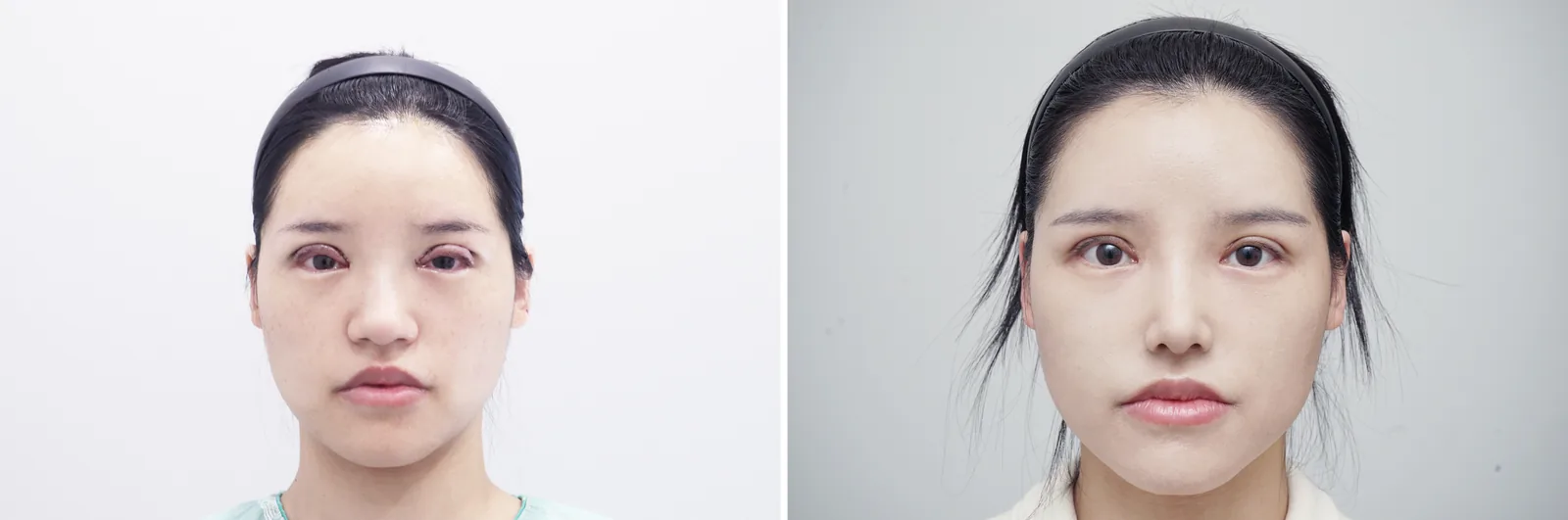
Example case (bulbous tip, long nose): front view before surgery (left) and 2 weeks after (right). Procedures: silicone bridge implant, tip with septal and donor rib cartilage, bulbous tip refinement, long-nose correction, osteotomy. Results vary between individuals; swelling, bruising, asymmetry and infection are possible risks. Shared with the patient's consent.
| What to compare | Ask any clinic | TIANA's answer |
|---|---|---|
| Focus | How much of your work looks like my nose? | Nose and revision surgery only |
| Surgeon | Who consults, operates and handles aftercare? | The same surgeon, 1:1 |
| Imaging | What do you use to plan the surgery? | 3D-CT before surgery |
| Materials | Which implant or graft, and why for me? | Silicone implant or own tissue, chosen for your nose |
| Stay | How many nights do I need? | About 7 to 14 nights, at least 7 |
| Going home | What do I carry with me? | Referral letter and surgery certificate if you fly on day 7 |
Materials deserve an extra minute. Silicone is widely used in Asia and is quick to place, but the Asian rhinoplasty review reports higher complication risks than with your own cartilage, including infection and extrusion. Your own cartilage carries the lowest infection risk in that review, with a limited supply and, for rib, a second surgical site. Ask why a surgeon is choosing one over the other for your skin.
For more on checking the person behind the clinic, see these questions for choosing a rhinoplasty surgeon in Korea.
Wondering which type your nose is?
Share your profile and front photos — the surgeon will tell you which procedures your nose would actually need. No cost, no obligation.
Ask which procedure fits meRecovery and follow-up: what changes when you fly
Staying home gives you something no overseas clinic can match: your surgeon is a short trip away for every check. Korea and Turkey both trade that for a fixed window on the ground, so the plan for the days after you leave matters more than which country you pick. Istanbul will be the shorter flight from much of Europe, and Seoul from much of Asia, so check your own route.
In Seoul, I ask you to plan on about 7 to 14 nights. The splint and outer stitches come off around day 7 and the inner stitches around day 14, and the timing varies and is confirmed at surgery.
The US Centers for Disease Control and Prevention warns that flying after surgery can raise the risk of blood clots and advises delaying air travel for 10 to 14 days after major surgeries. Ask any surgeon how that applies to your operation and your flight length. The CDC also advises getting copies of your records before you leave and making sure follow-up care is available at home.
Swelling won't be finished when you board. The American Society of Plastic Surgeons says initial swelling subsides within a few weeks, while the contour may take up to a year to fully refine. So the nose you judge on the flight home is an early draft, and thick skin may stretch that timeline.
Say you have thick skin, a wide tip and a low bridge, and you can stay nine nights. I'd reason through the bridge and tip as one design, and I'd be careful about narrowing the bridge too far, because the African American rhinoplasty review warns that over-narrowing can look out of keeping with the rest of the face. I'd also tell you the tip may look soft for a long time. You'd then need a plan for the inner stitches after day 7 and a doctor at home who has agreed to see you.
To test that plan, send your flight dates and a side photo taken in daylight on WhatsApp, and ask which part of your surgery would still be unfinished on the day you fly.
What do reviews get right about Korea and Turkey?
Three claims keep appearing in forum threads, and you've probably read them already.
"Korean surgeons give everyone a Korean nose, and Turkish surgeons give everyone a Western one." This is too sweeping to be useful. Design comes from the individual surgeon, your anatomy and the reference photos you bring. I choose by bone structure and concern, and I don't follow trends. These myths about ethnic rhinoplasty doctors in Korea go further into this one.
"The swelling was gone by the time I flew home." Visible swelling can drop quickly, so the poster may be telling the truth about the mirror. It says little about the settled shape, given the timeline above.
"My surgeon at home was just being timid." Sometimes that's so. Sometimes the limit is real, and another surgeon's yes only means a different risk tolerance. Ask each surgeon to name the limit in anatomical terms. It also helps to know how clinic listing sites and surgeon reviews can mislead, since a rating can't tell you how someone will treat your skin type.
What decides the cost of your rhinoplasty?
I won't compare what the two countries charge. Figures go out of date, and a number quoted for someone else's nose won't tell you much about yours. These are the things that move the cost for your case:
- Scope: tip only, or bridge and tip together, with or without hump reduction and osteotomy.
- Material: a silicone implant, or your own ear, septal or rib cartilage, dermis or fascia.
- First surgery or revision: rebuilding after earlier surgery is a different operation, especially with contracture.
- Your trip: the nights you need in Seoul, and any follow-up visits once you're home.
A plan that looks low can end up costing more money and more trips if it later needs correcting, so check what a quote leaves out. These questions to ask about an ethnic rhinoplasty quote will help you line quotes up. To get a figure for your own nose, ask on WhatsApp what it would cost for your case, with your photos attached.
What can go wrong, and who should wait?
Risks and side effects to know
Swelling, bruising and a blocked feeling in the nose are common in the first weeks. Less often, people have infection, bleeding, scarring, breathing trouble, asymmetry or a problem with an implant, such as extrusion. Some people need a revision. Results vary between individuals, and thick skin can limit how much definition shows.
As general medical advice, you should postpone surgery if you have an active infection or inflammation on or in the nose, are pregnant or breastfeeding, or have a bleeding problem or take blood-thinning medication that hasn't been reviewed. If your nose is still growing or you want to look like a different person, I'd also advise waiting. Which plan is safe for you is decided at the examination.
If something feels wrong after you fly home, contact your surgeon and see a local doctor with your records. Get urgent care for fever with spreading redness, heavy bleeding, worsening pain, trouble breathing, chest pain or a swollen leg. Don't wait for a reply in those cases.
If you want to see how real noses changed and how many months after surgery each photo was taken, browse TIANA's rhinoplasty case gallery before your consultation.
What to send first
Answer one thing for yourself before comparing further: what you want to keep. Then message on WhatsApp with five photos (front, 45-degree and side), or start with one photo if that's easier, and ask, "What would it cost for my case, and what would you leave alone?" The reply comes in English, and you can ask before booking anything. When you come to Seoul, I'll examine you and recommend the plan that fits your nose.
Frequently Asked Questions
Q1Will surgery in Korea make my nose look Korean?
It shouldn't if the plan starts from your own anatomy and face. I value a nose that blends in with your face over dramatic change, so tell your surgeon which features you want to keep and bring reference photos if you have them.
Q2Can TIANA correct a rhinoplasty done in Turkey?
TIANA performs revision rhinoplasty after surgery elsewhere, including difficult cases such as contracture. Bring any records you have from the earlier surgery, since they describe what was done and which materials were used.
Q3How many nights do I need in Seoul?
Plan on about 7 to 14 nights, with at least 7. The splint and outer stitches come off around day 7 and the inner stitches around day 14, though the timing varies and is confirmed at surgery.
Q4What if I fly home on day 7?
You get a referral letter and surgery certificate to take with you. It also helps to find a doctor at home before you travel, so the inner stitches and any concerns already have somewhere to go.
Q5Can I consult in English?
Yes. You can message in English on WhatsApp and the reply comes in English. Keep a written list of your questions so that nothing gets lost once you're on a call or in the exam room.
Thank you for reading to the end.
Send 5 photos (front, 45-degree and side) on WhatsApp for a free photo consultation. We reply in English with the likely scope of surgery and how the estimate is worked out.
Send my photos on WhatsAppThis article is general information about elective cosmetic surgery and is not a diagnosis. Results and recovery vary between individuals. Before-and-after photos are published with patient consent; surgery carries risks such as swelling and bruising and requires downtime. Final procedures and fees are decided after examination.