How to Sleep After Rhinoplasty: A Flight Guide | TIANA
Wondering how to sleep after rhinoplasty when your bed for the next week is in a Seoul hotel, the one after that is an airline seat, and nobody will be around at 3 a.m. to tell you whether the pressure in your nose is normal?
30-second check
Check which procedure fits your nose
Pick what applies. Related procedures appear, and you can send your answers straight to WhatsApp. No name or email needed.
Pick at least one concern to see the related procedures.
Send this on WhatsAppWhatsApp opens with your answers already typed. Then send 5 photos (front, both 45-degree angles, both sides) and, if you have one, a photo of the nose you would like.
Not opening? Copy the message and open WhatsAppSleep on your back with your head raised above your heart, on two or three firm pillows or a foam wedge, and keep everything off the splint. What keeps most people awake in the first nights is a blocked nose and a dry mouth, more than pain, and you can prepare for that before surgery day.
Hello, I'm Dr. Choi Hang-seok, Head Surgeon at Tiana Plastic Surgery in Seoul.
I operate only on noses, and I look after you one to one from the consultation through surgery and aftercare, so a question about a bad night goes back to the surgeon who knows what was done inside your nose. I also manage the anaesthesia myself on surgery day.
The recovery guides for patients travelling to Korea cover how to sleep after rhinoplasty and the rest of the trip in more detail.
Mouth breathing is what wakes you up
For the first nights your nose is swollen on the inside, and there may be packing or an internal splint. The American Society of Plastic Surgeons describes a splint or packing inside the nose and a splint or bandages on the outside. Air goes in and out through your mouth, the throat dries within an hour or two, and that dry throat is what wakes most people.
You can't shrink the swelling overnight, but you can deal with the dryness. Set the room up before you leave for the clinic on surgery day, because on the first evening you won't want to go shopping with a splint on your face:
- a small humidifier near the bed (ask the hotel whether they can lend one, or buy one the day you land)
- water and lip balm on the bedside table, on the side you can reach without turning your head
- gauze or tissues for the pink drip from the nostrils, which is expected for the first day or two
- the room kept a little cool, since a warm room makes a swollen face feel tighter
One more thing worth doing at home, weeks before you fly: rehearse. If you've slept on your side all your life, spend a few nights on your back with a wedge before surgery. The first night after rhinoplasty is a bad time to learn a new sleeping position.
What position should you sleep in, and for how long?
On your back, with your head higher than your heart. The NHS advises propping your head up with pillows for a couple of days when resting, to reduce swelling.
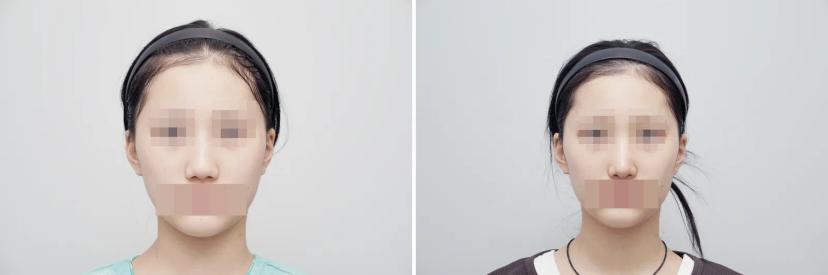
Example case (implant-free rhinoplasty, hump nose): front view before surgery (left) and 2 weeks after (right). Procedures: implant-free bridge with septal cartilage, tip with septal and donor rib cartilage, hump reduction, bulbous tip refinement, osteotomy, crooked-nose correction. Results vary between individuals; swelling, bruising, asymmetry and infection are possible risks. Shared with the patient's consent; eyes and mouth are pixelated for privacy.
The angle that works is roughly a hospital bed raised for reading: two or three firm pillows, or a foam wedge with one pillow over it. Lying flat lets fluid settle into the face overnight. Side or stomach sleeping puts the weight of your head on a nose that was reshaped days ago.
The trouble is that people roll in their sleep. Two things help. A U-shaped travel pillow worn around the neck stops your head from tipping sideways, and a pillow tucked against each side of your body stops the rest of you. If you have a reclining chair at home, the nights after you land are what it's for.
The American Society of Plastic Surgeons also notes that swelling may come and go and worsen in the morning during the first year. So a puffy face at 7 a.m. that settles by lunch is the expected pattern, and keeping your head up at night takes some of the edge off it.
| Nights | What your nose is doing | How to sleep |
|---|---|---|
| The first nights | Swelling builds, nose blocked, some oozing | On your back, head up, gauze under the nostrils, humidifier on |
| After that, until the splint comes off | Swelling starts to ease, still mouth breathing at times | Same position, neck pillow on to stop rolling |
| Splint removal to inner stitches (around day 14) | Nose uncovered, tip swollen and tender | Still on your back with head up, nothing resting on the bridge |
When you can go back to your side depends on what was done, and it's a question worth asking before the splint comes off. A nose where only the tip was refined usually tolerates a cheek on the pillow sooner than one where the bones were moved.
Wondering which type your nose is?
Share your front, 45-degree and side photos — the surgeon will tell you which procedures your nose would actually need. No cost, no obligation.
Ask which procedure fits meCan you sleep on the flight home?
Yes, upright, which is close to the position you've been sleeping in anyway. Book that appointment before you fly to Seoul, not after you land.
On the plane, wear the neck pillow and keep your head against the headrest rather than the window wall, where a bump on landing finds your nose. Cabin air is dry, so the mouth-breathing problem comes back: water, lip balm, and a saline spray only if one was given to you after surgery. An eye mask is fine if the strap sits above the bridge and nothing presses on the nose. Don't take a sleeping tablet your surgeon hasn't approved, and not with alcohol.
Say you're 33, flying from Seoul to Toronto on day 8 on an overnight flight, and you've slept on your side your whole life. I'd want you to have practiced back sleeping before the trip, to pick a window seat so nobody climbs past your face, and to keep the neck pillow on even when you think you're only resting your eyes. The first night itself, from the recovery room to the hotel room, is a separate story worth reading before you book the hotel.
Night signs that mean you should message the clinic
Some things are expected: a pink drip from the nostrils for the first day or two, a blocked feeling, a morning face puffier than the evening one, a tip that feels numb or stiff. These are not:
Redness and swelling: what to watch for
- bleeding that keeps soaking through gauze after you've sat upright, leaned slightly forward and kept still for 15 minutes
- fever, or redness and heat spreading across the nose or cheeks
- pain that gets worse after it had been getting better, especially on one side
- a knock to the nose in your sleep, followed by a new bend, click or swelling
- breathing that gets worse day by day after the first week
Risks and swelling: what to watch for
The NHS advice is to contact the clinic where you had the operation as soon as possible if you have severe pain or any unexpected symptoms. Heavy bleeding that won't stop is a local emergency first; message the clinic once you're being looked after. The wider list of rhinoplasty risks and who should wait covers what can happen beyond the first weeks. How quickly swelling settles varies from person to person, so a slow week on its own is not a red flag.
The habit I'd ask of every traveler: take a front and a side photo every morning, same spot by the window, same light. When something feels wrong at 2 a.m., you'll have a picture of what yesterday looked like, and that comparison says more than any description.
If you want to see how real noses changed and how many months after surgery each photo was taken, browse TIANA's rhinoplasty case gallery before your consultation.
Does it matter which part of your nose was changed?
For sleep, it does. When a hump is removed or the bones are moved to narrow the bridge, bruising around the eyes is more likely, and head elevation matters most in the first few nights. When the work is on the tip, the tip is what stays swollen and sensitive to pressure the longest; the reason the nose tip takes longest to settle is mostly about the thickness of the skin there.
The procedures I do, from tip refinement to hump and bone work, are listed on Tiana's English rhinoplasty page. If this is a revision, the sleeping rules are the same. And if something looks off a few months in, don't judge it on your morning face; there is a reason to know how long to wait before a revision is even considered.
Doctor's note
A design that needs bone work also means the first nights propped up with bruising around the eyes, and I'd rather you know that before you book than discover it in the hotel. A stretch of stiff, upright sleep is a small price for a nose that was never leaned on. If you can only change one habit, keep your head up and your face off the pillow until the splint is off.
Before you book flights, send a front and a side photo of your nose on WhatsApp, along with how you normally sleep and the date you'd have to fly home, and ask what kind of work your nose would likely need and what that means for those first nights. You can write in English, and you can ask before booking anything.
Cases close to this concern
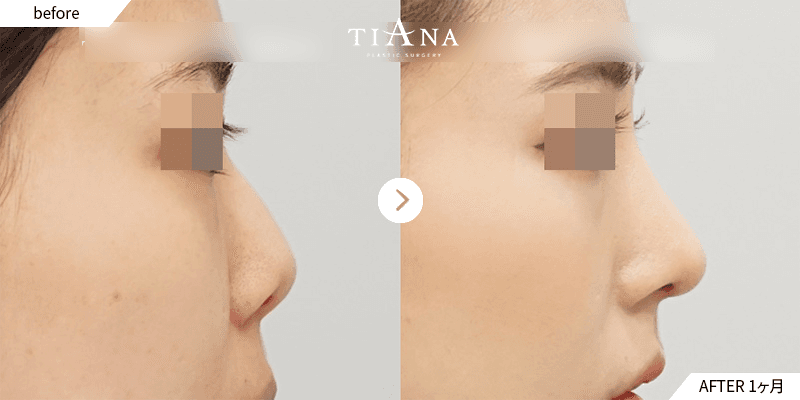
Drag the handle to compare before and after
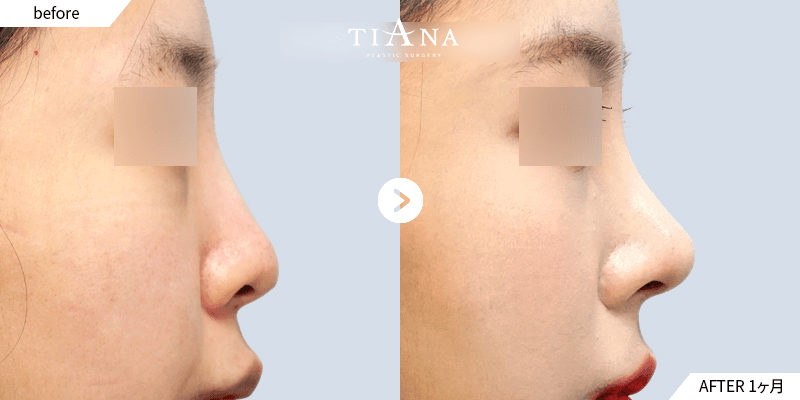
TIANA case, shared with the patient's consent. Results vary.
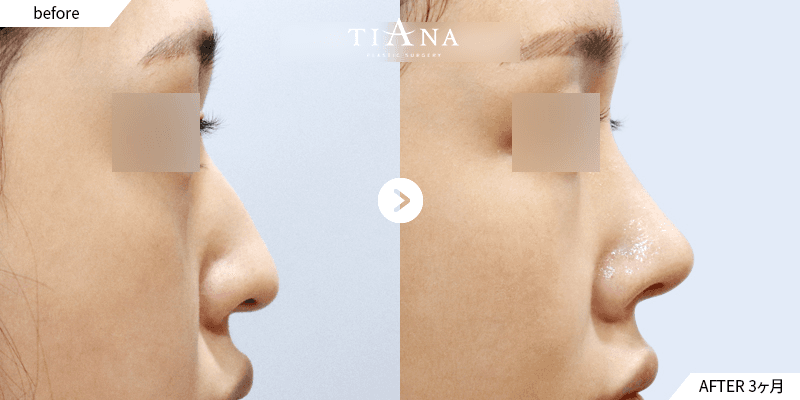
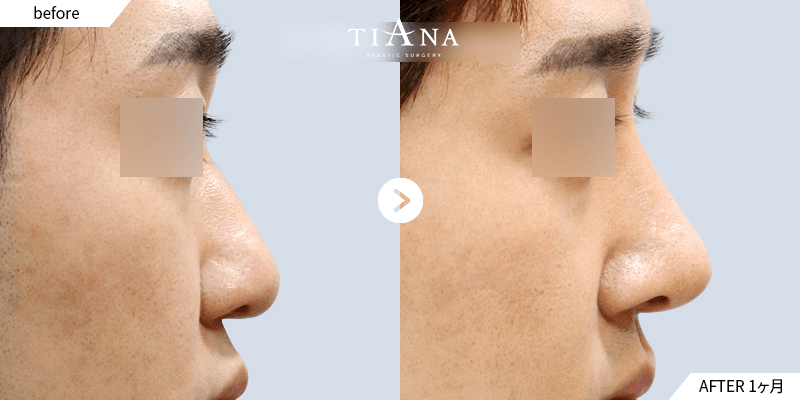
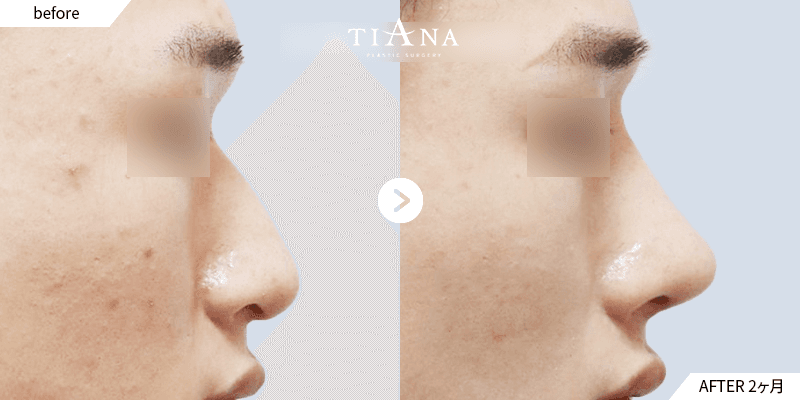
Before and after at TIANA (shared with patient consent) 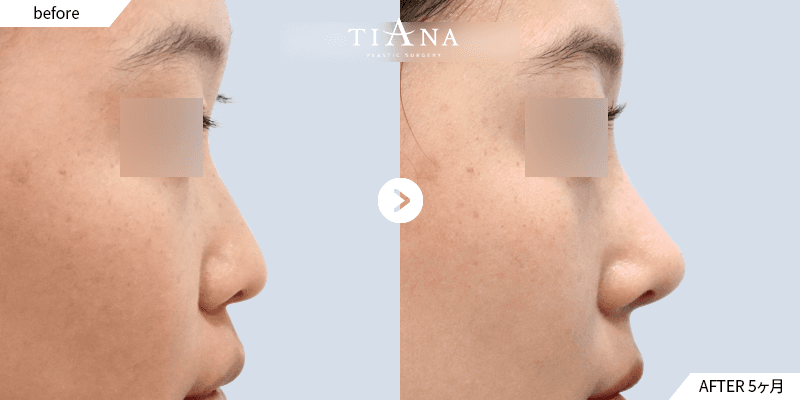
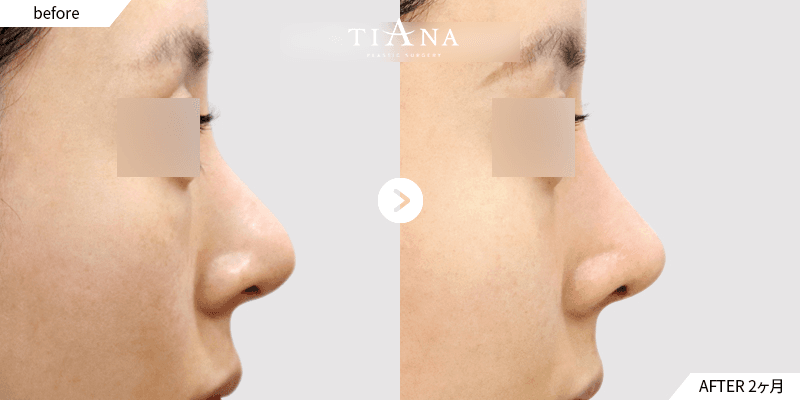
Before and after at TIANA (shared with patient consent) 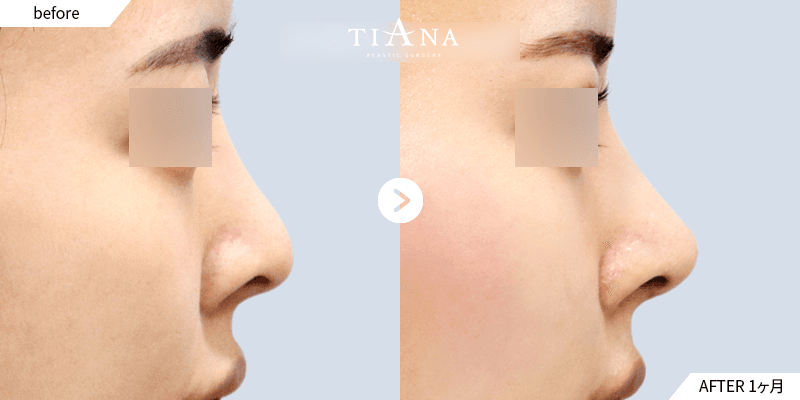
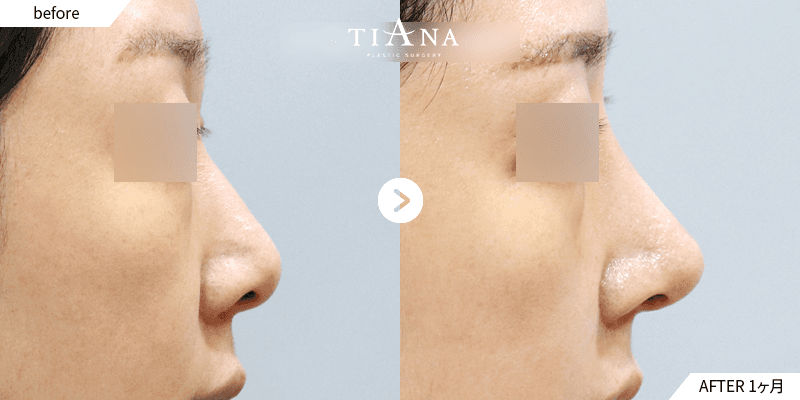
Before and after at TIANA (shared with patient consent)
* Results vary between individuals. Photos show TIANA patients.
See more cases →Korean patients talk about their surgery
Videos from Korean patients who had surgery at TIANA (Korean, YouTube). Patients from Japan, Taiwan and English-speaking countries also contact us every month on LINE and WhatsApp.


Read TIANA reviews on Google Maps
Start from your concern
Bridge concerns and what is considered
- Current shape
- Design direction (illustration)
Illustration only, not a result and not to scale.
What to consider
Silicone implant or own tissue
Low, flat bridge
From first message to flying home
Photo consult on WhatsApp
Send 5 photos and a photo of the nose you would like. The free reply in English explains the likely scope and how the estimate is worked out.
Video consult (optional)
On Google Meet you talk with the surgeon first, then the consultation manager explains the estimate. Free, with an interpreter.
Visit and 3D-CT
A 3D-CT scan and the surgeon's examination confirm the final plan and fee. An interpreter joins the consultation.
Surgery
The surgeon who consulted you performs the surgery and also manages the anesthesia.
Day 7 and day 14
The splint and outer stitches come off around day 7, the inner stitches around day 14. After you fly home, send progress photos on WhatsApp.
FROM THE SURGEON
A word from the surgeon
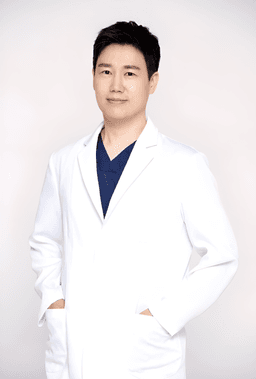
Bone, cartilage and skin thickness differ a lot between people, so the same operation name can need different steps.
Because I only treat noses, I can tell you at the consultation not just how far your nose can change, but where it is better not to push further.
Frequently asked questions
Q1When can I sleep on my side after rhinoplasty?
Not before the splint is off, and many surgeons ask for back sleeping for at least the first couple of weeks. Tip-only work usually allows it sooner than surgery where the bones were moved. Ask at the splint-removal visit for the work you had.
Q2I snore or use a CPAP machine. What should I tell the surgeon?
Say so at the consultation, before surgery is booked. A CPAP mask rests on or around the nose and pushes air through it, so its use in the first weeks has to be planned with your surgeon. Swelling also makes snoring worse for a while, which is expected.
Q3Can I take something to help me sleep?
Only what your surgeon has prescribed or approved. Some common over-the-counter pain relievers, such as aspirin and ibuprofen, can increase bleeding, and sleep aids combined with alcohol slow your breathing at a time when your nose is already blocked.
Q4Should I share a bed with a partner, a child or a pet?
For the first week, sleep alone if you can. The knock that worries surgeons most is rarely a fall; it's an elbow, a small hand or a paw landing on the splint in the dark.
Q5Is a humidifier really necessary?
It isn't required, but it's the easiest fix for the dry mouth that wakes people. If you can't get one, a warm shower before bed and a glass of water within reach help. Don't hold your face over steam.
Thank you for reading to the end.
Send 5 photos (front, 45-degree and side) on WhatsApp for a free photo consultation. We reply in English with the likely scope of surgery and how the estimate is worked out.
Send my photos on WhatsAppThis article is general information about elective cosmetic surgery and is not a diagnosis. Results and recovery vary between individuals. Before-and-after photos are published with patient consent; surgery carries risks such as swelling and bruising and requires downtime. Final procedures and fees are decided after examination.