Septal Extension Reviews in Korea: What They Miss
Have you read so many Korea septal extension reviews Korea's forums and clinic pages carry that you still can't tell whether a short, upturned tip like yours would come out well, or come out stiff and leaning?
30-second check
Check whether tip plasty alone is enough
Pick what applies. Related procedures appear, and you can send your answers straight to WhatsApp. No name or email needed.
Pick at least one concern to see the related procedures.
Send this on WhatsAppWhatsApp opens with your answers already typed. Then send 5 photos (front, both 45-degree angles, both sides) and, if you have one, a photo of the nose you would like.
Not opening? Copy the message and open WhatsAppAdd your date of birth and surgery history (booking form) →Reviews tell you how a stranger felt in week three. They can't tell you the three things that decide a septal extension: how much septal cartilage you have to borrow from, who plans and operates on your nose, and who removes your inner stitches on day 14 if you fly home on day 7.
Hello, I'm Dr. Choi Hang-seok, Head Surgeon at TIANA Plastic Surgery in Gangnam, Seoul. I'm a plastic surgery specialist in Korea and a member of the Korean Rhinoplasty Society, and I operate only on noses.
For this worry, that means the doctor who consults with you is the one who performs the surgery and checks your recovery. Your nasal structure is assessed on 3D-CT before the final plan is set, and he manages the anesthesia himself. If English isn't comfortable for every detail, an interpreter joins your in-person consultation.
If you'd rather start with your own nose than with twenty more reviews, take five photos in daylight (front, both three-quarter angles, both sides) and send them on WhatsApp with one question: how much tip length can my face carry? You can ask before booking anything.
Why does septal extension get such mixed reviews?
A septal extension graft is a piece of cartilage fixed to the front edge of your septum, the wall between your nostrils. Think of a tent pole under fabric. The tip skin drapes over the graft, so its length and angle set how far the tip projects and how far it points down. Move that pole a few millimeters and the whole profile changes.
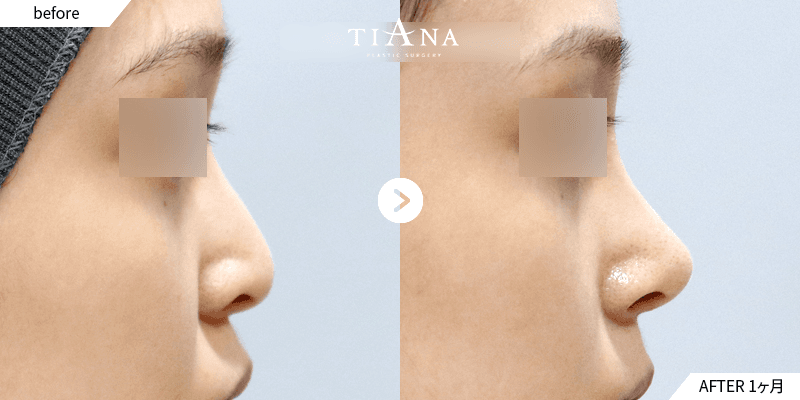
That's why reviews swing so hard. Bone, cartilage and skin thickness differ a lot between people, so the same operation name can need different steps. Someone with plenty of septal cartilage and thin skin goes through a different operation from someone with a small septum and thick tip skin, even though both reviews say septal extension.
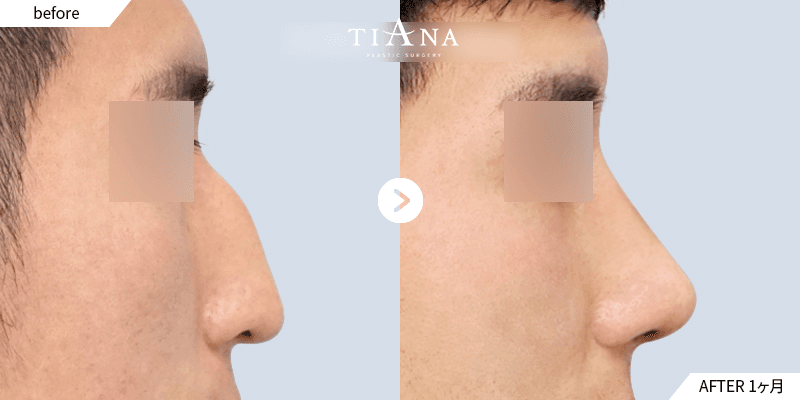
The second reason is timing. A review written in week two describes a swollen tip held by fresh stitches. The tip is the last part of the nose to settle, and the final contour usually keeps refining for many months, up to about a year. So when you open a review, look first for how many weeks after surgery it was written. That single number tells you more than any rating.
If your own concern is a short or upturned nose, I've explained how septal extension corrects an upturned nose in a separate post.
Doctor's note
Rhinoplasty is delicate surgery where a fraction of a millimeter changes a face. With septal extension, the temptation is to push the tip longer or higher than the skin and the face can carry. Because I only treat noses, I can tell you at the consultation not just how far your nose can change, but where it is better not to push further. For most people asking about this graft, the second answer is the more useful one.
Which septal extension reviews from Korea hold up medically?
A few claims come up again and again when people write about this operation. Here is how they line up with what is known about the graft. These are things people commonly post online, not anyone's outcome at my clinic.

Example case (bulbous tip, long nose): front view before surgery (left) and 2 weeks after (right). Procedures: silicone bridge implant, tip with septal and donor rib cartilage, bulbous tip refinement, long-nose correction, osteotomy. Results vary between individuals; swelling, bruising, asymmetry and infection are possible risks. Shared with the patient's consent.
| What reviews often say | What's medically true |
|---|---|
| My tip feels hard and barely moves | Expected. The tip is now anchored to a fixed cartilage post, so it's firmer than before. It often softens somewhat as swelling settles, but it rarely moves as freely as an unoperated tip. |
| The length I saw at one month is what I got | Not yet. Tip swelling can hide the real shape for months, so judge the profile much later. |
| Everyone ends up needing rib cartilage | No. Rib cartilage is mainly used when the septum doesn't have enough, as in some revisions and many contracted noses. |
| My tip drifted to one side months later | It can happen. A graft can bend or shift, so how it's fixed and how straight the septum is both matter. |
| The surgeon was kind and explained everything | Useful, but it tells you about the consultation, not about the graft. |
The first day after surgery is the part reviews describe least accurately; what a Korea rhinoplasty review skips about day one fills that gap.
The cartilage source matters more for your plan than any review. Septal cartilage is usually the first choice when there's enough of it. Ear cartilage, rib cartilage or donor rib cartilage come in when there isn't. A 3D-CT shows the shape of the septum and the nasal passage before surgery, which is exactly what you want to know when a graft has to be borrowed from inside your nose.
Wondering which type your nose is?
Share your front, 45-degree and side photos — the surgeon will tell you which procedures your nose would actually need. No cost, no obligation.
Ask which procedure fits meSix things to check in any clinic before a septal extension
Reviews can't answer these, so ask them directly. It doesn't have to be my clinic you choose, but wherever you end up comparing, get a straight answer to each one.
- Is the surgeon a plastic surgery specialist, and are their name and society memberships listed on the clinic's own website, where you can read them yourself?
- Is the doctor who examines you the same doctor who operates and checks your recovery?
- Is your septum imaged before the graft is planned, so the cartilage supply is known before the day of surgery?
- If the septum isn't enough, where would the extra cartilage come from, and is that already in the quote?
- Who gives the anesthesia? Ask whether Dr. Choi manages the anesthesia himself.
- If you fly home on day 7, who removes the inner stitches on day 14, and what paperwork do you leave with?
My profile and memberships are on TIANA's English homepage if you want to check item one for yourself. For item six, my answer is this: if you leave on day 7, you go home with a referral letter and a surgery certificate so a doctor near you can remove the inner stitches.
What decides the cost of your septal extension
If you're fitting this into limited leave and a set budget, five things move the quote. First, whether it's tip work alone or a full rhinoplasty that includes the bridge. Second, where the cartilage comes from: your septum, your ear, or rib or donor rib cartilage. Third, whether it's a first operation or a revision. Fourth, how much cartilage and how thick the skin you actually have. Fifth, how many nights you stay in Seoul.
A plan that looks lower on paper can end up costing more money and another flight if it needs revising. For the figure on your own nose, send your five photos on WhatsApp and ask what it would cost for your case. The deposit and the way you pay are settled after the consultation, so put any questions about them in that same message.
Tip stiffness, a shifted graft, and when revision comes up
In the first weeks, expect swelling and bruising around the nose and sometimes the eyes, a blocked feeling while the packing is in and for a while after, and a tip that feels firm and a little numb. The packing comes out in the days after surgery, the cast and outer stitches on day 7, the inner stitches on day 14. Swelling fades at its own pace for each person, which is why I won't give you a fixed number of days.
Infection and risks: what to watch for
Less common, but worth knowing by name: a graft that warps or shifts so the tip leans; a tip that ends up too long or too projected for the face; a narrower airway if the graft crowds the nasal passage; infection; and visible irregularity under thin skin. I've gone through who a septal extension graft suits and its risks in more depth elsewhere.
As general medical advice, it's usually wiser to wait if you've had nose surgery within roughly the last year, if you're pregnant or breastfeeding, if you have an active sinus or skin infection near the nose, if you take blood thinners that can't safely be paused, or if you smoke and can't stop around the operation. If a first operation already left your tip short or tilted, whether it's too soon for a revision is a separate question with its own timing.
Once you're home, a tip that turns red, hot or increasingly painful, a fever, or bleeding that won't stop means seeing a doctor near you the same day, with your surgery certificate in hand. For slower worries, like a tip that seems to lean at month two, take photos in the same light from the same angles and send them on WhatsApp with your surgery date.
If a leaning or over-long tip is the risk you're weighing most, a side photo in daylight with your head level shows tip length and angle better than any other picture. Send it with your planned travel dates and ask whether your septum is likely to be enough or whether a second cartilage source might be needed.
How would 7 to 14 nights in Seoul work for you?
Say you're 26, in your first job in Vancouver, with twelve days of leave over New Year and a short nose that tilts up. Day 1 is the visit: consultation, 3D-CT where needed, the design and fee confirmed, then surgery once the plan is set. The following days are check-ups, when the packing comes out, swelling is checked, and you get medication and aftercare instructions. Day 7, the cast and outer stitches come off.
With twelve days, you would stay for the cast removal and leave before day 14, taking the referral letter and surgery certificate home for the inner stitches. One calendar trap catches people: the clinic is open weekdays 10:00 to 19:00 and Saturdays 10:00 to 16:00, and closed on Sundays and Korean public holidays, New Year's Day included. Count forward from your surgery date before you book the flight, so day 7 doesn't fall on a closed day.
Keep sightseeing for after day 7. With a cast on and the packing only just out, most people find the hotel room is where they want to be.
If you want to see how real noses changed and how many months after surgery each photo was taken, browse TIANA's rhinoplasty case gallery before your consultation.
Where I stand on septal extension
My view is simple. A septal extension should make the tip fit your face, not make it as long as the nose in a reference photo. I compare the reference photo you bring with your anatomy and set only the range you can reach without strain. I'd rather lengthen a little less and leave you with a tip that looks as if it was always yours.
None of this has to be decided this month. The reviews will still be there, and your nose will be the same nose when you're ready.
What shapes your plan in Seoul is how much septal cartilage the 3D-CT shows and how thick the skin over your tip is. When you want to move, send your five daylight photos, a reference photo if you have one, and your travel dates on WhatsApp, and ask: how much length can my tip carry, and is my septum likely to be enough?
— Dr. Choi Hang-seok, Head Surgeon
Cases close to this concern
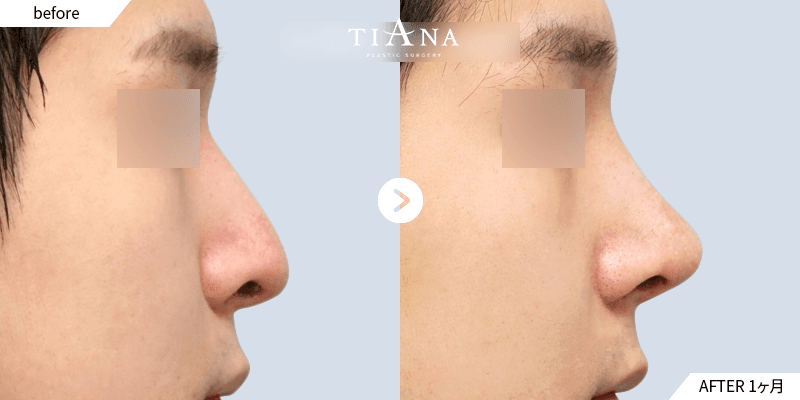
Drag the handle to compare before and after
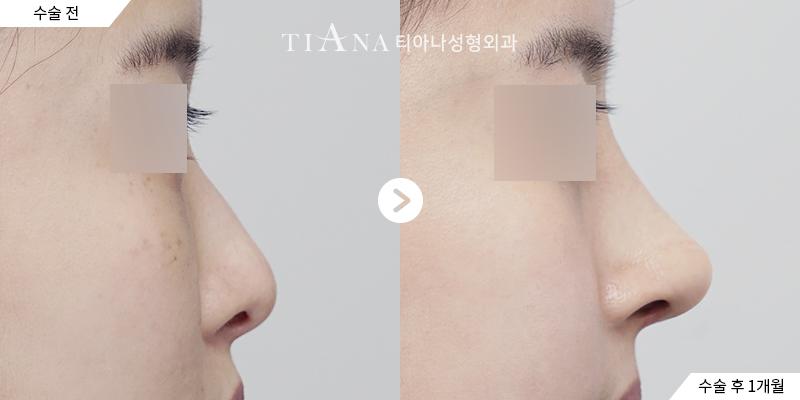
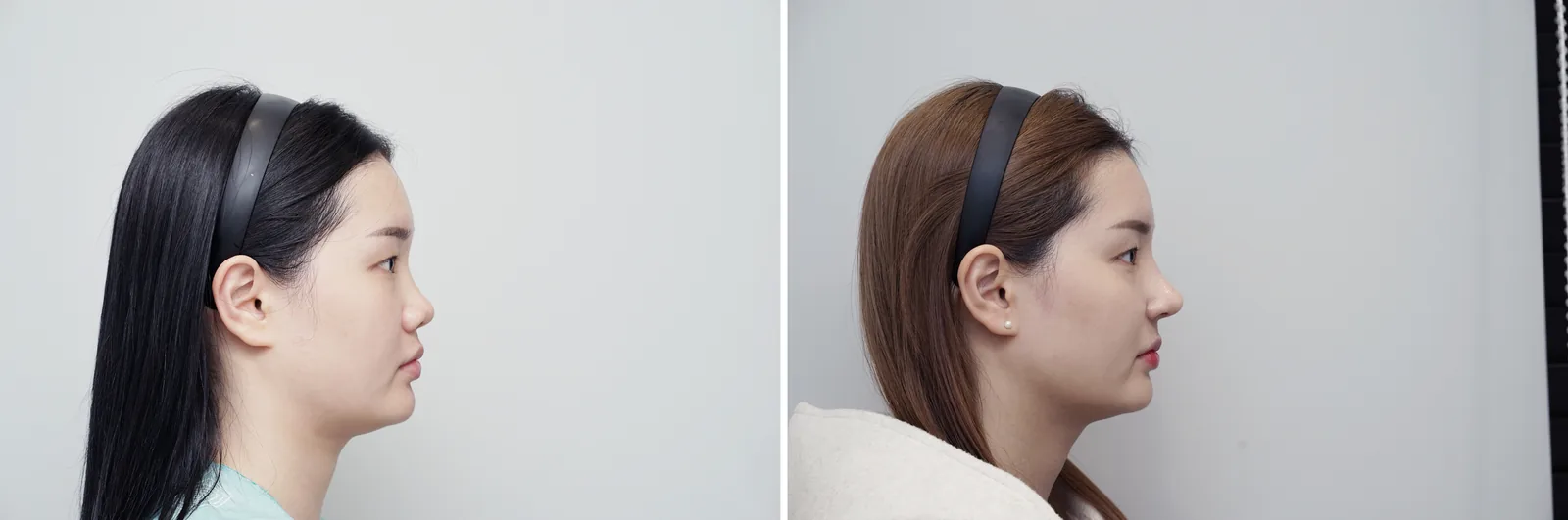
TIANA case, shared with the patient's consent. Results vary.
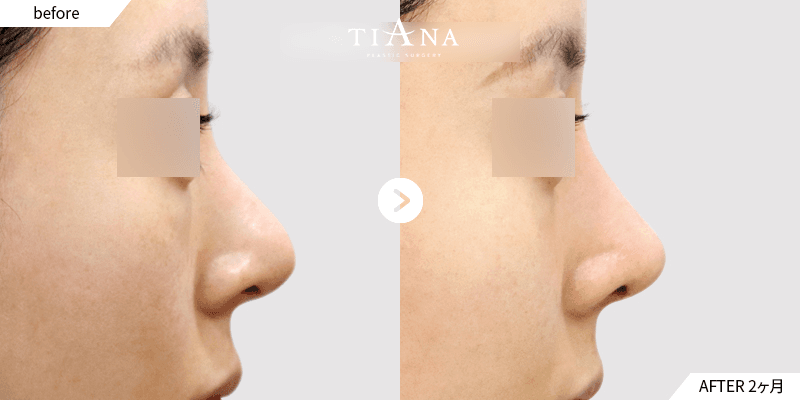
Before and after at TIANA (shared with patient consent) 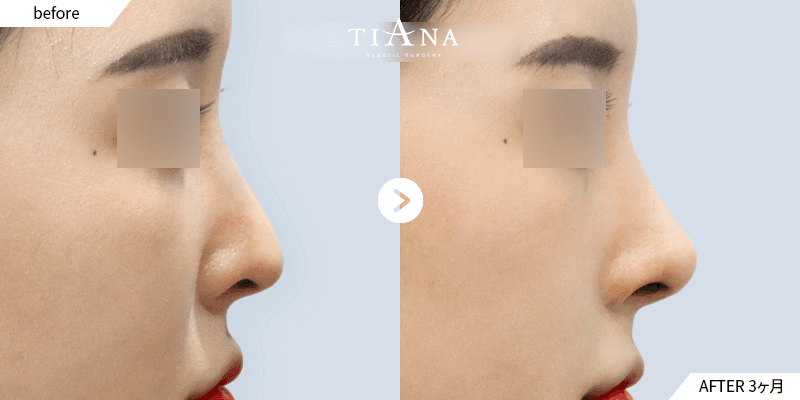
Before and after at TIANA (shared with patient consent) 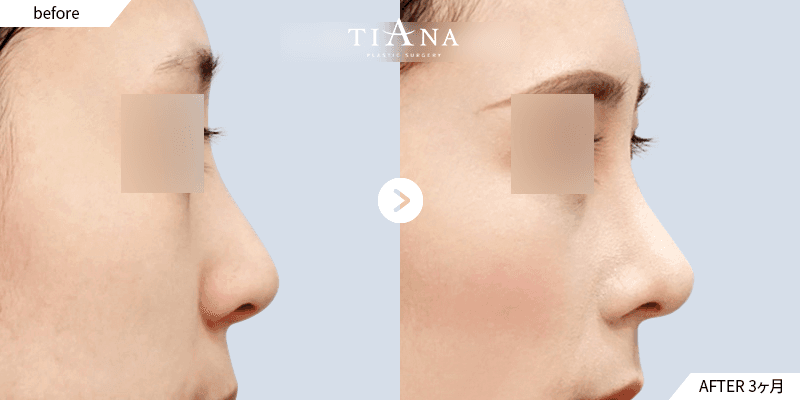
Before and after at TIANA (shared with patient consent)
* Results vary between individuals. Photos show TIANA patients.
See more cases →Korean patients talk about their surgery
Videos from Korean patients who had surgery at TIANA (Korean, YouTube). Patients from Japan, Taiwan and English-speaking countries also contact us every month on LINE and WhatsApp.


Start from your concern
Tip concerns and what is considered
- Current shape
- Design direction (illustration)
Illustration only, not a result and not to scale.
What to consider
Tip cartilage reshaping
Round, wide tip
From first message to flying home
Photo consult on WhatsApp
Send 5 photos and a photo of the nose you would like. The free reply in English explains the likely scope and how the estimate is worked out.
Video consult (optional)
On Google Meet you talk with the surgeon first, then the consultation manager explains the estimate. Free, with an interpreter.
Visit and 3D-CT
A 3D-CT scan and the surgeon's examination confirm the final plan and fee. An interpreter joins the consultation.
Surgery
The surgeon who consulted you performs the surgery and also manages the anesthesia.
Day 7 and day 14
The splint and outer stitches come off around day 7, the inner stitches around day 14. After you fly home, send progress photos on WhatsApp.
FROM THE SURGEON
A word from the surgeon

Bone, cartilage and skin thickness differ a lot between people, so the same operation name can need different steps.
Because I only treat noses, I can tell you at the consultation not just how far your nose can change, but where it is better not to push further.
Frequently asked questions
Q1When is it fair to judge a septal extension result?
Not at one month. The tip holds swelling longest, and the contour usually keeps refining for many months, up to about a year. If you want to track it, take photos at three, six and twelve months in the same daylight, from the same five angles, and compare those rather than mirror checks.
Q2Will I still breathe normally after a septal extension?
For most people, yes. Because the graft is attached to the septum, it can narrow the airway if it's placed off-center or the septum is already bent. That's why the septum's straightness and the nasal passage are checked on imaging beforehand; where breathing is part of the problem, functional rhinoplasty is a separate option on our menu.
Q3Can a septal extension be done without a silicone implant?
Yes. The extension itself is cartilage, not an implant. The bridge is a separate decision: some people need height there and some don't, and tip work without an implant is one of the options we offer.
Q4What should I send if I've already had nose surgery elsewhere?
Any operative notes or discharge papers you still have, the date of the surgery, what material was used if you know it, and a photo of your nose from before that first operation. In a revision, these show how much cartilage may already have been used, which changes where a new graft could come from.
Thank you for reading to the end.
Send 5 photos (front, 45-degree and side) on WhatsApp for a free photo consultation. We reply in English with the likely scope of surgery and how the estimate is worked out.
Send my photos on WhatsAppThis article is general information about elective cosmetic surgery and is not a diagnosis. Results and recovery vary between individuals. Before-and-after photos are published with patient consent; surgery carries risks such as swelling and bruising and requires downtime. Final procedures and fees are decided after examination.