Deviated Septum Surgery in Korea: Who Needs It
Does one side of your nose always feel blocked, or does your nose look slightly tilted in photos? Are you wondering whether deviated septum surgery in Korea could fix your breathing, your shape, or both?
By the end of this guide, your questions about rhinoplasty should turn into a clear next step.
Send 5 photos (front, 45-degree and side) on WhatsApp and we will reply in English with a free first assessment: the likely scope of surgery and how the estimate is worked out.
Send my photos on WhatsAppRead this before you book anything. Breathing problems and shape problems overlap, but they are not always fixed by the same surgery or the same doctor.
By the end you'll know what functional nose surgery is, how a plastic surgeon and an ENT doctor differ here, who actually needs surgery, and how septum work fits into rhinoplasty.
Hello, I'm Dr. Choi Hang-seok, Head Surgeon at TIANA Plastic Surgery in Gangnam, Seoul.
TIANA performs only rhinoplasty and revision rhinoplasty. I handle each patient one-to-one from consultation through surgery, anesthesia and aftercare. Before surgery, 3D-CT imaging maps your septum, nasal bones and airway.
The short answer: a deviated septum is a bend in the wall that divides the nose. Many people have a mild bend with no symptoms. If your only problem is breathing, an ENT doctor is usually the right first stop. If you also want to change the shape of your nose, the septum can be corrected during rhinoplasty, often in the same operation.
If you're not sure which applies to you, send five photos on WhatsApp (front, both 45-degree angles and both side profiles) and tell us whether breathing, shape or both bother you.
What is functional nose surgery?
Functional nose surgery, sometimes called functional rhinoplasty, aims to improve how air moves through the nose, rather than how the nose looks. The most common target is a deviated septum.
The septum is a wall of cartilage and bone. When it bends to one side, one airway can become narrow. Surgery to straighten it is called septoplasty. People looking into blocked nose surgery usually describe a nose that is always blocked on one side, mouth breathing at night or a feeling that air doesn't pass freely.
I explain functional nose surgery, and how plastic surgery and ENT differ, in my video (the video is in Korean).
Plastic surgeon or ENT doctor?
This is the question I hear most about the septum. The answer depends on what you want to change.
| Your main concern | Usually the first stop | Why |
|---|---|---|
| Breathing only, no interest in changing the shape | ENT doctor | Sinus problems, allergic rhinitis and the inside of the airway are their core field |
| Shape only (a hump, a round tip, a low bridge) | Plastic surgeon | Shape is the goal; the septum is addressed if it affects the result |
| A crooked nose that also feels blocked | Plastic surgeon who handles the septum in rhinoplasty | Straightening the outside often means correcting the septum inside |
| Allergic rhinitis or sinus infections | ENT doctor | These are medical conditions that surgery on the shape doesn't treat |
Doctor's note
I tell patients honestly when their problem belongs to an ENT doctor. If someone comes only because they can't breathe and has no concern about shape, rhinoplasty is not the answer. Where I can help is when the septum affects both how the nose works and how it looks.
Wondering which type your nose is?
Share your front, 45-degree and side photos — the surgeon will tell you which procedures your nose would actually need. No cost, no obligation.
Ask which procedure fits meWho needs deviated septum surgery?
A bent septum on its own is not a reason for surgery. Many adults have one and never notice it.
Surgery is worth discussing when:
- one side of your nose is blocked most of the time, not only when you have a cold
- the blockage affects your sleep or daily life
- your nose looks visibly tilted and the septum is part of the cause
- you are already planning rhinoplasty, and the septum affects the result
It is less likely to help when the blockage comes and goes with allergies or colds, or when the main cause is swelling of the lining inside the nose. In those cases an ENT doctor can tell you what will actually work.
Deviated septum surgery in Korea during rhinoplasty
When rhinoplasty and septum work are done together, the surgeon straightens the septum from the inside while reshaping the outside. This is common in crooked nose correction, where the septum, the nasal bones and the tip cartilage are often all part of the tilt.
The septum is also one of the most common sources of cartilage for supporting the tip. During rhinoplasty, part of the septal cartilage can be used as graft material, which means one surgery, one recovery and one trip to Seoul.
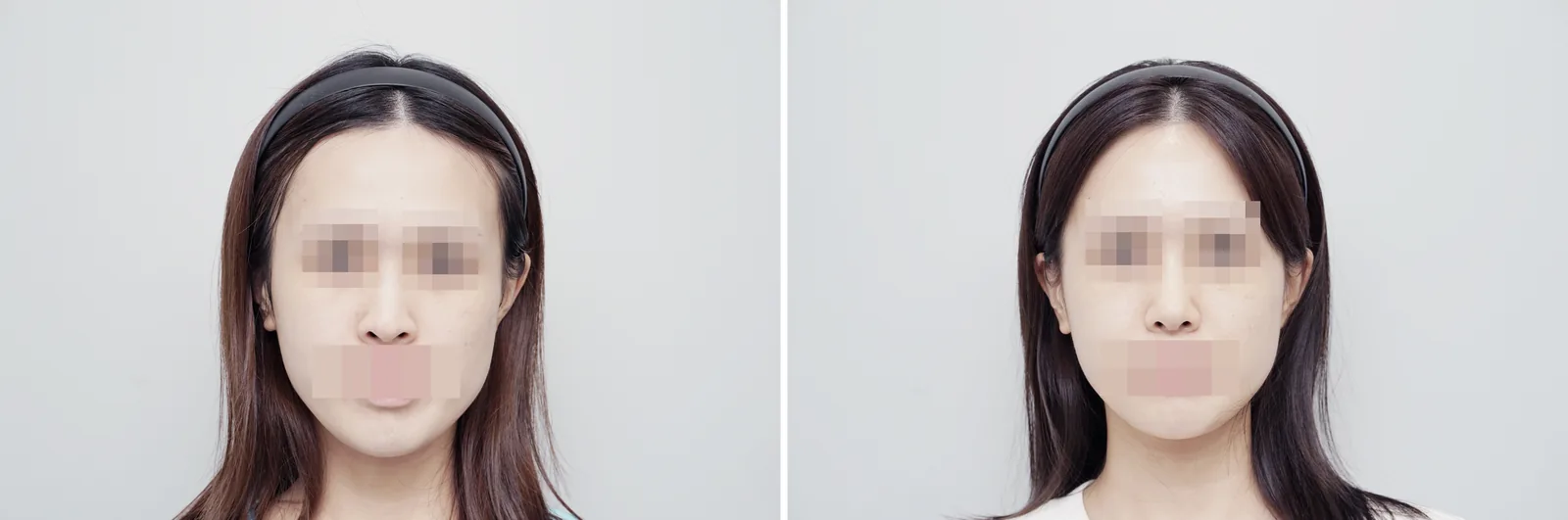
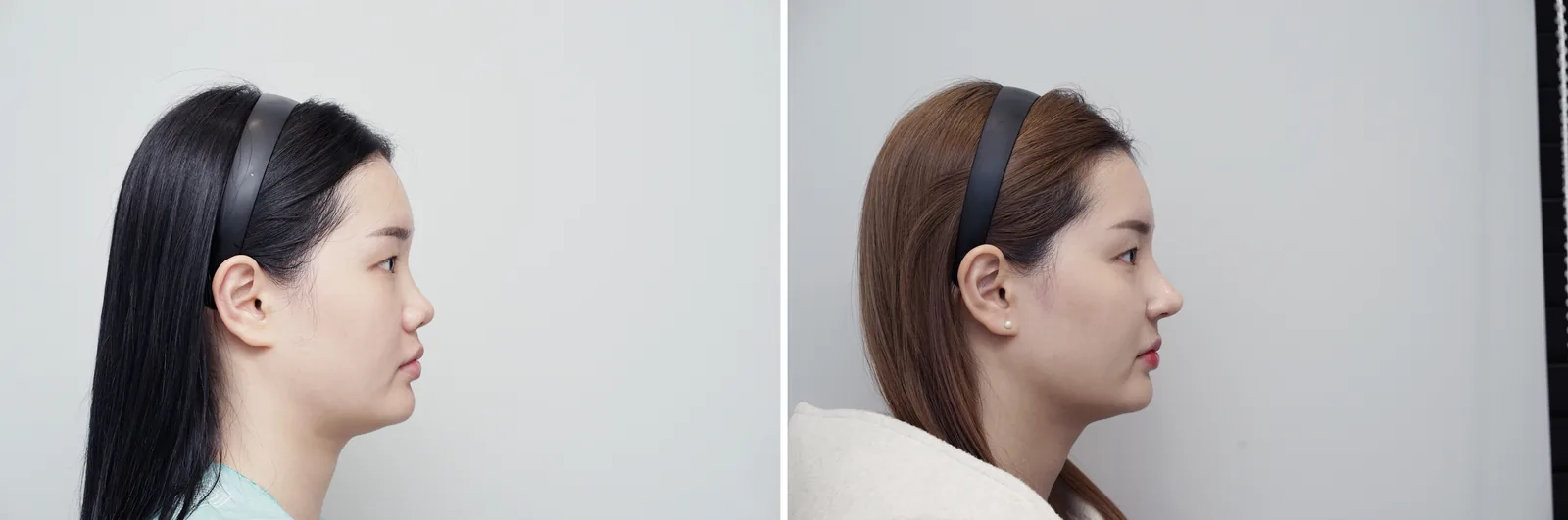
Example case (implant-free rhinoplasty, short nose): front view before surgery (left) and 2 weeks after (right). Procedures: implant-free bridge with septal cartilage, tip with septal and the patient's own rib cartilage, short-nose correction, crooked-nose correction, columella and nasolabial angle adjustment, nostril rim lowering. Results vary between individuals; swelling, bruising, asymmetry and infection are possible risks. Shared with the patient's consent; eyes and mouth are pixelated for privacy.
A nose can look crooked for different reasons, and the plan depends on which part is off. 3D-CT shows the septum, the bones and the airway together, so the plan targets the real cause rather than the part that looks crooked from the outside.
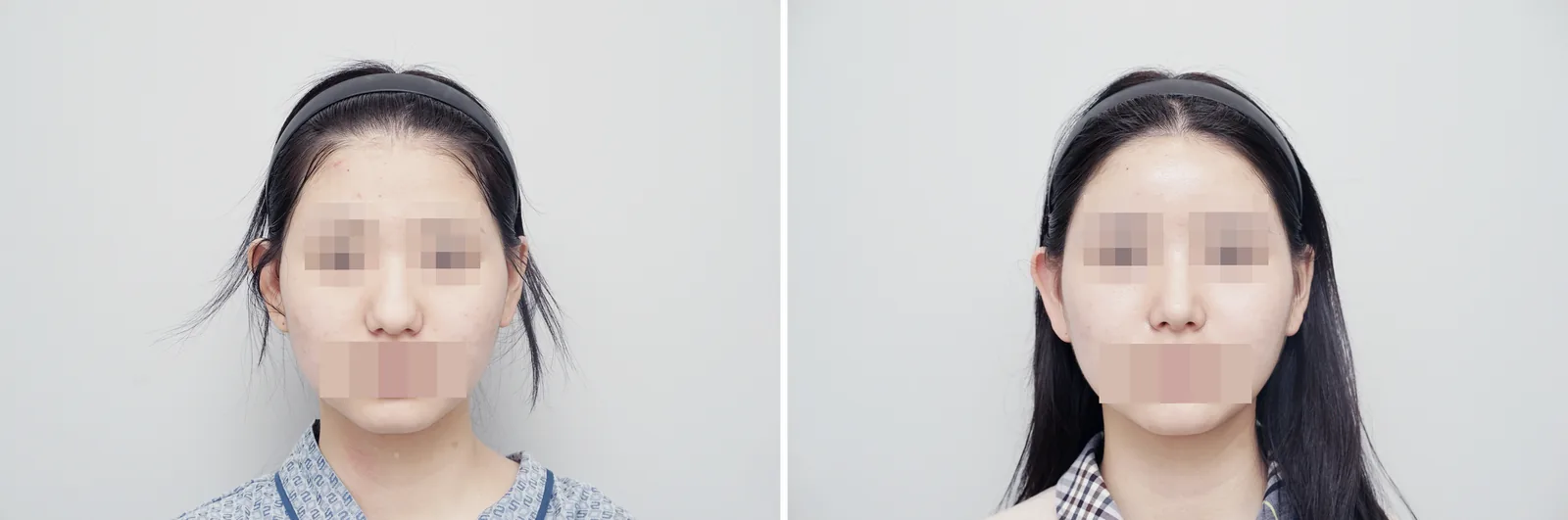
Example case (hump nose, bulbous tip): front view before surgery (left) and 2 weeks after (right). Procedures: silicone bridge implant, tip with septal and donor rib cartilage, hump reduction, bulbous tip refinement, osteotomy, crooked-nose correction. Results vary between individuals; swelling, bruising, asymmetry and infection are possible risks. Shared with the patient's consent; eyes and mouth are pixelated for privacy.
If a hump is part of your concern, when hump nose surgery is worth it explains how a hump and a crooked bridge are planned together. More articles are in all crooked nose and septum articles.
Risks and recovery
After septum work, a blocked feeling is normal at first because of swelling and packing. It usually eases as the swelling settles, but the pace differs between people.
Less common risks include bleeding, infection, a change in how the tip is supported, numbness and the need for revision. The American Society of Plastic Surgeons lists these among rhinoplasty risks. Tell the surgeon about any past nose injury or surgery, and about blood-thinning medicine or supplements (don't stop them on your own; ask your prescribing doctor).
Plan on about 7 to 14 nights in Seoul, and at least 7. The splint and outer stitches usually come off around day 7, and the stitches inside the nose around day 14.
This varies between people and is confirmed at surgery. If you fly home around day 7, you leave with a referral letter and a surgery certificate so a local doctor can remove the inner stitches. More on planning is in how long to stay in Seoul for rhinoplasty.
How the bridge, tip and septum fit into one design is on TIANA's English rhinoplasty page.
Summary
- A deviated septum is a bend in the wall that divides the nose. A mild bend is common and often harmless.
- If breathing is your only concern, an ENT doctor is usually the right first stop.
- If you also want to change the shape, deviated septum surgery in Korea can be done during rhinoplasty.
- A crooked nose can come from the septum, the bones or the tip, so 3D-CT helps find the real cause.
- Plan 7 to 14 nights in Seoul, and at least 7.
Send five photos on WhatsApp (front, both 45-degree angles and both side profiles) and tell us whether breathing, shape or both bother you. You'll get a reply in English with the likely scope and how the quote is worked out. When you come to Seoul, I examine your nose, 3D-CT maps the septum and bones, and we decide the plan together.
Frequently asked questions
Q1What is a deviated septum?
The septum is the wall of cartilage and bone that divides the left and right sides of the nose. When it bends to one side, it is called deviated. A mild bend is common in adults and often causes no problems.
Q2Should I see a plastic surgeon or an ENT doctor?
If your only concern is breathing, sinus problems or allergic rhinitis, an ENT doctor is usually the right first stop. If you also want to change the shape of your nose, the septum can be addressed by the surgeon during rhinoplasty.
Q3Can a crooked nose be straightened by fixing the septum?
Sometimes. A nose can look crooked because of the septum, the nasal bones or the tip cartilage, and often a mix. 3D-CT helps show which part is off, so the plan targets the real cause.
Q4Can the septum be used as graft material in rhinoplasty?
Yes. Septal cartilage is one of the most common materials for supporting the tip, and harvesting it is done from the inside of the nose. How much can be used depends on your septum.
Q5How long should I stay in Seoul?
Plan about 7 to 14 nights, and at least 7. The splint and outer stitches usually come off around day 7, and the stitches inside the nose around day 14. This varies between people and is confirmed at surgery.
Thank you for reading to the end.
Send 5 photos (front, 45-degree and side) on WhatsApp for a free photo consultation. We reply in English with the likely scope of surgery and how the estimate is worked out.
Send my photos on WhatsAppThis article is general information about elective cosmetic surgery and is not a diagnosis. Results and recovery vary between individuals. Before-and-after photos are published with patient consent; surgery carries risks such as swelling and bruising and requires downtime. Final procedures and fees are decided after examination.