
Tip Plasty Recovery Time? Nights, Methods, Cost, Reviews
Afraid tip plasty recovery will outlast your leave, especially if a surgeon at home has already called your tip difficult?
By the end of this guide, your questions about rhinoplasty should turn into a clear next step.
Send 5 photos (front, 45-degree and side) on WhatsApp and we will reply in English with a free first assessment: the likely scope of surgery and how the estimate is worked out.
Send my photos on WhatsAppRead this before you price a long-haul flight to Seoul.
You'll know how recovery changes with each method, what decides the cost, what reviews get wrong and how many nights to plan, so you can choose a plan that fits your tip and your leave.
Hello, I'm Dr. Choi Hang-seok, Head Surgeon at TIANA Plastic Surgery in Gangnam, Seoul.
We do rhinoplasty and revision rhinoplasty only, including difficult cases such as contracture. The same surgeon stays with you from consultation through surgery and aftercare, and tip support can draw on septal, ear, rib or donor rib cartilage.
I wrote this because people often plan their leave around the splint date, when the tissue used and any earlier surgery tell you more about the weeks ahead.
Expect a splint for about a week, bruising that can last about three weeks, and swelling that keeps settling for months. In Seoul, plan about 7 to 14 nights, with 7 as the minimum.
If your tip has been called difficult, send a side photo on WhatsApp along with what you were told at home, and ask one thing: which tissue would a tip like mine usually need?
Why I won't quote you one recovery period
You'll find plenty of pages offering a single figure for tip surgery. I don't give one, because swelling settles at a different pace for everyone, and a tip with thick skin or old scar tissue tends to behave differently from one that has never been operated on.

What I can give you is the fixed points. At TIANA, the splint and outer stitches come off around day 7 and the inner stitches around day 14, with the timing confirmed at surgery. After that, you're guided individually from your progress photos.
Risks and side effects to know
General guidance fills in the rest. The NHS says you may need up to 2 weeks off work, that bruising and swelling can last about 3 weeks, and that strenuous exercise usually resumes at 4 to 6 weeks. The American Society of Plastic Surgeons says the contour may take up to a year to fully refine.
Which tip plasty methods recover faster?
The words people search for, such as nose tip reduction, nose tip lift and tip rhinoplasty, describe different goals. A round tip calls for refinement of the cartilage. A low tip calls for projection built with cartilage. A short or upturned tip may need septal extension and columella work. Each goal asks something different of your healing.
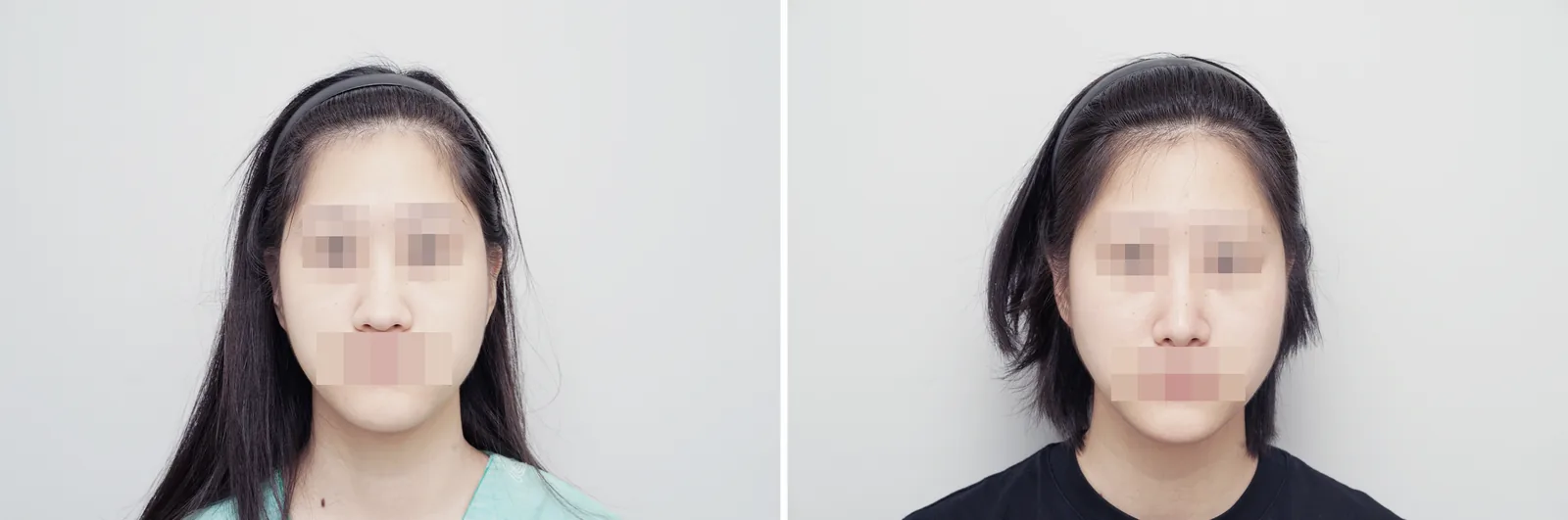
Example case (implant-free rhinoplasty, bulbous tip): front view before surgery (left) and 6 months after (right). Procedures: implant-free bridge with septal cartilage, tip with septal and donor rib cartilage, bulbous tip refinement, drooping-tip correction, columella and nasolabial angle adjustment. Results vary between individuals; swelling, bruising, asymmetry and infection are possible risks. Shared with the patient's consent; eyes and mouth are pixelated for privacy.

| Approach | What it adds | Plan for |
|---|---|---|
| Minimal-incision tip work | Less surgery; tends to recover faster | Light refinement only |
| Septal cartilage support | No wound outside the nose | A tip that feels firm for a while |
| Ear cartilage | A small second site at the ear | Care when sleeping on that side |
| Rib cartilage | A chest wound as well as the nose | Soreness when moving or breathing deeply |
| Revision | Work through existing scar tissue | Slower settling in many cases |
The chest is its own subject, so read how rib cartilage recovery plays out in the nose and chest if a surgeon has mentioned it. Earlier surgery also changes the picture, and recovery after a tip revision has its own day-by-day account. For the wider range of noses we treat, see TIANA's English rhinoplasty page.
Say you have thick skin, an earlier tip operation and a contracted, shortened tip, and your surgeon at home called it difficult. I wouldn't plan that around a 7-night stay. Used septal cartilage may mean another source is needed, and scar tissue limits how far the skin can stretch. I'd tell you to plan toward the 14-night end and to accept a slower tip.
Doctor's note
When a surgeon calls a tip difficult, I want to know why. Thick skin, weak cartilage and scarring are three separate problems with three separate recoveries. Some of those tips can be improved within limits, and I would rather set that limit before you travel than after you've taken your leave. Raising the tip alone can also make it look out of place on the face, so I look at the bridge and the angle above the lip at the same time.
Wondering which type your nose is?
Share your front, 45-degree and side photos — the surgeon will tell you which procedures your nose would actually need. No cost, no obligation.
Ask which procedure fits meFourteen days in Seoul, from a long-haul start
Take a reader flying from Sydney as the example. Your first planning point is the clinic's calendar: 10:00 to 19:00 on weekdays, 10:00 to 16:00 on Saturdays, closed on Sundays and public holidays. If you land on a Saturday night, Monday is your first open day. Ask at booking which day your exam and surgery would fall on.
Before surgery, 3D-CT imaging maps your bone and nasal structure. During the first week, the splint stays on, and you can generally expect the most swelling and bruising, along with a blocked nose. As general advice, sleeping with your head raised helps, so check your hotel before you book. For that side of things, read what to look for in a hotel room during recovery.
Around day 7, the splint and outer stitches come off. You'll see your new tip for the first time, and it will look wider and stiffer than it will later. In the second week, bruising fades and walking around Seoul is usually possible, though crowds and contact are worth avoiding. Around day 14, the inner stitches come out, and that is the natural end of a full-length stay.
When can you fly home and go back to work?
The earliest point is around day 7, and you'll get a referral letter and surgery certificate if you leave then. The CDC's medical tourism page says flying after surgery can increase the risk of blood clots, and it suggests delaying air travel for 10 to 14 days after major surgeries. That's a good reason to raise a long-haul flight with your surgeon.
For work, a desk job is often manageable at around 2 weeks, with bruising perhaps still fading. A job in front of clients or cameras may call for closer to 3 weeks. Add the flight and a day to recover from it. If you can take 3 weeks in total, a 14-night stay leaves you some margin.
Write down your leave dates and your departure city in a WhatsApp message, and ask this: with my tissue and my dates, should I plan closer to 7 nights or 14? Add a side photo taken in daylight.
What can go wrong once you're back home?
The usual reactions are soreness, swelling, bruising around the eyes, a stiff tip and reduced feeling in the skin. They tend to ease over weeks to months. Swelling can return in the mornings during the first year, according to the ASPS. Results vary from one person to the next.
Less often, there can be infection, poor healing or scarring, breathing difficulty, a rare septal perforation, an appearance you're unhappy with, or the need for revision. The NHS also mentions heavy nosebleeds and a change in your sense of smell.
In general, hold off and talk to a surgeon first if you have an infection on or around the nose, are pregnant or breastfeeding, take blood-thinning medication or have a bleeding disorder, or had nose surgery recently. A previous operation also needs time to settle before revision, and the right interval is a question for your surgeon.
If something feels wrong at home, photograph it and contact your surgeon, then take your referral letter and surgery certificate to a local doctor. Fever, spreading redness, heavy bleeding, trouble breathing, or leg swelling and chest pain after the flight need urgent local care. Ask for copies of your records before you leave Korea, as the CDC recommends. Our overview of the tip recovery system looks further at the weeks after you get home.
What decides the cost of tip plasty?
We don't publish a fixed menu price, because the fee follows what your nose needs. Four things move it most: the scope of surgery (tip alone or a wider plan), how much cartilage you have available and how thick your skin is, the tissue source, and whether this is a revision. Your flights and hotel nights are separate, and they grow with the length of stay your recovery calls for.
For your own figure, attach your photos on WhatsApp and ask what tip plasty would cost for your case. The final fee is confirmed after examination in Seoul.
Reviews: what they get right about the tip
Three things come up again and again in reviews of nose tip surgery, and each deserves a closer look.
"My tip stayed hard for months." Often true, especially after cartilage support. A firm tip is commonly part of early healing, and it tends to soften gradually, though a septal extension may keep some firmness.
"It looked swollen again one morning, so something went wrong." Usually not. The ASPS says swelling may come and go and worsen in the morning during the first year. Pain, redness or a sudden change in shape is a different matter and worth reporting.
"Revision heals like the first surgery." Often not. Scar tissue and reduced blood supply can slow things down, so a reviewer's timeline from a first operation may not apply to a second one.
If you want to see how real noses changed and how many months after surgery each photo was taken, browse TIANA's rhinoplasty case gallery before your consultation.
What to send before you commit to dates
Good tip plasty recovery planning starts with your own tissue and your actual leave. Send 5 photos (front, 45-degree and side) on WhatsApp, and ask what it would cost for your case and how many nights to plan. The reply in English explains the likely scope and how the estimate is worked out. A deposit is only discussed once you decide to book surgery, so asking questions first is fine.
When you come in, I'll examine your nose, including with 3D-CT, and recommend the plan that fits it.
Frequently asked questions
Q1Is a nose tip lift the same as tip plasty?
It's one goal within tip plasty. Tip plasty can also narrow a round tip, build projection or adjust the angle, and the work involved decides how recovery goes.
Q2Can tip plasty be done without an implant?
Yes. TIANA offers tip surgery without an implant. Whether it suits you depends on your cartilage and skin, which the surgeon checks during examination.
Q3Can I wear glasses after tip surgery?
Ask your surgeon, because it varies with the scope of surgery. If the bridge or nasal bones were also worked on, surgeons generally want less pressure on that area for a while. Bring contact lenses as a backup if you can wear them.
Q4Is a one-week trip realistic?
Seven nights is the minimum at TIANA, and the splint and outer stitches come off around day 7, though timing varies. A one-week trip leaves no margin, and a flight home that soon is worth discussing with your surgeon first.
Q5Does ear cartilage add much to healing?
It adds a small second wound, usually minor compared with the nose itself. As general advice, expect some tenderness at the ear and take care when sleeping on that side.
Thank you for reading to the end.
Send 5 photos (front, 45-degree and side) on WhatsApp for a free photo consultation. We reply in English with the likely scope of surgery and how the estimate is worked out.
Send my photos on WhatsAppThis article is general information about elective cosmetic surgery and is not a diagnosis. Results and recovery vary between individuals. Before-and-after photos are published with patient consent; surgery carries risks such as swelling and bruising and requires downtime. Final procedures and fees are decided after examination.