Korea Bulbous Tip Recovery System? Cost, Reviews, Methods
Worried that a Korea bulbous tip recovery system is something you have to buy, or that you'll be on your own once the splint comes off?
By the end of this guide, your questions about rhinoplasty should turn into a clear next step.
Send 5 photos (front, 45-degree and side) on WhatsApp and we will reply in English with a free first assessment: the likely scope of surgery and how the estimate is worked out.
Send my photos on WhatsAppRead this before you build a leave spreadsheet around it.
You'll know what decides the cost, which review claims about tip healing hold up, how the methods differ and what recovery consists of, so you can pick the scope that fits your tip, your days off and your budget.
Hello, I'm Dr. Choi Hang-seok, Head Surgeon at TIANA Plastic Surgery in Gangnam, Seoul.
We perform only rhinoplasty and revision rhinoplasty. I handle your consultation, surgery and aftercare myself, and the clinic has 3D-CT imaging and high-concentration oxygen care for post-op swelling.
I'm writing this because the phrase makes healing sound like a product, and people end up comparing add-ons when they should compare what is done to the tip and who follows it afterward.
There is no single recovery system for a bulbous tip. Recovery is a run of follow-up steps over about 7 to 14 nights in Seoul, plus swelling that settles on its own timetable, shaped largely by your skin and the scope of surgery.
If a package or add-on is what brought you here, send one side-view photo on WhatsApp and ask which follow-up steps your tip would need.
The belief behind the search: healing comes as a package
A round tip recovers on a biological timetable, and no add-on replaces it. The skin over the tip tends to be thicker and oilier than the skin on the bridge, and swelling tends to sit there longest. That's why the tip is often the last part of the nose to settle.
The American Society of Plastic Surgeons says initial swelling subsides within a few weeks, while the new contour may take up to a year to fully refine. Supportive care can make the early days easier. I can't promise you it will shorten that whole arc.
We have high-concentration oxygen care at TIANA to support recovery from swelling. I'd treat it as one helper in your first days, alongside keeping your head raised and following your aftercare guidance.
Your skin sets a limit too. Thick skin restricts how sharply a tip can show through it, whatever care follows, so read what tip surgery can change when the skin is thick before you plan anything around a sharp result.
What your recovery in Seoul is actually made of
Plan on about 7 to 14 nights, and at least 7. If anything deserves the name Korea bulbous tip recovery system, it's this short run of visits with the same surgeon.
| When | What happens | What to plan |
|---|---|---|
| Day 1 | In-person consultation, tests if needed, design and cost confirmed, then surgery | We're closed Sundays and public holidays |
| Next day on | Nasal packing out, swelling check, prescriptions, aftercare guidance | Keep these days clear |
| Around day 7 | Progress check, splint and outer stitches off (timing is confirmed at surgery) | The shortest stay ends here |
| Around day 14 | Inner stitches off | Flying on day 7? You get a referral letter and surgery certificate |
The day-by-day bulbous tip steps in English go through the surgery side of this in more detail.
After those visits, I don't give one fixed swelling period, because it settles at a different pace for everyone. I guide you individually from your progress photos.
Say you have a wide, round tip, fairly thick skin and ten nights of leave. I'd want you in Seoul past the splint removal with a few days of margin in case the timing shifts. You'd then choose between staying for the inner stitches and taking the letter home. I'd also warn you that thick skin usually holds swelling longer, so the tip you take back to the office will look fuller than it will later. A wedding or a photo shoot belongs much further down your calendar.
Once you've counted your days, message your travel dates on WhatsApp and ask whether they reach the splint removal with room to spare.
Doctor's note
A nose changes the face with tiny differences, which is why I operate only on noses. I would sooner see you leave Seoul with a scope that suits your anatomy and a swollen tip you understand than with a longer list of extras. Swelling at this stage tells you very little about the final line, so try not to measure your tip in the mirror every morning.
Wondering which type your nose is?
Share your profile and front photos — the surgeon will tell you which procedures your nose would actually need. No cost, no obligation.
Ask which procedure fits meWhich methods change how a bulbous tip heals?
The method matters more to your recovery than anything you add afterward. Which one fits comes down to your bone structure and what bothers you, and trends don't enter into it.
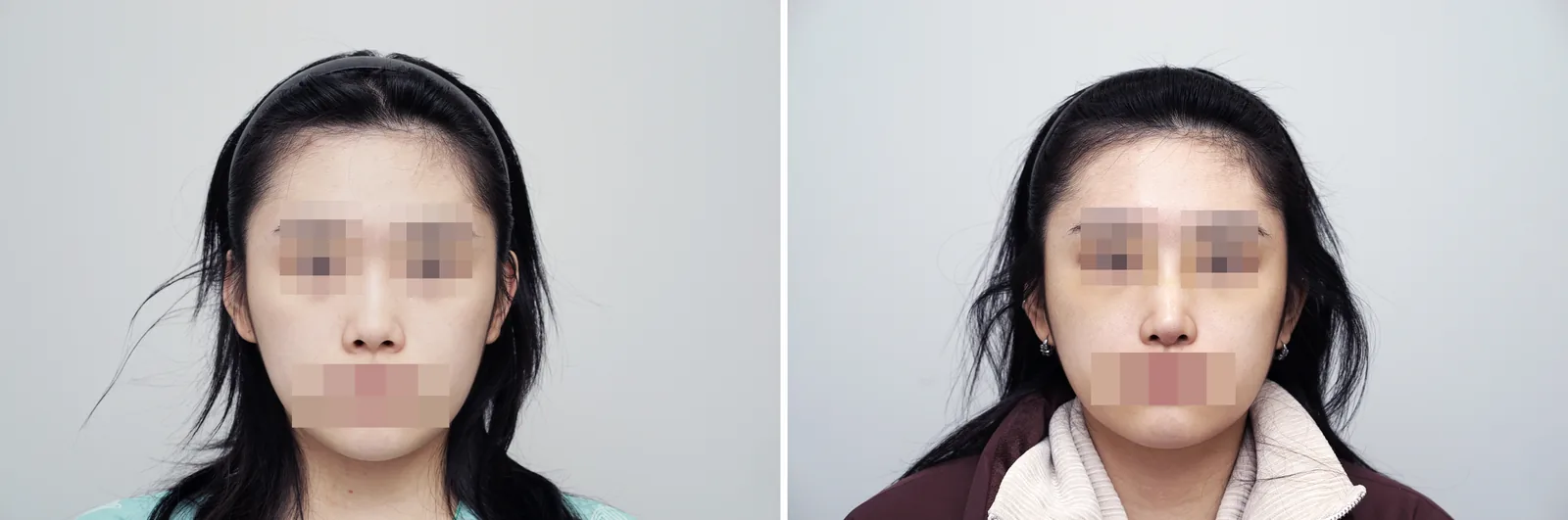
Example case (bulbous tip): front view before surgery (left) and 2 weeks after (right). Procedures: silicone bridge implant, tip with septal and donor rib cartilage, hump reduction, bulbous tip refinement, short-nose correction, columella and nasolabial angle adjustment. Results vary between individuals; swelling, bruising, asymmetry and infection are possible risks. Shared with the patient's consent; eyes and mouth are pixelated for privacy.
- Bulbous tip refinement: the tip cartilage is brought together so the tip looks slimmer from the front and the side. You can read how this surgery narrows a round, wide tip for the anatomy.
- Minimal-incision tip work or tip surgery without an implant: suited to a light refinement. Minimal-incision procedures tend to recover faster, though they generally leave less room to alter the structure.
- Tip support with cartilage: septal, ear, rib or donor rib cartilage, or your own dermis and fascia. Taking your own rib cartilage adds a second healing site on the chest.
- Full rhinoplasty: a bridge implant plus tip support, suggested when the bridge is also low.
That last one matters more than people expect. Raising only the tip can make it look detached from the face, so I recommend the scope your nose needs and no more. Finding out after you've traveled that the scope was too small is the outcome to avoid.
What do reviews get right about bulbous tip recovery?
Review threads are useful on the early weeks and weaker on the final result. Three claims come up again and again.
The claim that the tip stayed big for months is often true, for the reasons above. It's a normal pattern, and it says little about whether the surgery worked. A review written three weeks after surgery can't tell you about the final shape.
The claim that the tip felt stiff or numb is also common and usually temporary, though the time it takes to pass differs from person to person. New numbness that spreads, or pain that worsens, deserves a call to your surgeon.
The claim that a particular device, massage or machine sped everything up is the weak one. One person has no way of knowing how fast their tip would have settled without it. Ask what a given treatment is meant to help with, and don't let it decide your choice of clinic.
What decides the cost of bulbous tip surgery and recovery?
I quote for your nose, because two similar-looking tips can need very different surgery. These are the things that move it:
- Scope: the tip alone, or the bridge and tip together.
- Your nose: how much cartilage is available and how thick the skin is.
- Revision or first surgery: previous surgery usually means a more involved operation.
- Your days in Seoul: 7 nights or closer to 14 changes your own accommodation and leave.
A plan that looks lower-priced can end up costing more money and more trips if it later needs correcting. So compare what's covered, and ask whether follow-up visits and oxygen care are part of the estimate. This page on nose tip surgery cost, methods and nights covers the wider picture, and our English rhinoplasty consultation page shows how the quote is worked out. Then ask on WhatsApp what it would cost for your case, with a photo.
Who should wait, and what can go wrong?
The hard part of any Korea bulbous tip recovery system is the stretch after you've flown home, so plan for it now.
Risks and side effects to know
Swelling, bruising, a stuffy nose, tip stiffness and numbness are common. They usually ease over weeks to months, and results vary between individuals. The American Society of Plastic Surgeons also lists less common risks, including infection, bleeding, anesthesia risks, poor wound healing, breathing difficulty, septal perforation, an appearance you're unhappy with and the possibility of revision.
As general medicine, you'd usually wait or get medical advice first if you have an infection or inflamed skin on the nose, a bleeding disorder or blood-thinning medication, poorly controlled blood pressure, or if you're pregnant or breastfeeding. Smoking slows wound healing, so raise it early. Whether surgery suits you is settled at the examination.
If fever, spreading redness, heavy bleeding or worsening pain appears once you're home, see a local doctor promptly and bring your surgery certificate, then tell us what happened. The CDC's medical tourism guidance also advises keeping your records with you and notes that flying after surgery raises the risk of blood clots. If the shape concerns you later, we do perform revision rhinoplasty, including difficult cases such as contracture.
If you want to see how real noses changed and how many months after surgery each photo was taken, browse TIANA's rhinoplasty case gallery before your consultation.
Your next step before booking leave
Send five photos on WhatsApp (front, 45-degree and side) with one question: which of these follow-up steps would I have to stay in Seoul for? The reply in English explains the likely scope of surgery and how the estimate is worked out, and you can ask before booking anything, since a deposit only comes up once you decide to book surgery. When you come to Seoul, I examine you with 3D-CT and recommend the scope that fits your nose.
Frequently Asked Questions
Q1Do I have to pay for a special recovery program after tip surgery?
Recovery here means the follow-up visits, aftercare guidance and progress checks after surgery. Ask on WhatsApp what your estimate covers, including oxygen care, so you can see it in writing on your side before you decide.
Q2Does high-concentration oxygen care make the swelling go away?
It's offered as support for recovery from swelling. It doesn't set the timetable, and your skin and the scope of surgery usually have more influence on how long the tip stays full.
Q3Can I fly home before the inner stitches come out?
Yes, if you're flying around day 7, you get a referral letter and surgery certificate. Plan at least 7 nights, because the splint and outer stitches come off around then and the timing is confirmed at surgery.
Q4Why does my nose tip still feel hard when the bridge looks settled?
The tip usually holds swelling longer than the bridge, especially under thicker skin, and firmness often eases slowly. Tell your surgeon if it worsens, becomes painful or looks uneven.
Q5Does a shorter stay mean a worse recovery?
Your tissue heals at the same pace wherever you are. A 7-night stay does mean less time for in-person checks, so choose it with that trade-off in mind and keep your certificate and records with you.
Thank you for reading to the end.
Send 5 photos (front, 45-degree and side) on WhatsApp for a free photo consultation. We reply in English with the likely scope of surgery and how the estimate is worked out.
Send my photos on WhatsAppThis article is general information about elective cosmetic surgery and is not a diagnosis. Results and recovery vary between individuals. Before-and-after photos are published with patient consent; surgery carries risks such as swelling and bruising and requires downtime. Final procedures and fees are decided after examination.