Nose Tip Surgery Korea Cost? Methods, Nights, Recovery
Got a fixed block of leave and wondering whether the nose tip surgery Korea cost you've been quoted covers the nights you'll spend in Seoul?
By the end of this guide, your questions about rhinoplasty should turn into a clear next step.
Send 5 photos (front, 45-degree and side) on WhatsApp and we will reply in English with a free first assessment: the likely scope of surgery and how the estimate is worked out.
Send my photos on WhatsAppRead this before you put in your leave request.
You'll learn which tip methods move the cost, how many nights each step of healing asks for, what review threads get right about tip pricing, and how recovery continues once you're home, so you can fit the plan to your calendar and your budget.
Hello, I'm Dr. Choi Hang-seok, Head Surgeon at TIANA Plastic Surgery in Gangnam.
We only do rhinoplasty and revision rhinoplasty. Tip work here ranges from minimal-incision refinement and tip surgery without an implant to tip support built with cartilage, and I handle you 1:1 from consultation to aftercare.
I wrote this because people tend to budget the surgery and forget the calendar, and the nights in Seoul decide whether the trip fits their leave at all.
Tip surgery costs what the tip needs: a light refinement, more projection, or lengthening with septal extension, plus the cartilage used and whether it's a revision. The time cost is 7 to 14 nights in Seoul, at least 7.
If your leave dates are already fixed, send the five photos (front, 45-degree and side) on WhatsApp together with those dates, and ask which kind of tip work your photos point to. That way you plan flights around your own nose instead of a generic schedule.
Which tip methods move the cost?
A tip can bother you in four different ways, and each one leads to different work.

| What bothers you | Usual approach | What adds work |
|---|---|---|
| Round, heavy tip | Bulbous tip refinement | Reshaping the tip so it looks slimmer |
| Low or flat tip | Projection with septal, own or donor cartilage | Cartilage grafts |
| Short or upturned tip | Septal extension and columella work | A graft fixed to the septum, sometimes ear or rib |
| Long or drooping tip | Adjusting tip height and angle | The support the new angle needs |
If only a light refinement is needed, minimal-incision tip work or tip surgery without an implant may be enough. For round tips specifically, I've explained how bulbous tip surgery narrows a wide tip.
What decides the cost for your tip
Most of the nose tip surgery Korea cost question comes down to five things:
- The method: refinement, projection, lengthening or angle change.
- The cartilage source: septal, ear, rib or donor rib cartilage, or your own dermis and fascia.
- Revision or first surgery: a tip operated on before may have less cartilage left to use.
- Whether the bridge needs work too: if it's also low, full rhinoplasty with a bridge implant plus tip support may be suggested, which is a different scope.
- Your nights in Seoul: 7 at minimum, 14 if you want the inner stitches out before you fly.
To get the figure for your own tip, ask on WhatsApp what your case would cost and say which row of the table above fits you.
Why septal extension sits at the larger end of tip surgery
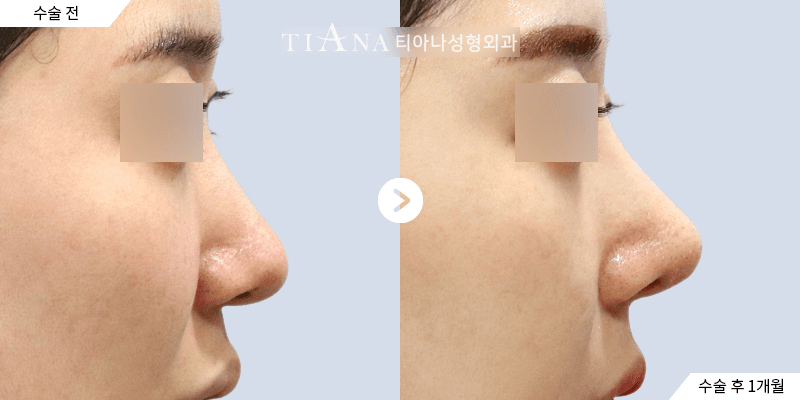
A septal extension graft is a piece of cartilage fixed to the end of the septum, and the tip cartilages are anchored to it.
That control needs material. Septal cartilage comes first. When there isn't enough, the plan moves to ear cartilage, rib cartilage or donor rib cartilage, and each step adds to the operation.
Doctor's note
A short tip asks for structure, and a longer tip needs something solid underneath it. If your septum can't supply enough cartilage, the plan moves to ear or rib cartilage, and rib means a second place to heal. I'd rather you know that before your leave is approved than after you've landed.
Some tips shouldn't be pushed this far at all. I've written about when to say not yet to nose tip surgery.
Wondering which type your nose is?
Share your profile and front photos — the surgeon will tell you which procedures your nose would actually need. No cost, no obligation.
Ask which procedure fits meHow many nights does tip surgery need in Seoul?
Plan on about 7 to 14 nights, at least 7. The usual sequence looks like this, with your own plan set around your flights:
- Day 1: the in-person consultation, with tests if needed. The design and cost are confirmed before surgery.
- From the next day: nasal packing comes out, swelling is checked, and you receive prescriptions and aftercare guidance.
- Day 7: a progress check, then the splint and outer stitches come off. Timing varies and is confirmed at surgery.
- Day 14: the inner stitches come out. If you fly home on day 7, you get a referral letter and surgery certificate so a local clinic can remove them.
The clinic is open weekdays 10:00 to 19:00 and Saturdays 10:00 to 16:00, and closed on Sundays and public holidays. Count those closed days when you map day 7 onto your calendar.
Ten working days off: two ways to plan it
Say you work in Toronto and have ten working days plus the weekends on either side.
With 7 nights, the splint comes off around day 7 and you fly home with the referral letter, having the inner stitches removed locally. With 14 nights, the inner stitches come out in Seoul, but you'll likely be back at your desk with some swelling still visible.
If your plan involves septal extension with your own rib cartilage, I'd lean toward the longer stay. A second healing site is one more thing to watch before a long flight. A light minimal-incision refinement fits a 7-night trip more easily.
If you're weighing 7 nights against 14, write which row of the table describes your tip and how soon after landing you're due back at work. Asking with those two details means the answer you get is about your own leave.
What does recovery look like once you're home?
The American Society of Plastic Surgeons notes that initial swelling subsides within a few weeks, while the nasal contour can take up to a year to fully refine. For many people the tip is the last part to settle, so it can look fuller in photos for a while after the bridge has calmed down.
If you left on day 7, take the referral letter to a local clinic for the inner stitches. Keep the surgery certificate with your records. How visible the swelling is at work varies, so plan important meetings with that in mind.
What do reviews say about tip surgery cost?
Threads about nose tip surgery Korea cost repeat a few claims.
'Tip-only surgery is a small operation.' Partly true. A light refinement is a smaller operation, but septal extension with rib cartilage is a substantial one, even though it only changes the tip.
'Thick skin means tip surgery won't work.' Not quite. Thick skin limits how much definition shows through and can change the plan, but it doesn't rule tip work out.
'You can have the stitches out at home.' True for the inner stitches if you leave on day 7 with the referral letter.
Risks and side effects to know
In the first weeks, swelling, bruising and a stuffy nose are common and temporary. The tip often feels firm or slightly numb for a while, and a tip supported by a graft can feel stiffer than before.
The American Society of Plastic Surgeons lists risks including anesthesia risks, infection, poor wound healing, difficulty breathing through the nose and the possibility of revision surgery. Healing and results differ from person to person.
As a general rule, wait or raise it at consultation if you have a cold or sinus infection, smoke, are pregnant or breastfeeding, take blood-thinning medicine, or injured your nose recently.
After flying home, the US Centers for Disease Control and Prevention advises medical travelers to keep copies of their records and line up follow-up care before they leave. Contact a local doctor quickly for fever, increasing pain or redness, bleeding that won't stop, or worsening breathing.
Is minimal-incision tip work always enough?
In short, it's the lighter route when the tip only needs refining. When a tip needs real length or projection, there's generally a limit to how much support a smaller approach can build, which is covered in where a closed approach stops. If you're still deciding what your nose needs before choosing a surgeon, read your own nose first. The tip and nasolabial angle are designed together either way, and our page on rhinoplasty in Korea for international patients explains the clinic.
When you write on WhatsApp, include the five photos and the one tip question that matters most to your leave, for example whether your tip can be done without an implant. A deposit only comes up once you decide to book surgery, so asking questions first is fine. When you arrive, I'll examine your nose with 3D-CT imaging and recommend the tip work that fits it.
Frequently Asked Questions
Q1Can tip surgery be done without an implant?
Yes. TIANA offers tip surgery without an implant. Whether it suits you depends on your cartilage and skin, which are checked during examination.
Q2My bridge is low too. Is tip surgery alone enough?
Often not. When the bridge is also low, full rhinoplasty, a bridge implant plus tip support designed as one profile, may be suggested instead.
Q3Do I have to stay until day 14?
No. At least 7 nights is the plan. If you fly home on day 7, you get a referral letter and surgery certificate so a local clinic can remove the inner stitches.
Q4Which tissue is used to support the tip?
Septal cartilage, ear cartilage, rib cartilage or donor rib cartilage, as well as your own dermis and fascia. The choice depends on your nose and any previous surgery.
Q5Can I message in English?
Yes. You can write on WhatsApp in English and send your photos there.
Thank you for reading to the end.
Send 5 photos (front, 45-degree and side) on WhatsApp for a free photo consultation. We reply in English with the likely scope of surgery and how the estimate is worked out.
Send my photos on WhatsAppThis article is general information about elective cosmetic surgery and is not a diagnosis. Results and recovery vary between individuals. Before-and-after photos are published with patient consent; surgery carries risks such as swelling and bruising and requires downtime. Final procedures and fees are decided after examination.