
Does Rhinoplasty Hurt? Pain by Day, Recovery and Risks
Does rhinoplasty hurt enough that a week alone in a Seoul hotel, with a splint on your nose, would be miserable?
By the end of this guide, your questions about rhinoplasty should turn into a clear next step.
Send 5 photos (front, 45-degree and side) on WhatsApp and we will reply in English with a free first assessment: the likely scope of surgery and how the estimate is worked out.
Send my photos on WhatsAppIf you're still comparing clinics and haven't booked a flight, the section on which steps add soreness is the one that could change your plan.
What the first two days feel like, which parts of the surgery make them harder, what the flight home is like, and which kind of pain means you should call a doctor: with those four answers, you can judge whether this is a trip you can manage on your own.
Hello, I'm Dr. Choi Hang-seok, Head Surgeon at TIANA Plastic Surgery in Gangnam, Seoul, and a board-certified plastic surgeon (Korea).
TIANA does rhinoplasty and revision rhinoplasty only, and I see you one-to-one from consultation through surgery and aftercare. An anesthesiologist is on staff, your bone and nasal structure are mapped with 3D-CT before surgery, and a medical interpreter for your language is provided at no extra charge.
Most people brace for a sharp, cutting pain and are caught off guard by something else: two or three nights of breathing through the mouth, which wears them down more than the ache does.
Yes, it hurts, but for most people it is a dull ache, pressure and a blocked nose, usually worst in the first two to three days and controlled with oral pain medication. Moving bone and taking rib cartilage are the steps that add the most soreness.
If you want to know which of those steps your own nose would likely need, send three photos on WhatsApp (front, 45-degree and side, in daylight) and ask one thing: would my plan involve bone work or rib cartilage?
What the first 48 hours feel like
You're asleep or sedated during the operation, so the surgery itself is not the part you feel. What you notice when you wake up is pressure: a splint taped over the bridge, a nose that feels packed full, and often some oozing that needs gauze under the nostrils for the first day.

Many people describe day one as a heavy head cold on top of a bruised face. The ache tends to build into day two or three as swelling peaks, then eases. For a typical first rhinoplasty, oral pain medication is usually enough.
The stuffiness is what wears people down. With the inside of the nose swollen, you breathe through your mouth, your throat dries out, and sleep comes in short pieces. The American Society of Plastic Surgeons' recovery guidance asks you to rest with your head raised above your chest, and in my view a couple of extra pillows and water by the bed matter more than most people plan for.
If you want to know what happens before you wake up, I've written about the rhinoplasty procedure steps in the operating room.
Which parts of the surgery hurt more?
Ask 'does rhinoplasty hurt' about two different noses and you'll get two different answers, because the soreness tracks with how much is done.
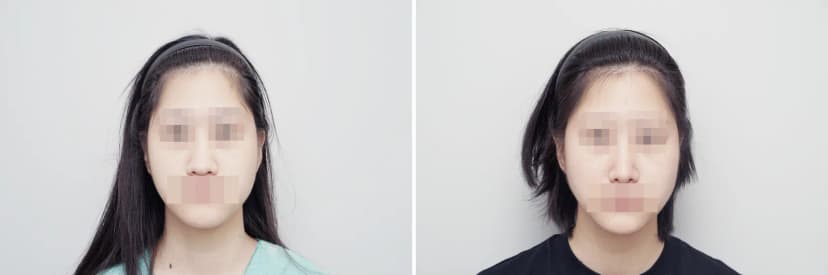
Example case (implant-free rhinoplasty, bulbous tip): front view before surgery (left) and 6 months after (right). Procedures: implant-free bridge with septal cartilage, tip with septal and donor rib cartilage, bulbous tip refinement, drooping-tip correction, columella and nasolabial angle adjustment. Results vary between individuals; swelling, bruising, asymmetry and infection are possible risks. Shared with the patient's consent; eyes and mouth are pixelated for privacy.

- Tip-only work (refining a round tip, minimal-incision tip work): usually the mildest. Mostly tightness and tenderness at the tip.
- Hump reduction and osteotomy: when bone is narrowed or a hump is taken down, bruising under the eyes is common and the ache across the bridge lasts a little longer.
- Rib cartilage for tip support or the bridge: the chest becomes a second wound. For many people it is the sorer of the two for the first days, especially when coughing, laughing or getting out of bed.
- Revision: scar tissue from an earlier operation makes the surgery longer, and if new cartilage has to be harvested, you add that donor site too.
Doctor's note
I operate only on noses because a fraction of a millimetre changes a face. The same thinking applies to pain. Every extra step, more bone moved, more cartilage taken, a bigger change than your face calls for, adds swelling and soreness you'll carry onto the plane. So I compare the photo you like with your anatomy and plan only the range your nose can reach without forcing it.
Wondering which type your nose is?
Share your front, 45-degree and side photos — the surgeon will tell you which procedures your nose would actually need. No cost, no obligation.
Ask which procedure fits meA hypothetical: a hump, a low tip and a flight on day 8
Say you're 31, you have a bump on the bridge and a tip that sits low, and your return flight is booked for day 8. The first thing I'd want to know is how much cartilage your septum can give. If it's enough to support the tip, the soreness stays in your nose: an ache across the bridge from the bone work, bruising that fades toward yellow over the first week or so, and a blocked nose.
If your septum can't provide enough, rib cartilage enters the plan, and you should expect your chest to be what you notice most when you sit up or laugh. 3D-CT shows the bone and nasal structure, which is what tells me whether osteotomy is needed at all. With both bone work and rib cartilage in the plan, I'd tell you that day 8 is workable but not comfortable, and that the longer end of a 7 to 14 night stay would be kinder to you.
Day 7, the splint and the flight home
Plan on about 7 to 14 nights in Seoul, at least 7. The splint and outer stitches come off around day 7 and the inner stitches around day 14; the exact timing is confirmed at surgery. Splint removal tends to feel strange more than painful, and the nose stays tender to the touch for a while afterward.
So does rhinoplasty hurt on the flight home? By day 7 most people have moved from ache to tenderness and stuffiness. A congested nose can feel more blocked in the cabin, so drink water, keep your head upright when you sleep on the plane, and keep your hands and glasses off the bridge. If you fly home on day 7, you leave with a referral letter and a surgery certificate for a doctor at home.
How the swelling settles over the following weeks is covered in how long rhinoplasty takes to heal.
When pain is a warning sign
Normal soreness gets a little better each day after the third. Pain that does the opposite is worth acting on.
Risks and side effects to know
Common and temporary: swelling, bruising under the eyes, a blocked nose, some oozing in the first days, and numbness or stiffness of the tip, which often eases over weeks to months. The American Society of Plastic Surgeons' safety page also lists persistent pain, numbness, breathing difficulty and the possibility of revision surgery among the risks, and the NHS names breathing problems and nosebleeds among the things that can go wrong. Healing speed differs between people, and whether surgery suits you can only be judged at an in-person exam.
Who should wait or think twice, as general medicine: anyone taking blood thinners or supplements that raise bleeding risk (aspirin, fish oil, vitamin E) who hasn't cleared them with their doctor; smokers who can't stop around the surgery; anyone with an active sinus infection or a heavy cold; anyone pregnant; and anyone hoping a new nose will fix something that isn't about the nose.
Whether surgery is the right call in the first place is a separate question, which I take up in when rhinoplasty works and where its limits are.
Once you're home: pain that gets worse after day 3, fever, redness or heat that spreads, bleeding that keeps soaking through gauze, or a sudden change in breathing needs a doctor that same day. Take your referral letter and surgery certificate to your local doctor or emergency department, and send us a photo on WhatsApp as well.
If you take a daily medication or have had nose surgery before, put that in your WhatsApp message together with your travel dates, and ask whether the nights you have are enough for the plan your nose would likely need.
Who is in the room matters for pain too
If you're still comparing clinics, the questions in seven checks for choosing a rhinoplasty surgeon in Korea apply whoever you pick. Add two about pain: who is responsible for anesthesia, and who you contact on day 3 if the ache is worse than on day 2.
At TIANA, an anesthesiologist is on staff, and the surgeon who plans your nose is the one who operates and follows you through aftercare. More about the clinic and the photo consultation is on TIANA's rhinoplasty page in English.
If you want to see how real noses changed and how many months after surgery each photo was taken, browse TIANA's rhinoplasty case gallery before your consultation.
What to send before you book anything
If you'd rather start small, a side profile in daylight is enough for a first message, with one question: which part of my nose would need the most work?
In Seoul, the first thing I look at for the pain question is your 3D-CT: the bone along your bridge and how much septal cartilage you have, because those two decide how sore your first week will be.
Frequently asked questions
Q1Does removing the splint or any packing hurt?
Splint removal around day 7 usually feels like tape being peeled off and some pressure, not sharp pain. If your plan includes internal packing or splints, removal takes seconds and feels like strong pressure; ask at consultation whether your plan uses them.
Q2Can I take my usual painkillers before surgery?
Not without checking. Aspirin and anti-inflammatory painkillers such as ibuprofen can increase bleeding, and so can fish oil and vitamin E. List every medication and supplement in your first message so the timing of stopping them can be discussed before you travel.
Q3Does rib cartilage hurt more than the nose itself?
For many people, yes, for the first several days. The chest wound is sore when you cough, laugh, sneeze or roll over in bed. Holding a pillow against your chest when you cough helps. Whether you need rib cartilage at all depends on how much septal cartilage is available.
Q4Is the numb nose tip after rhinoplasty normal?
Yes, numbness or a wooden feeling at the tip is common because small skin nerves are disturbed during surgery. It often returns gradually over weeks to months. Numbness that spreads, or comes with increasing pain and redness, should be checked by a doctor.
Q5Does revision rhinoplasty hurt more than a first rhinoplasty?
It often involves more soreness and swelling, because scar tissue makes the surgery longer and new cartilage may need to be harvested from the ear or rib. Plan toward the longer end of the 7 to 14 nights in Seoul if you're having a revision.
Thank you for reading to the end.
Send 5 photos (front, 45-degree and side) on WhatsApp for a free photo consultation. We reply in English with the likely scope of surgery and how the estimate is worked out.
Send my photos on WhatsAppThis article is general information about elective cosmetic surgery and is not a diagnosis. Results and recovery vary between individuals. Before-and-after photos are published with patient consent; surgery carries risks such as swelling and bruising and requires downtime. Final procedures and fees are decided after examination.