When Can I Blow My Nose After Rhinoplasty? 3 Stages
Blocked solid on day four, tissue in hand, and afraid that one hard blow could shift what was just built?
30-second check
Check which procedure fits your nose
Pick what applies. Related procedures appear, and you can send your answers straight to WhatsApp. No name or email needed.
Pick at least one concern to see the related procedures.
Send this on WhatsAppWhatsApp opens with your answers already typed. Then send 5 photos (front, both 45-degree angles, both sides) and, if you have one, a photo of the nose you would like.
Not opening? Copy the message and open WhatsAppSo, when can I blow my nose after rhinoplasty? Not at all while the splint is on, which is about the first week. Gentle blowing commonly comes back somewhere in weeks two to four, and later if bone or the septum was worked on.
Hello, I'm Dr. Choi Hang-seok, Head Surgeon at TIANA Plastic Surgery in Seoul.
I do rhinoplasty and revision rhinoplasty only, and I stay with each patient from consultation through surgery to aftercare, so the instruction about your nose comes from the person who knows what was done inside it. The stay is about 7 to 14 nights, with the splint and outer stitches off around days 5 to 7. That puts the strictest stage in Seoul and the rest of it at home.
Still planning the trip? Send your travel dates on WhatsApp with five photos of your nose, and ask how many of the no-blowing days would fall after your flight home.
Why is blowing your nose a problem after surgery?
Blowing builds pressure inside the nose, and for the first weeks that pressure lands on stitched lining, raw surfaces and, in some operations, bones that were just moved.
Picture a chair leg that has just been glued. It already looks finished and holds its shape, but nobody sits on it until the glue has cured.
Risks and side effects to know
There's a second reason, and it saves a lot of frustration. The blocked feeling in the first week or two is mostly swollen lining and dried blood, with little loose mucus behind it. Blowing can't clear swelling. It can restart bleeding and push air into tissue that is trying to seal.
The same pressure logic covers straining, heavy lifting and singing at full voice in the months after rhinoplasty.
The three stages, from splint to a normal blow
| Stage | Roughly when | What to do |
|---|---|---|
| 2. Splint off, lining still healing | From splint removal until your surgeon clears you, commonly into week 2 or 3 | Still no blowing. Saline mist if prescribed, dabbing, leaving crusts alone. |
| 3. Cleared | From clearance on, commonly between weeks 2 and 4; later after bone or septum work | Gentle blowing with both nostrils open and your mouth slightly open. No pinching one side shut. |
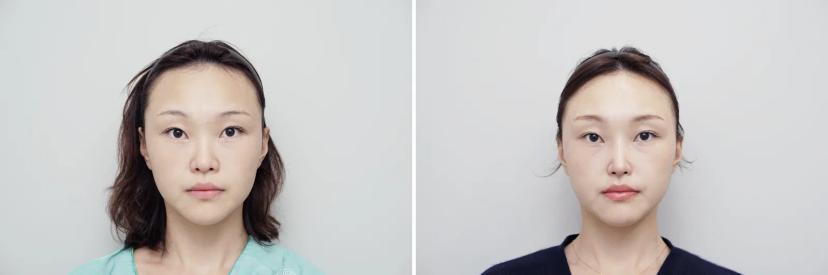
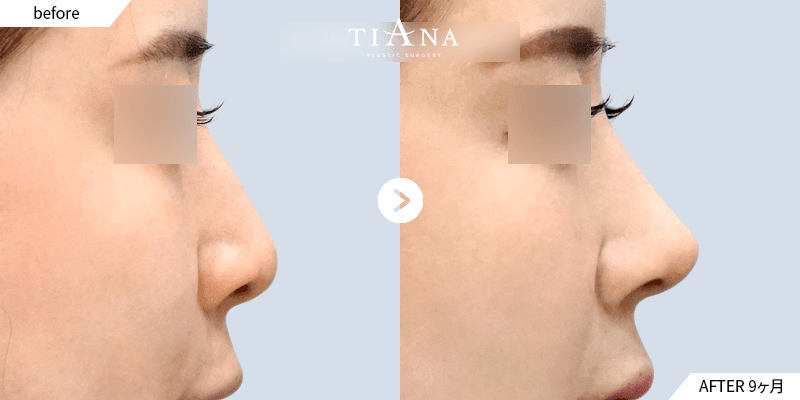
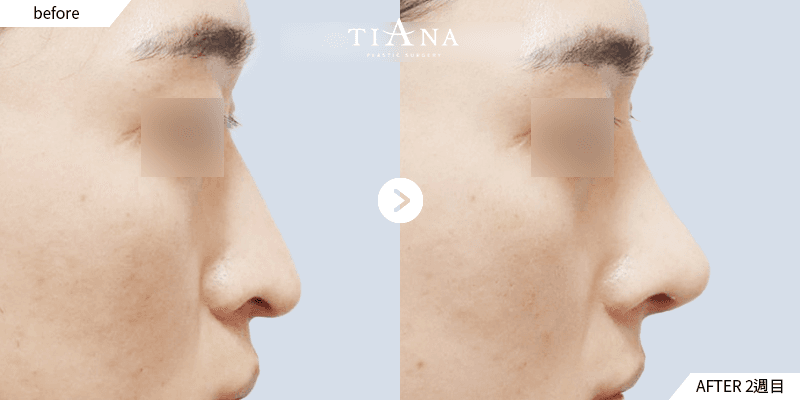
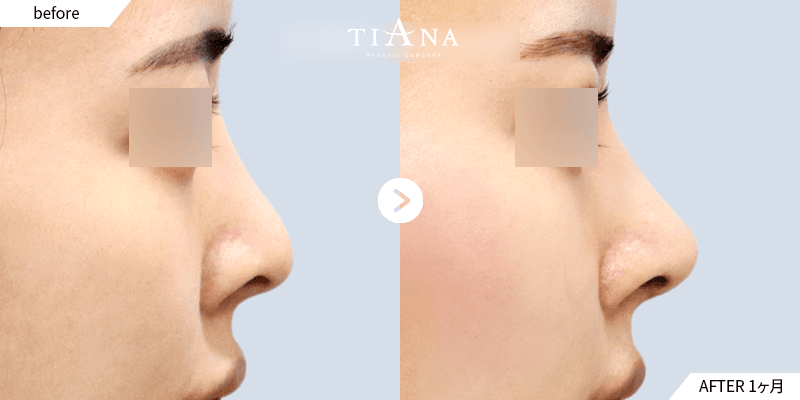
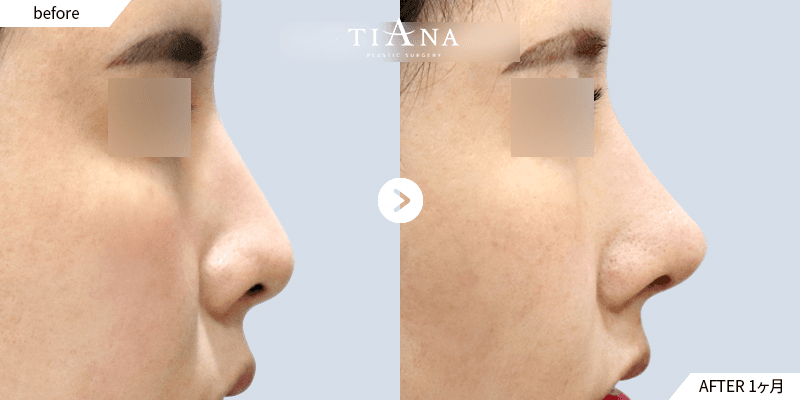
Example case (hump nose, bulbous tip): front view before surgery (left) and 1 month after (right). Procedures: silicone bridge implant, tip with septal and donor rib cartilage, hump reduction, bulbous tip refinement, short-nose correction, columella and nasolabial angle adjustment. Results vary between individuals; swelling, bruising, asymmetry and infection are possible risks. Shared with the patient's consent.
The date for stage three is the part I can't give you from a blog. It moves with what was done: tip-only work usually clears sooner than surgery where the nasal bones were narrowed or the septum was straightened. Before you leave Seoul, ask at the splint visit which week applies to your operation, and write it in your phone.
Wondering which type your nose is?
Share your front, 45-degree and side photos — the surgeon will tell you which procedures your nose would actually need. No cost, no obligation.
Ask which procedure fits meWhat can you do instead when your nose is blocked or running?
Let it run and dab. Everything else is about keeping the lining moist so crusts soften on their own.
- Dab under the nostrils with gauze or a tissue. Don't wipe sideways across the tip or push a tissue inside.
- Use a saline mist if your surgeon told you to. A mist wets the lining; a squeeze-bottle rinse pushes pressure through it, so ask before using one.
- Sleep with your head raised. Swollen lining drains better that way, and I've covered positions in how to sleep after rhinoplasty, including on the flight.
- Breathe through your mouth without fighting it, and keep water and lip balm by the bed.
- Sneeze with your mouth open. Don't try to hold a sneeze in by pinching.
- Leave crusts alone. Clean only what you can see at the rim of the nostril, with a damp cotton bud, without going in.
- Ask before using a decongestant spray or cold tablets. Some raise blood pressure or dry the lining further.
A habit worth starting on day one: take one photo from the front and one from below each morning, in the same light. You'll want them later.
What changes on the flight home and in the first weeks back?
Cabin air is dry, and a dry nose crusts faster. On the plane, sip water, use the saline mist if it was prescribed, and keep tissues for dabbing in the seat pocket. Whether you're cleared to fly on a given day is a separate question, and I've answered it in when you can fly home after closed rhinoplasty in Korea.
Say your splint came off on day 7, you fly to Sydney the next evening, and three days after landing you have a streaming cold. You're in stage two with a nose that now runs for real. The rule doesn't change: let it run, dab, mist, sneeze open-mouthed, sleep propped up. A cold by itself doesn't push on healing tissue the way hard blowing does.
If you leave Seoul around day 7, the stitches inside the nose are still in. Use that visit: ask that doctor how the lining looks, and keep a note of the answer.
If hay fever or a winter of back-to-back colds is what worries you, say so in your first message with the month you plan to travel, and ask what the no-blowing weeks would look like for you.
What if you blew your nose or sneezed hard by accident?
One accidental blow or closed-mouth sneeze usually ends in a small bleed and a fright. Sit upright, lean slightly forward, breathe through your mouth and hold a cool cloth to your cheeks. Don't pinch the nose shut the way you would for an ordinary nosebleed unless your surgeon told you to; the bones and cartilage are what you're protecting. A light bleed usually slows within ten to fifteen minutes.
Then look, don't press. Compare a front photo and a from-below photo with the ones you took the day before. If the bridge sits where it did and the nostrils match yesterday's picture, carry on with the rules for your stage.
Gentle blowing later on has no bearing on why the tip takes longest to settle after rhinoplasty. That slow change is swelling leaving, and it happens anyway.
Bleeding, fever, a shifted bridge: when to contact the clinic
Expected for the first weeks: blood-tinged mucus, crusts at the nostril rim, a stuffy nose that is worse at night, and a weaker sense of smell. These ease as the lining swelling goes down, and the pace differs from one person to the next.
Take extra care, as a general rule, if you have hay fever or year-round allergies, if you catch colds easily, or if you use a CPAP machine at night. Each of those adds pressure or drip during the weeks you can't blow, so mention it before surgery.
- bright red bleeding that keeps coming after twenty minutes of sitting upright
- a fever
- pain or redness that grows after it had been fading
- a bad smell or yellow-green discharge
- a bridge or tip that looks shifted compared with yesterday's photo
- one side that suddenly blocks completely
Send the day number since surgery and the two photos. For heavy bleeding or a high fever, go to local emergency care first, bring the surgery certificate, and message us from there.
If you want to see how real noses changed and how many months after surgery each photo was taken, browse TIANA's rhinoplasty case gallery before your consultation.
A dull stretch for a nose shaped in millimeters
Rhinoplasty is surgery where a fraction of a millimeter changes a face, and that is the scale your nose is healing at while you're reaching for a tissue. I'd rather you spend the dull days dabbing than one afternoon wondering whether a bleed moved something. There's nothing to gain from reaching stage three early; the nose clears on its own schedule either way.
What sets your date is whether bone or the septum was worked on, and how the lining looks once the inner stitches are out. If English isn't your first language, an interpreter joins your in-person consultation. Unsure where you stand today? Send your two photos and your day number on WhatsApp, and ask which stage you're in.
— Dr. Choi Hang-seok, Head Surgeon
Cases close to this concern
Drag the handle to compare before and after
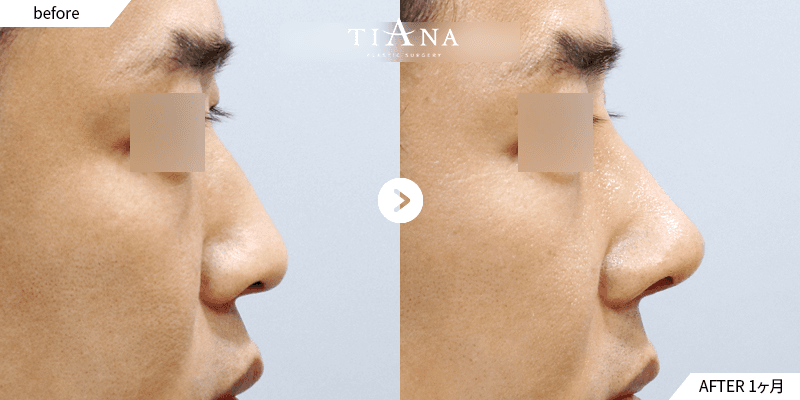
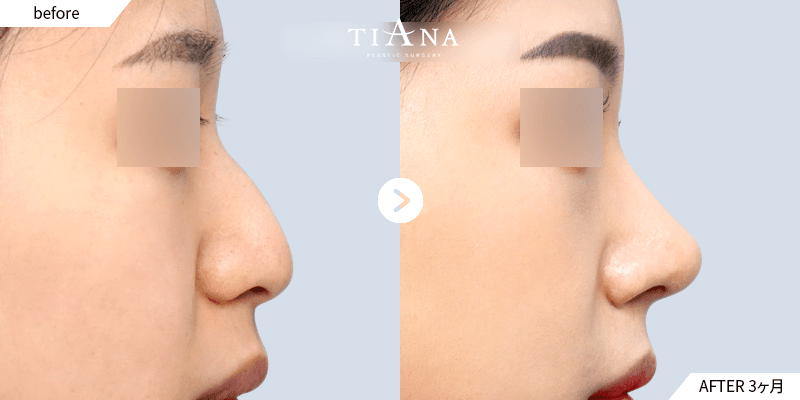
TIANA case, shared with the patient's consent. Results vary.
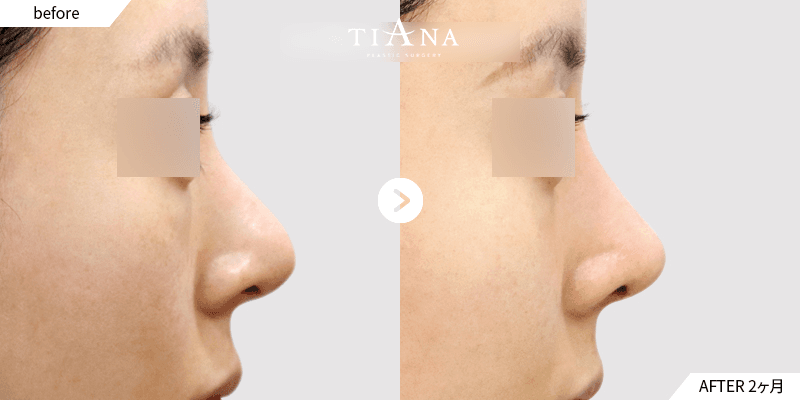
Before and after at TIANA (shared with patient consent) 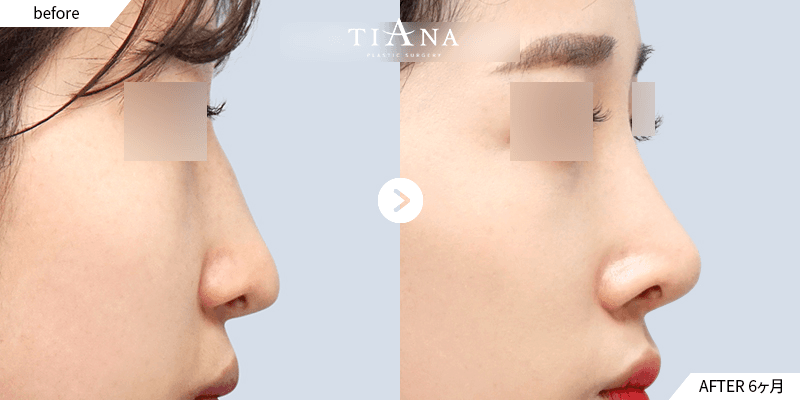
Before and after at TIANA (shared with patient consent) 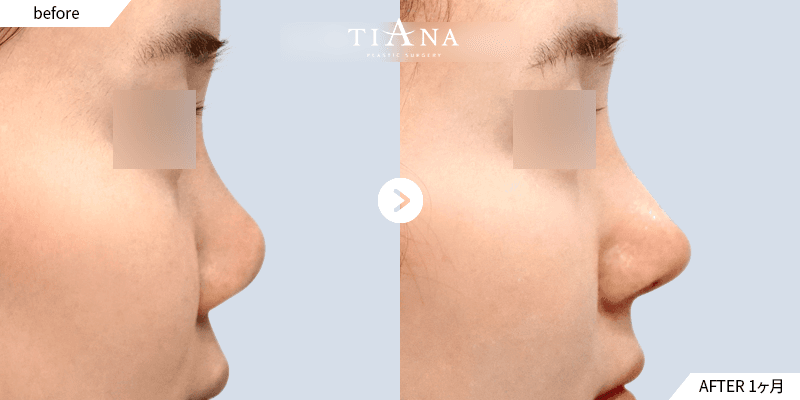
Before and after at TIANA (shared with patient consent)
* Results vary between individuals. Photos show TIANA patients.
See more cases →Korean patients talk about their surgery
Videos from Korean patients who had surgery at TIANA (Korean, YouTube). Patients from Japan, Taiwan and English-speaking countries also contact us every month on LINE and WhatsApp.


Read TIANA reviews on Google Maps
Start from your concern
Bridge concerns and what is considered
- Current shape
- Design direction (illustration)
Illustration only, not a result and not to scale.
What to consider
Silicone implant or own tissue
Low, flat bridge
From first message to flying home
Photo consult on WhatsApp
Send 5 photos and a photo of the nose you would like. The free reply in English explains the likely scope and how the estimate is worked out.
Video consult (optional)
On Google Meet you talk with the surgeon first, then the consultation manager explains the estimate. Free, with an interpreter.
Visit and 3D-CT
A 3D-CT scan and the surgeon's examination confirm the final plan and fee. An interpreter joins the consultation.
Surgery
The surgeon who consulted you performs the surgery and also manages the anesthesia.
Day 7 and day 14
The splint and outer stitches come off around day 7, the inner stitches around day 14. After you fly home, send progress photos on WhatsApp.
FROM THE SURGEON
A word from the surgeon
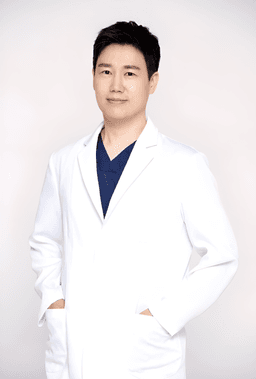
Bone, cartilage and skin thickness differ a lot between people, so the same operation name can need different steps.
Because I only treat noses, I can tell you at the consultation not just how far your nose can change, but where it is better not to push further.
Frequently asked questions
Q1Can I sneeze after rhinoplasty?
You can't stop a sneeze, so change its route: open your mouth and let it out there. Don't pinch your nose or clamp your lips to hold it in, because that sends the full pressure into the nose. If sneezing fits are frequent because of allergies, ask your surgeon which allergy medicine is acceptable during recovery.
Q2Is a saline rinse the same as a saline spray?
No. A fine mist only wets the lining and is often allowed from the first days if your surgeon says so. A squeeze bottle or neti pot pushes a stream of water through the nose under pressure, which is closer to blowing. Ask before using one, and expect it to be allowed later than a mist.
Q3Does blowing too early change the final shape?
One gentle blow is unlikely to. The usual consequence of early blowing is bleeding. The shape is more at risk when the nasal bones were moved and the blowing is hard or repeated in the first weeks. Signs to act on are a bridge that looks off-center compared with earlier photos, or new swelling on one side.
Q4My nose still feels blocked in week three. Is something wrong?
Usually not. The lining inside the nose stays swollen longer than the skin outside, and crusts narrow the passage further, so breathing commonly improves in steps over several weeks. Tell your surgeon if one side is completely blocked, if the blockage is getting worse after it had improved, or if it comes with pain or fever.
Q5Some surgeons say two weeks and others say six. Why the difference?
Because the operations differ. Follow the number given for your own operation.
Thank you for reading to the end.
Send 5 photos (front, 45-degree and side) on WhatsApp for a free photo consultation. We reply in English with the likely scope of surgery and how the estimate is worked out.
Send my photos on WhatsAppThis article is general information about elective cosmetic surgery and is not a diagnosis. Results and recovery vary between individuals. Before-and-after photos are published with patient consent; surgery carries risks such as swelling and bruising and requires downtime. Final procedures and fees are decided after examination.