Alar Base Reduction in Korea: Scars, Recovery, Risks
Do you have wide nostrils or flaring nostril wings, and you've read that alar base reduction in Korea is a quick fix? Most people who message us about it ask the same three things: where the scar will be, how long recovery takes and whether it could go wrong.
By the end of this guide, your questions about rhinoplasty should turn into a clear next step.
Send 5 photos (front, 45-degree and side) on WhatsApp and we will reply in English with a free first assessment: the likely scope of surgery and how the estimate is worked out.
Send my photos on WhatsAppThis guide answers those questions. It covers the different excisions, how to tell flare from a wide base, the scar, stitches, risks, cost factors and revision.
Hello, I'm Dr. Choi Hang-seok, Head Surgeon at TIANA Plastic Surgery in Gangnam, Seoul.
TIANA performs only rhinoplasty and revision rhinoplasty. I handle each patient one-to-one from consultation through surgery, anesthesia and aftercare, and every nose is mapped with 3D-CT imaging before surgery.
The short answer: alar base reduction removes a small piece of skin and tissue at the base of the nostril wings. A wedge from the outside reduces flare, a cut inside the nostril sill makes the openings smaller, and many people need a mix. The scar sits in a natural crease or inside the nostril, and the outer stitches usually come out around day 7.
What alar base reduction is

The alae are the curved wings on each side of the nostrils. Where they join the cheek and the upper lip is called the alar base. Alar base reduction changes the width or curve at that base.
It is a small operation compared with full rhinoplasty, but it changes the lower third of the face in a very visible place. That is why the amount removed matters more than the technique name.
The three common excisions
| Excision | What it changes | Where the incision sits |
|---|---|---|
| Wedge (external) excision | Reduces flare, so the wings curve out less | In the crease where the wing meets the cheek |
| Sill (internal) excision | Makes the nostril openings smaller | Inside the nostril floor, at the sill |
| Combined excision | Reduces flare and opening size together | Both places, often joined as one line |
Searchers often call any of these nostril reduction, and the wedge alone is sometimes called alar flare reduction. In consultation I use the plain description instead: are we reducing the curve of the wing, the size of the opening, or both?
Flare, a wide base or a wide tip?
A nose that looks wide at the bottom is not always an alar problem. Before planning surgery, I separate three things.
- Alar flare: the wings curve outward and spread further when you smile. The base where they attach may be normal.
- A wide alar base: the wings attach far apart on the face, and the nostril openings look large and round from below.
- A wide tip: the tip itself is broad or round. The wings look wide because the tip above them is wide.
The third case is the one people miss. If the tip is broad, cutting the base can leave the tip looking even bigger by comparison. Then the right plan is tip work, sometimes with a small base adjustment, not a base excision alone.
Doctor's note
When I examine a wide lower nose, I look from the front, from below and while the patient smiles. Flare shows most when you smile. A wide base shows best from below. A wide tip shows in every view, and that changes the whole plan.
If you have already read about whether nostril surgery alone is enough, my earlier article on when alar reduction works on its own goes deeper into that decision. For a broad tip, see what tip plasty involves. How I balance the base, tip and bridge as one design is described on TIANA's English rhinoplasty page.

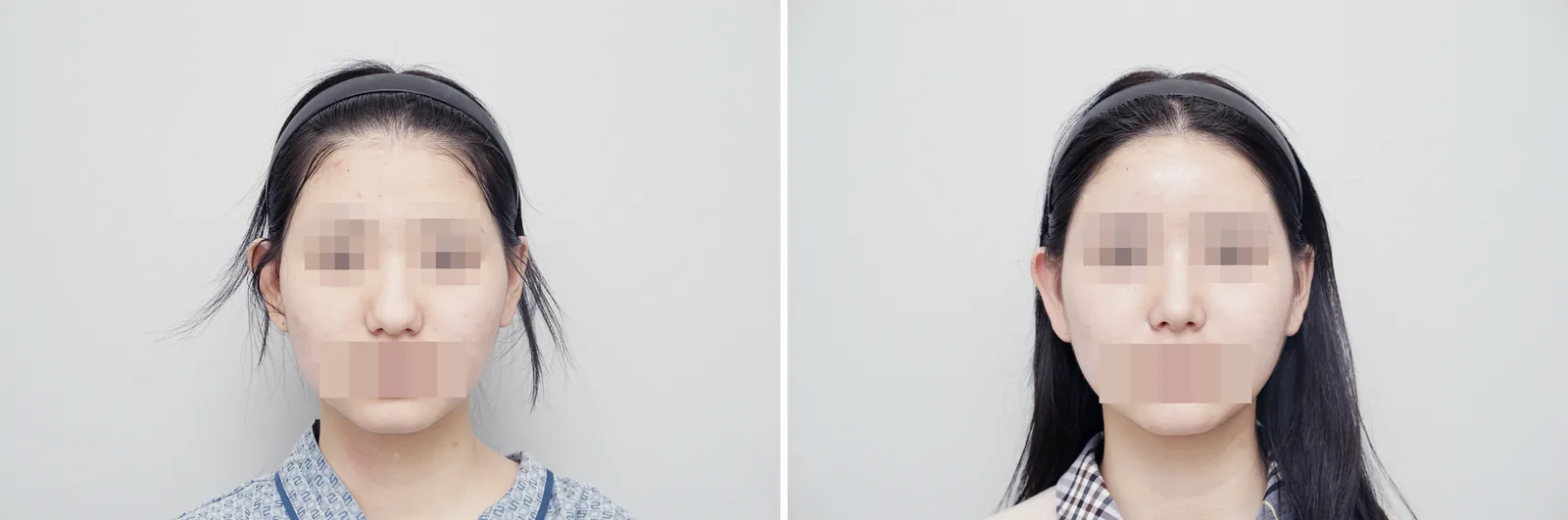
Example case (hump nose, bulbous tip): front view before surgery (left) and 1 month after (right). Procedures: silicone bridge implant, tip with septal and donor rib cartilage, hump reduction, bulbous tip refinement, short-nose correction, columella and nasolabial angle adjustment. Results vary between individuals; swelling, bruising, asymmetry and infection are possible risks. Shared with the patient's consent.
Wondering which type your nose is?
Share your front, 45-degree and side photos — the surgeon will tell you which procedures your nose would actually need. No cost, no obligation.
Ask which procedure fits meWhere the alar base reduction scar sits and how it heals
Scar worry is the most common reason people hesitate. It is a fair worry, because this is skin surgery on the face.
For a wedge excision, the line is placed in the crease where the wing meets the cheek. That crease is already a shadow line, which helps the scar blend. For a sill excision, the line is inside the nostril, where it is hard to see from the front.
What to expect over time
- First weeks: the line is pink or red, and there may be slight swelling and crusting along it.
- Following months: the color fades gradually and the line softens and flattens.
- Long term: in many people the line becomes hard to notice. In some, it stays slightly visible or widens.
How your skin scars is something no surgeon can fully predict. Tell me if you have formed raised or keloid scars before, and avoid smoking, since it slows wound healing.
Recovery and stitches
Surgery on the base alone usually means a short recovery, but it is still surgery. Swelling, mild bruising and a tight feeling around the nostrils are common early on.
| Time | What usually happens |
|---|---|
| First days | Swelling and tightness around the nostrils; keep the lines clean as instructed |
| Around day 7 | Outer stitches usually come out |
| 1 to 2 weeks | Main swelling settles if only the base is done |
| With tip or bridge work | Splint also off around day 7, inner stitches around day 14 |
| 3 to 4 weeks | The nose starts to look natural in most people; scars keep maturing for months |
Plan on about 7 to 14 nights in Seoul, and at least 7. If you fly home around day 7, you leave with a referral letter and a surgery certificate. More on trip length is in how long to stay in Seoul for rhinoplasty.

Risks of alar base reduction
Most risks come from removing too much, removing unevenly, or a scar that heals poorly. The American Society of Plastic Surgeons lists infection, poor wound healing, scarring and the possible need for revision among rhinoplasty risks.
- Visible scar: the line may stay red longer, widen or look notched in some people.
- Asymmetry: the two sides can heal a little differently, and small differences show at the base.
- Over-narrowing: too much removed can make the nostrils look pinched or the base look tight against the face.
- Change in nostril shape: a round opening can become more oval or slit-like, which may or may not suit you.
- Infection or wound opening: uncommon, but possible along any incision.
A conservative amount, matched to your tip and face, is safer than chasing the narrowest possible nostrils. More can be removed later; tissue that is gone is hard to bring back.
What decides the cost
We don't publish fixed prices, because the same name covers very different amounts of work. These are the things that change a quote:
- Scope of excision: sill only, wedge only, or both.
- Combined surgery: tip refinement, a bridge implant or cartilage grafts done at the same time.
- Primary or revision: correcting an earlier alar surgery takes more planning.
- Imaging and aftercare: 3D-CT before surgery and follow-up during your stay.
When you compare quotes, check whether each one covers the same scope. A lower figure for "nostril reduction" may not include the tip work your nose needs. You can see how a full quote is built in how much a nose job in Korea costs.
Revision after alar surgery
Revision is possible, but what can be done depends on what went wrong. A widened scar or a small difference between sides can often be improved.
Over-narrowed nostrils are harder. Once tissue has been removed, restoring it takes more complex work, and the result is less predictable. If you had alar surgery elsewhere and something feels off, wait for the tissue to settle and have it examined before planning anything. Articles on alar surgery are collected in all alar reduction articles.
Summary
- Alar base reduction narrows the nostril base: a wedge excision reduces flare, a sill excision makes openings smaller.
- A wide lower nose can come from flare, a wide base or a wide tip, and each needs a different plan.
- The scar sits in the wing crease or inside the nostril and usually fades over months, but healing varies.
- Outer stitches usually come out around day 7; plan at least 7 nights in Seoul.
- Over-narrowing is the risk to avoid, so a conservative amount is safer.
Send five photos on WhatsApp (front, both 45-degree angles and both side profiles), plus one from slightly below. Ask whether your width comes from flare, the base or the tip. When you come to Seoul, I examine your nose, 3D-CT maps the structure, and we decide the scope together.
Frequently asked questions
Q1Where is the scar after alar base reduction?
For flaring wings the incision sits in the crease where the nostril wing meets the cheek. For wide nostril openings it sits inside the nostril sill. The line usually looks pink at first and fades over months, but how a scar heals differs between people.
Q2What is the difference between alar base reduction and nostril reduction?
People use the words loosely. Strictly, a sill excision makes the nostril openings smaller, and a wedge excision from the outside of the wing reduces flare. Alar base reduction often means either one or both combined, depending on what makes your base look wide.
Q3When are the stitches removed after alar base reduction?
At TIANA the outer stitches usually come out around day 7. If the surgery is combined with tip or bridge work, the splint also comes off around day 7 and the inner stitches around day 14. Timing varies and is confirmed at surgery.
Q4How much does alar base reduction cost in Korea?
It depends on the scope: sill excision, wedge excision or both, and whether tip or bridge surgery is done at the same time. We don't publish fixed prices. Send photos on WhatsApp and we explain how your quote would be built.
Q5Can alar base reduction be revised if too much is removed?
Some problems, such as an uneven side or a widened scar, can often be improved. Tissue that was over-removed is much harder to put back, so a conservative first plan matters more than in most parts of rhinoplasty.
Thank you for reading to the end.
Send 5 photos (front, 45-degree and side) on WhatsApp for a free photo consultation. We reply in English with the likely scope of surgery and how the estimate is worked out.
Send my photos on WhatsAppThis article is general information about elective cosmetic surgery and is not a diagnosis. Results and recovery vary between individuals. Before-and-after photos are published with patient consent; surgery carries risks such as swelling and bruising and requires downtime. Final procedures and fees are decided after examination.