Bulbous Nose Tip After Rhinoplasty: When to Worry
Home from Seoul and still seeing a bulbous nose tip after rhinoplasty, unsure whether it's swelling or the shape you'll keep?
30-second check
Check what your bulbous tip needs
Pick what applies. Related procedures appear, and you can send your answers straight to WhatsApp. No name or email needed.
Pick at least one concern to see the related procedures.
Send this on WhatsAppWhatsApp opens with your answers already typed. Then send 5 photos (front, both 45-degree angles, both sides) and, if you have one, a photo of the nose you would like.
Not opening? Copy the message and open WhatsAppAdd your date of birth and surgery history (booking form) →In the first months it's most often swelling. The tip has the thickest skin on the nose and drains slowly, so it settles last and can take up to a year to fully refine; what calls for a message the same day is redness that spreads, heat, fever, pain that rises after it had eased, or tip skin turning pale or dark.
Hello, I'm Dr. Choi Hang-seok, Head Surgeon at TIANA Plastic Surgery, a clinic in Seoul that treats only noses.
The doctor you consult with here is the one who operates and checks your recovery, so one surgeon knows exactly what was done to your cartilage. And if you'd rather go through symptoms in a language other than English, a medical interpreter for that language is provided at no extra charge.
If your tip looks rounder than you expected, take three photos today by a window (front, side and from below), note how many weeks it's been since surgery, and send both on WhatsApp with the question that's really on your mind: does this match where I should be by now?
Why the tip settles after everything else
During tip surgery the cartilage is trimmed, stitched or supported, and the skin over it is lifted and laid back down. That skin then has to shrink onto a new, often smaller framework. On the bridge the skin is thin and shrinks fast. At the tip it's thicker and oilier, with fewer easy drainage routes, so fluid lingers there longest.
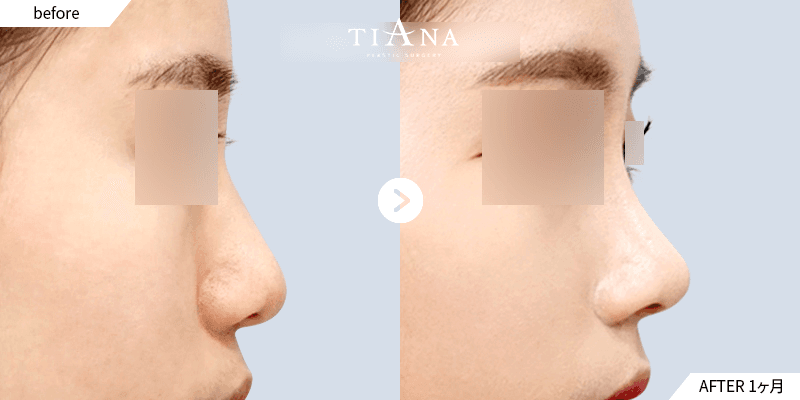
Think of a thick bath towel left to dry folded over a rail: the thin edge is dry in an hour, the folded middle is still damp by evening. Your tip is the folded middle. The American Society of Plastic Surgeons notes that while the first swelling goes down within a few weeks, the nose can take up to a year to reach its refined contour, and the tip carries much of that long tail. I've gone into why the nose tip takes longest to settle in more detail elsewhere.
Thick, oily skin stretches the timeline further and also sets the ceiling on how fine the tip can look once it's done, which is the subject of how skin sets the limit for an Asian bulbous nose.
What a normal round-looking tip feels like in the first months
- Rounder in the morning and slimmer by evening, because fluid pools in the face while you lie flat
- Firm, almost wooden to the touch, with tip skin that's numb or tingling as feeling returns
- One side a little fuller than the other, sometimes switching from week to week
- A shiny, oily tip with small whiteheads once the cast is off
- A fullness just above the tip that makes the profile look less defined
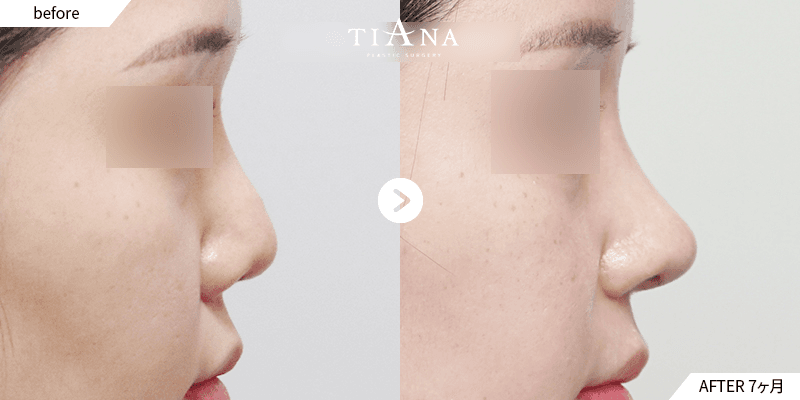
None of these on its own means something went wrong. One habit helps more than any cream: stop judging in the bathroom mirror. Take your three photos once a week, at the same window, the same time of day and the same distance, and keep them in one dated folder. Morning light exaggerates; a row of dated evening photos shows the trend, and that folder is what any doctor, here or at home, will want to see.
Wondering which type your nose is?
Share your front, 45-degree and side photos — the surgeon will tell you which procedures your nose would actually need. No cost, no obligation.
Ask which procedure fits meInfection, skin color change, a hard new lump: when to message the same day
The reactions above fade gradually. Some people settle more slowly than others: smokers, people with thick oily skin, noses operated on before, and tips built with cartilage grafts, where a graft edge can become easier to feel as swelling falls. How fast your own tip settles will vary, so compare it with your earlier photos, not with someone else's timeline.
These signs are different and shouldn't wait for your weekly photo:
Redness and swelling: what to watch for
- redness that spreads, skin that feels hot, or a fever
- pus or a bad-smelling discharge from the nostrils or the incision
- pain that gets worse after it had been easing
- tip skin that turns white, grey or purple
- bleeding that doesn't stop with ten minutes of gentle pressure
- sudden swelling or a bend after a knock to the nose
For any of these, see a doctor at home the same day, at urgent care or emergency if it's evening, and take your surgery certificate with you. Then send photos and your surgery date on WhatsApp as well. For slower worries, such as fullness on one side that hasn't changed in weeks or a small firm bump, keep taking weekly photos and send them together, so the change, or the lack of it, is visible across dates.
If one side of your tip has stayed firmer or higher than the other for several weeks, put a photo from the day your cast came off next to this week's photo in your message; two dates side by side say more than a long description.
Aftercare at home that touches the tip
Most of the home routine is about not disturbing a framework that's still knitting together. Sleep with your head raised in the first weeks. Keep heavy glasses off the bridge until your surgeon says otherwise. Don't massage, squeeze or tape the tip on your own initiative; pressure on cartilage that hasn't settled can shift it, so do only what you were shown.
Sun matters more than people expect, because healing tip skin can darken or stay red longer after exposure, so a hat and sunscreen on the nose are worth the bother. Avoid contact sports and crowded spaces where an elbow could catch your face. If you're reading this before your flight, the first days are laid out in sightseeing after rhinoplasty in Seoul, day by day.
When is a round tip a reason to talk about revision?
Surgeons generally want the tissues to soften before judging the shape, and a second operation is usually not discussed until around a year has passed. Operating on a tip that is still swollen means cutting through tissue that hasn't finished healing.
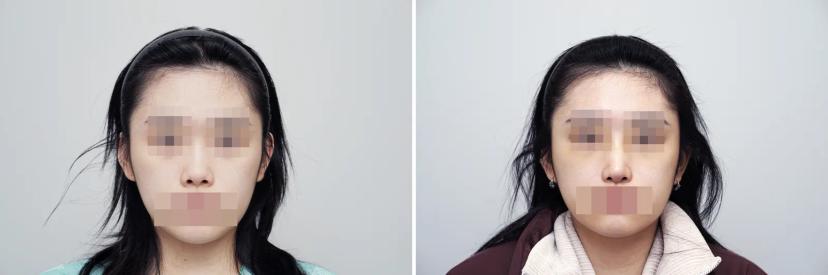
Example case (bulbous tip): front view before surgery (left) and 2 weeks after (right). Procedures: silicone bridge implant, tip with septal and donor rib cartilage, hump reduction, bulbous tip refinement, short-nose correction, columella and nasolabial angle adjustment. Results vary between individuals; swelling, bruising, asymmetry and infection are possible risks. Shared with the patient's consent; eyes and mouth are pixelated for privacy.
Say you're 52, flew home on day 8, and at four months your tip looks slim in evening photos and round every morning. Now say it's month ten, your evening photos haven't changed in three months, and the tip is still wider than the plan you agreed on. That's when a revision conversation makes sense, starting with your photos from each stage and the surgery certificate. Revision, including tips first operated on at other clinics, is part of my practice, and the choices are the same ones described in narrowing a round, wide tip in Korea.
Doctor's note
A round tip at six weeks is one of the most common worries after this surgery, and that early it's usually the tip still holding fluid. I would much rather you send a photo you think is a silly question than sit at home for a month wondering. And I'd rather wait for your tissues than chase swelling with a second operation.
If you want to see how real noses changed and how many months after surgery each photo was taken, browse TIANA's rhinoplasty case gallery before your consultation.
Before you leave Seoul: what to have in hand
If you haven't flown yet, or you're helping a parent plan theirs, these are worth sorting out wherever the surgery happens:
- the referral letter and surgery certificate in your carry-on, with a photo of each on your phone
- which stitches are still in, and the date they're due out
- a few words on what was done to the tip that you can repeat to a doctor at home
- whether an interpreter can join if you need to discuss symptoms in your own language
The TIANA English homepage shows how to reach the clinic on WhatsApp.
Risks and side effects to know
Nothing about your tip has to be decided in the first months. When you're ready, send three dated evening photos and your surgery date on WhatsApp, and ask the question you keep coming back to: is this still swelling at my stage? What tells swelling from shape is how your tip changes between morning and evening, and from one month's photos to the next.
— Dr. Choi Hang-seok, Head Surgeon
Cases close to this concern
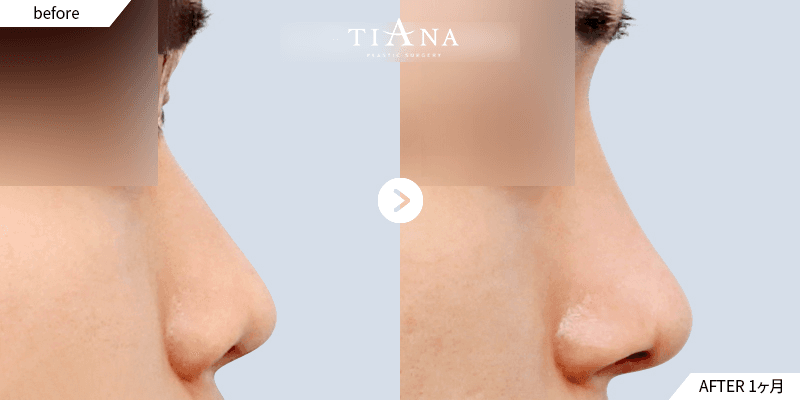
Drag the handle to compare before and after
TIANA case, shared with the patient's consent. Results vary.
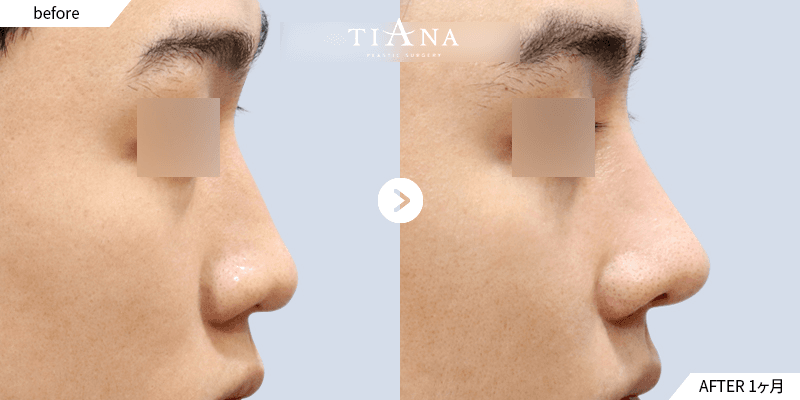
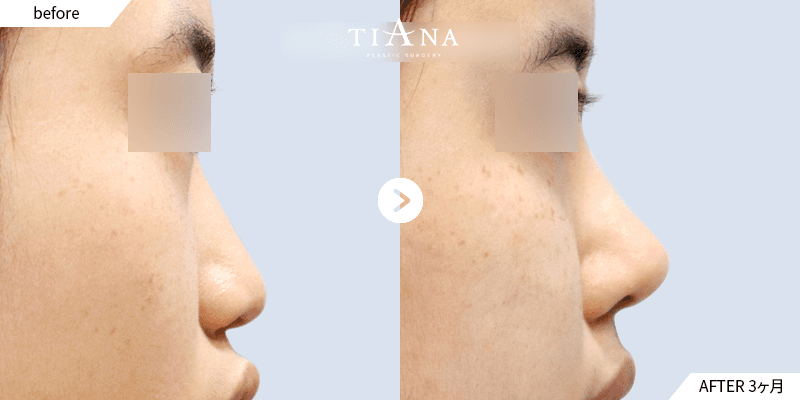
Before and after at TIANA (shared with patient consent) 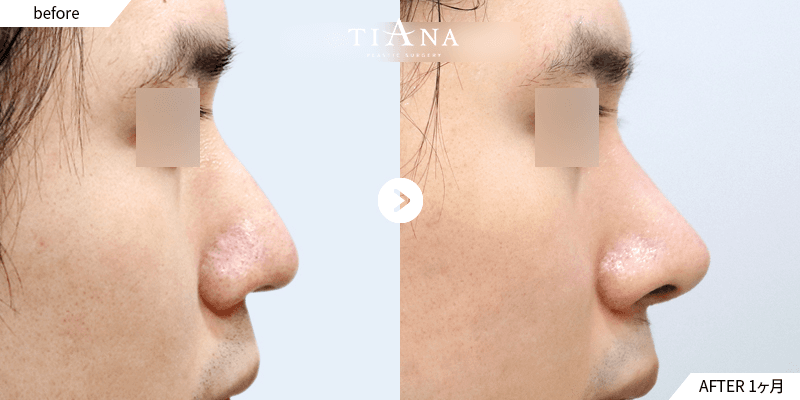
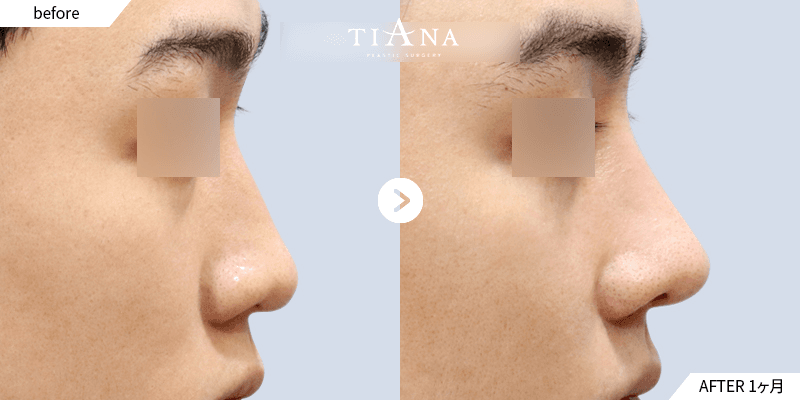
Before and after at TIANA (shared with patient consent) 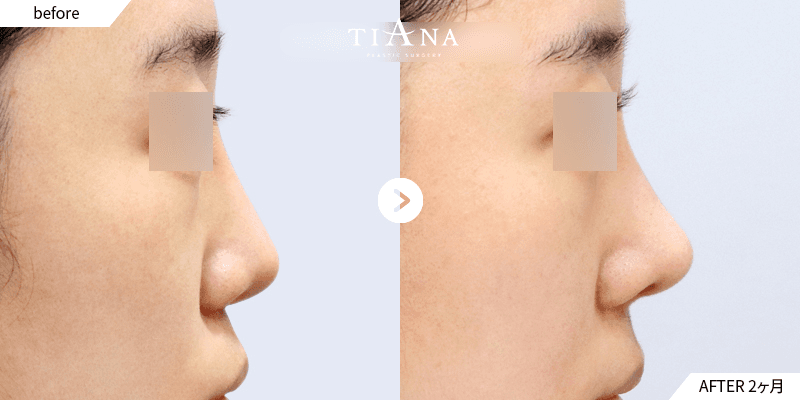
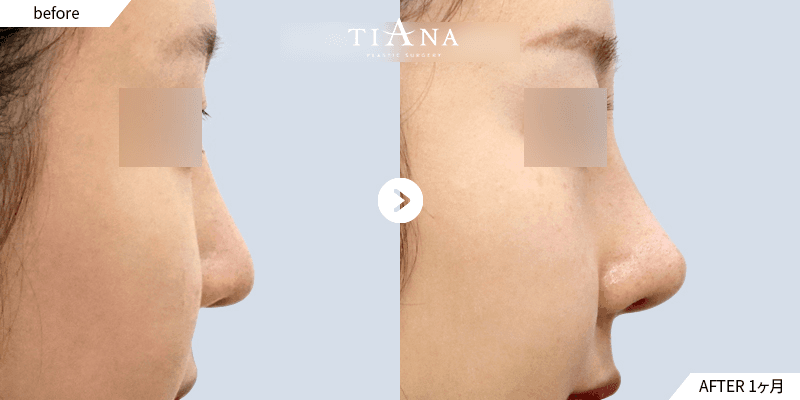
Before and after at TIANA (shared with patient consent)
* Results vary between individuals. Photos show TIANA patients.
See more cases →Korean patients talk about their surgery
Videos from Korean patients who had surgery at TIANA (Korean, YouTube). Patients from Japan, Taiwan and English-speaking countries also contact us every month on LINE and WhatsApp.


Start from your concern
Bulbous tip types and what is considered
- Current shape
- Design direction (illustration)
Illustration only, not a result and not to scale.
What to consider
Tip cartilage reshaping (suturing, trimming)
Wide, spread tip cartilage
From first message to flying home
Photo consult on WhatsApp
Send 5 photos and a photo of the nose you would like. The free reply in English explains the likely scope and how the estimate is worked out.
Video consult (optional)
On Google Meet you talk with the surgeon first, then the consultation manager explains the estimate. Free, with an interpreter.
Visit and 3D-CT
A 3D-CT scan and the surgeon's examination confirm the final plan and fee. An interpreter joins the consultation.
Surgery
The surgeon who consulted you performs the surgery and also manages the anesthesia.
Day 7 and day 14
The splint and outer stitches come off around day 7, the inner stitches around day 14. After you fly home, send progress photos on WhatsApp.
FROM THE SURGEON
A word from the surgeon
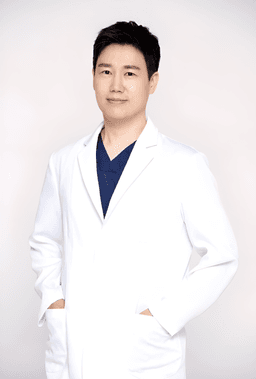
Bone, cartilage and skin thickness differ a lot between people, so the same operation name can need different steps.
Because I only treat noses, I can tell you at the consultation not just how far your nose can change, but where it is better not to push further.
Frequently asked questions
Q1Why does the area just above my tip look fuller than before?
Swelling and early scar tissue often collect in the soft spot just above the tip, which can round the profile and make the tip look less projected. In the first months this usually softens with time. If it's still firm after many months, send dated profile photos.
Q2Should I massage my tip to push the swelling down?
Only if your surgeon showed you how and told you when. Pressing on cartilage stitched into a new position a few weeks ago can shift it or irritate a graft. Keeping your head raised at night, going easy on salty food and giving it time are safer.
Q3Can a doctor at home treat a problem with surgery done in Korea?
Yes. Infection, bleeding or a blocked nose are treated the same way wherever the operation took place. Bring your surgery certificate so they can see what was done, and send the same photos with your surgery date on WhatsApp.
Q4Can thick skin keep the tip looking round for good?
Thick skin can leave some fullness that waiting won't remove, because skin can only shrink so far onto the cartilage. That limit is set before surgery, and it shows as a softer tip that stays the same, while a tip that keeps getting wider later on is a different matter and worth photographing.
Thank you for reading to the end.
Send 5 photos (front, 45-degree and side) on WhatsApp for a free photo consultation. We reply in English with the likely scope of surgery and how the estimate is worked out.
Send my photos on WhatsAppThis article is general information about elective cosmetic surgery and is not a diagnosis. Results and recovery vary between individuals. Before-and-after photos are published with patient consent; surgery carries risks such as swelling and bruising and requires downtime. Final procedures and fees are decided after examination.