Korea Bulbous Tip vs Regular Rhinoplasty: Which One?
"Will a narrower tip look odd if the rest of my nose stays as it is?"
30-second check
Check what your bulbous tip needs
Pick what applies. Related procedures appear, and you can send your answers straight to WhatsApp. No name or email needed.
Pick at least one concern to see the related procedures.
Send this on WhatsAppWhatsApp opens with your answers already typed. Then send 5 photos (front, both 45-degree angles, both sides) and, if you have one, a photo of the nose you would like.
Not opening? Copy the message and open WhatsAppAdd your date of birth and surgery history (booking form) →People ask this a lot before tip surgery. Underneath it sits a second thought: what if you pick the smaller operation, fly home, and only then see that the whole nose needed work?
In the Korea bulbous tip vs regular rhinoplasty decision, your bridge matters more than your tip. If the bridge already sits at a height that suits your face, narrowing the tip on its own is usually enough. If the bridge is low, a refined tip alone tends to look stuck on, and a full rhinoplasty that shapes bridge and tip together fits better.
Hello, I'm Dr. Choi Hang-seok, Head Surgeon at TIANA Plastic Surgery in Seoul and a plastic surgery specialist in Korea.
I operate only on noses, so at the consultation I can tell you how far your nose can change and also where it's better not to push further. The surgeon you consult with is the one who operates, Dr. Choi manages the anesthesia himself, and a 3D-CT scan shows the bone and cartilage under a thick, round tip before a scope is settled.
If you're stuck between the two, send five photos on WhatsApp (front, both obliques, both sides) and ask the one thing that matters here: does my bridge need work, or only my tip? If English isn't your first language, an interpreter joins your in-person consultation.
Three ways to treat a round tip, side by side
A "regular" rhinoplasty usually means surgery on the whole nose. Here that is the full rhinoplasty: the bridge, raised with a silicone implant or your own tissue, and the tip, supported with septal, ear or donor cartilage, planned as one shape. Bulbous tip correction stays at the end of the nose. The cartilages that make the tip look round are brought closer together, so it reads narrower from the front and cleaner in profile.
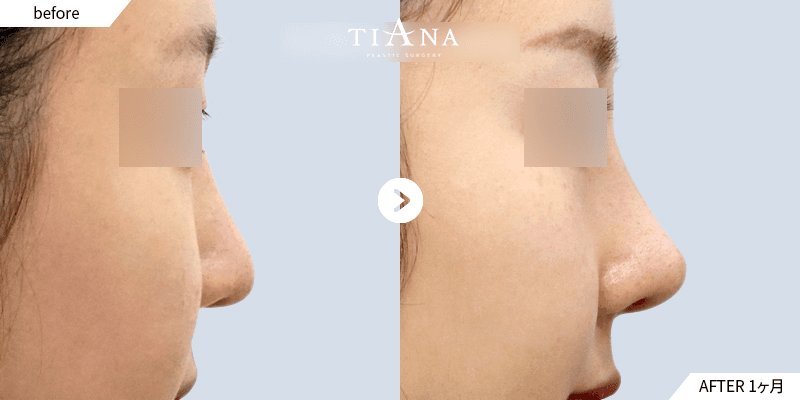
There is also a no-incision tip option. The incision is kept to a minimum and recovery is lighter, but the change it can make is smaller.
| Option | What it changes | Who it tends to suit |
|---|---|---|
| Bulbous tip correction | Brings the tip cartilages together to narrow a round tip | A wide, round tip under a bridge you already like |
| Full rhinoplasty | Bridge height and tip shape planned together | A low or flat bridge plus a round tip |
| No-incision tip surgery | A smaller tip change through a minimal incision | Mild roundness, when short downtime matters most |
If width at the very end of the nose is your main complaint, I go further into the techniques for narrowing a round, wide tip in a separate post.
Is tip surgery alone enough when the bridge is low?
Often it isn't. Raising or sharpening only the tip on a low bridge makes the tip look like it floats in front of the face, because the eye reads the nose as one line from the brows down. That's why I don't choose an operation by its name or by what's popular this year. I choose by bone structure and by what actually bothers you.
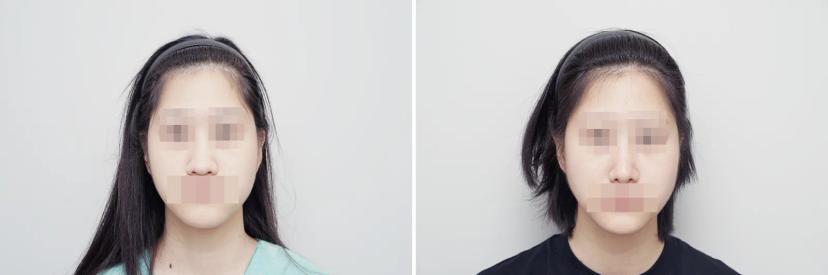
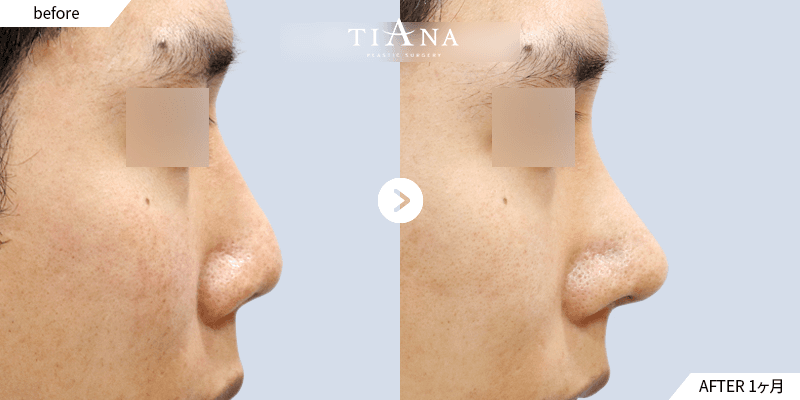
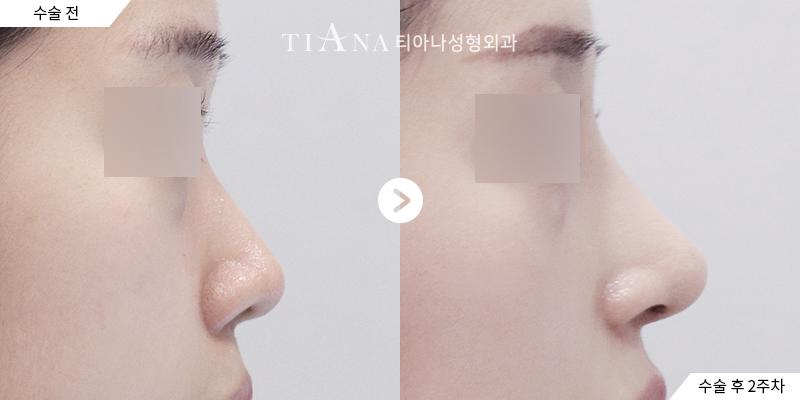
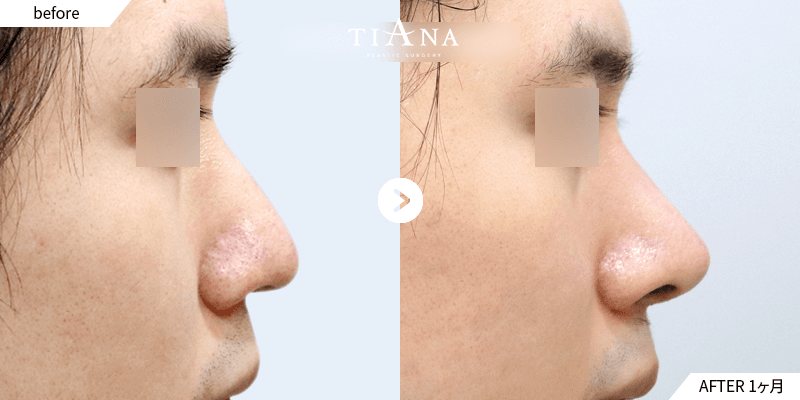
Example case (bulbous tip): front view before surgery (left) and 6 months after (right). Procedures: implant-free bridge with septal cartilage, tip with septal and donor rib cartilage, bulbous tip refinement, drooping-tip correction, columella and nasolabial angle adjustment. Results vary between individuals; swelling, bruising, asymmetry and infection are possible risks. Shared with the patient's consent; eyes and mouth are pixelated for privacy.
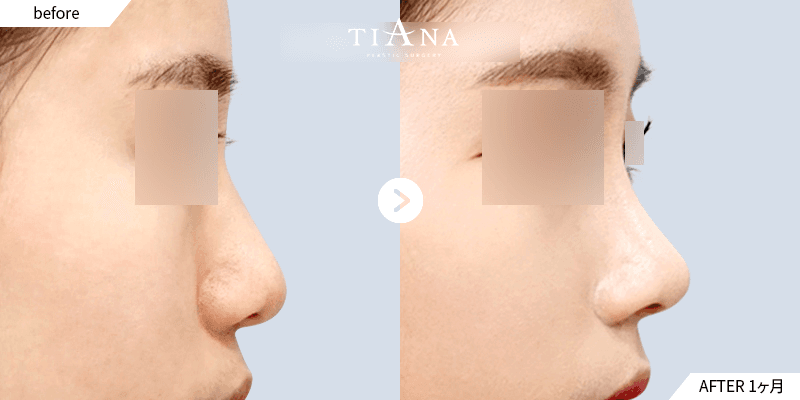
Here's a rough check you can do at home before you message anyone. Take a profile photo in daylight, then cover the tip with a fingertip. If the line from between your eyes down to your finger already looks right to you, a tip-only plan is worth discussing. If that line looks low or flat, the conversation will probably turn to the whole nose.
If you bring a photo of a nose you like, I compare it with your anatomy and set only the range that can be reached without forcing it. I'd rather confirm the scope at the consultation than have you realise after the trip that the range wasn't enough.
Doctor's note
I'd rather add the bridge to the plan at the consultation than send you home with a tip that sits ahead of the rest of your face. I'd equally rather leave alone a bridge that already suits you. Doing only the range you need is how a nose ends up looking like it was always yours.
Wondering which type your nose is?
Share your front, 45-degree and side photos — the surgeon will tell you which procedures your nose would actually need. No cost, no obligation.
Ask which procedure fits meDoes thick skin change the answer?
Yes, and this is where many people who were told "difficult" at home get stuck. Think of the tip cartilage as the wire frame of a lampshade and the skin as the fabric over it. Pinch the frame narrower and thin fabric follows it closely. Thick, padded fabric hides much of the change.
In many Asian noses the skin over the tip is thick and the cartilage underneath is small and soft. Surgeons writing on Asian rhinoplasty describe the same problem: removing cartilage under thick skin rarely sharpens the tip, and adding structural support usually does more. Bone, cartilage and skin thickness differ a lot between people, so the same operation name can need different steps.
Say you're 31, living in Sydney, with a wide tip, thick oily skin over it and a bridge you're mostly happy with. A surgeon at home suggested a full rhinoplasty with an implant. In that situation I'd look first at supporting and narrowing the tip with cartilage, and leave the bridge alone if it already suits your face. What you should expect is a narrower, more defined tip, not a thin pointed one, and with thick skin the change shows slowly as swelling settles. If you also want the bridge higher, then the full rhinoplasty becomes the right conversation.
If your skin is thick, add one close side photo of the tip in daylight without makeup, and ask whether your skin points to tip support alone or to the whole nose.
How many nights in Seoul does each option need?
Plan on 7 to 14 nights, depending on what's done. The cast and the outer stitches come off around day 7, and the stitches inside the nose around day 14. If you fly home on day 7, you leave with a referral letter and a surgery certificate so a doctor at home can remove the inside stitches.
The no-incision tip tends to recover faster than the other two. A full rhinoplasty adds work on the bridge, so in general there is more swelling to settle around the upper nose as well. The clinic also has high-concentration oxygen care, used to help recovery from swelling after surgery.
Whichever option you choose, the tip is the last part to settle. General surgical guidance is that the final contour can take up to a year to refine, and thick skin sits at the slow end of that. The day-by-day picture is in the post on bulbous tip recovery in Seoul, and if language is what worries you most, there's a post on which bulbous tip surgery steps you can handle in English. The photo consultation steps and my profile are on TIANA's English homepage.
What decides the cost of tip-only work versus the whole nose?
There's no single number, because the cost follows what your nose needs:
- Scope. Tip only, or bridge and tip together.
- Your nose. How much cartilage you have and how thick the skin is, which decides whether the tip needs support grafts.
- First surgery or revision. A revision usually involves more work.
- Your stay. How many nights you spend in Seoul is part of your own budget.
A plan that looks cheaper on paper can end up costing more if a second surgery and a second trip are needed later. Deposit and payment method are settled after the consultation, so you can ask about both in the same WhatsApp message where you ask what your case would cost, with the five photos attached.
Swelling, a stiff tip, or a tip that looks unchanged: the risks
The reactions most people have are swelling and bruising, a tip that feels firm or numb for a while, and a tip that stays fuller than the rest of the nose for months. Less often there is asymmetry, infection, a change in breathing, or a result that later needs a revision. Under thick skin there's one more: scar tissue can fill the space left by over-trimmed cartilage and make the tip look round again, which is one reason support usually beats removal. How quickly your tip settles differs from person to person.
It's sensible to wait if you have an active infection or breakout on the nose, are pregnant, have had a recent injury to the nose, or are still in your teens and growing.
If you're home and notice increasing redness, worsening pain, fever, or a new bump, see a local doctor promptly and take your surgery certificate with you. Then send photos and your surgery date on WhatsApp. If a revision ever turns out to be needed, the clinic has a setup for handling revision surgery.
What should you ask any clinic before agreeing to a scope?
- How is skin thickness over the tip assessed, and what imaging is used before deciding tip-only versus the whole nose?
- Is the surgeon at the consultation the one who operates?
- If the plan is tip-only, what supports the tip, and where does that cartilage come from?
- What happens with the inside stitches if you fly home on day 7?
- Is an anesthesiologist present during surgery?
- Can you have a medical interpreter for your language?
It doesn't have to be us. Wherever you sit down, these answers will tell you more than a gallery of the smallest tips, a point I go into in how to choose a clinic for bulbous tip surgery.
If you want to see how real noses changed and how many months after surgery each photo was taken, browse TIANA's rhinoplasty case gallery before your consultation.
Where I stand on tip-only versus the whole nose
My view is that a round tip deserves the smallest operation that actually fixes it, and no smaller. When your bridge already suits you, I'd keep it. When it doesn't, I'd rather tell you now than have you notice it on the flight home.
There's no need to settle this in a week. When you're ready, send the five photos on WhatsApp with your rough travel dates and ask whether your nose points to the tip alone or to the whole nose. What decides it for you is how thick the skin over your tip is and how much cartilage sits beneath it.
— Dr. Choi Hang-seok, Head Surgeon
Cases close to this concern
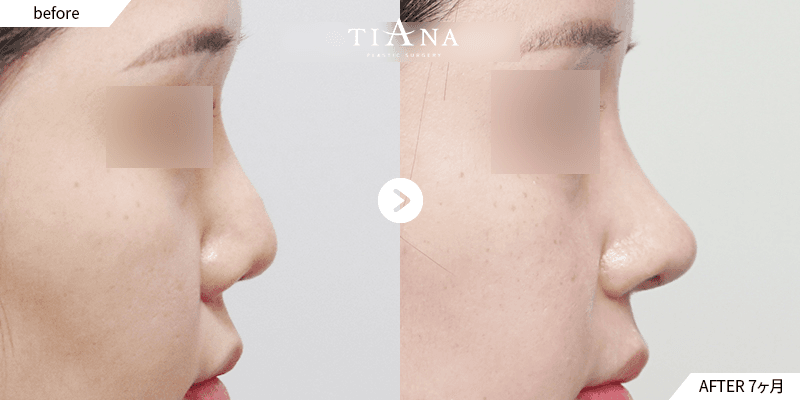
Drag the handle to compare before and after
TIANA case, shared with the patient's consent. Results vary.
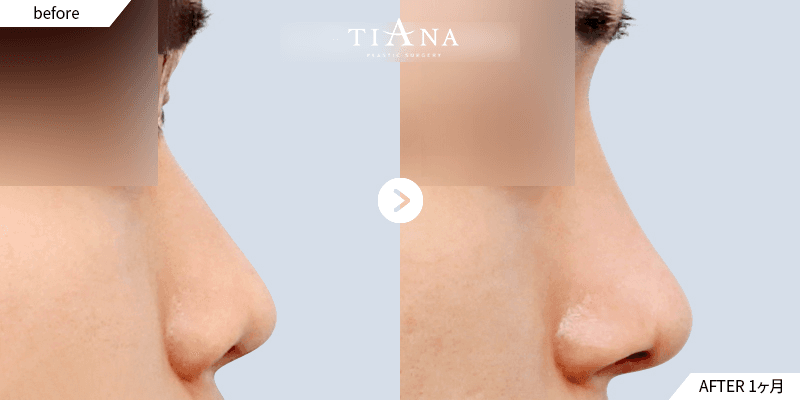
Before and after at TIANA (shared with patient consent) 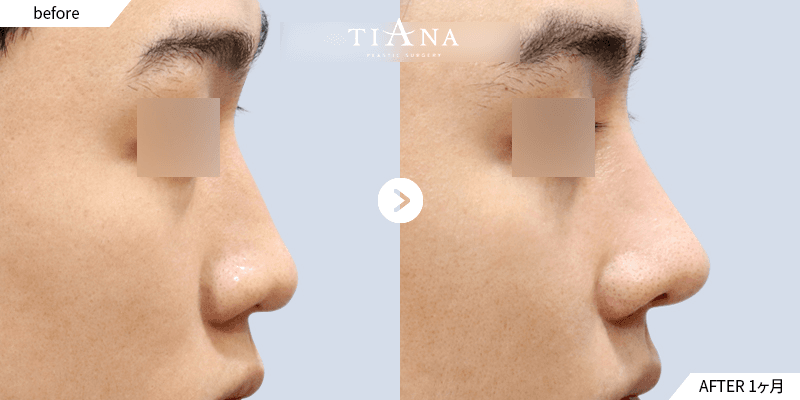
Before and after at TIANA (shared with patient consent) 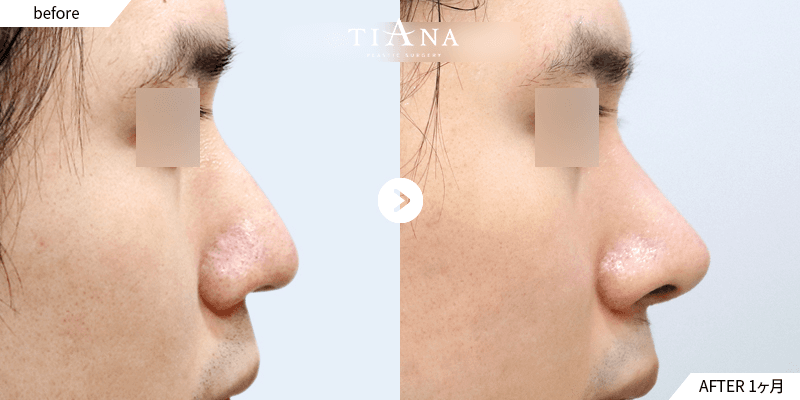
Before and after at TIANA (shared with patient consent)
* Results vary between individuals. Photos show TIANA patients.
See more cases →Korean patients talk about their surgery
Videos from Korean patients who had surgery at TIANA (Korean, YouTube). Patients from Japan, Taiwan and English-speaking countries also contact us every month on LINE and WhatsApp.


Start from your concern
Bulbous tip types and what is considered
- Current shape
- Design direction (illustration)
Illustration only, not a result and not to scale.
What to consider
Tip cartilage reshaping (suturing, trimming)
Wide, spread tip cartilage
From first message to flying home
Photo consult on WhatsApp
Send 5 photos and a photo of the nose you would like. The free reply in English explains the likely scope and how the estimate is worked out.
Video consult (optional)
On Google Meet you talk with the surgeon first, then the consultation manager explains the estimate. Free, with an interpreter.
Visit and 3D-CT
A 3D-CT scan and the surgeon's examination confirm the final plan and fee. An interpreter joins the consultation.
Surgery
The surgeon who consulted you performs the surgery and also manages the anesthesia.
Day 7 and day 14
The splint and outer stitches come off around day 7, the inner stitches around day 14. After you fly home, send progress photos on WhatsApp.
FROM THE SURGEON
A word from the surgeon
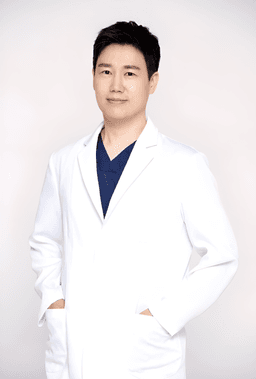
Bone, cartilage and skin thickness differ a lot between people, so the same operation name can need different steps.
Because I only treat noses, I can tell you at the consultation not just how far your nose can change, but where it is better not to push further.
Frequently asked questions
Q1Can I fix the tip now and do the bridge later?
It's possible, but a second operation works through scar tissue from the first, and the tip may need adjusting so it matches the new bridge height. If you already suspect you'll want the bridge higher, it's usually better to plan both in one surgery.
Q2Is no-incision tip surgery enough for a very round tip?
Usually not for a wide tip under thick skin. It suits mild roundness where a small change is the goal and short downtime matters. A very wide or heavy tip typically needs the cartilage reshaped through a standard tip approach.
Q3Will I need rib cartilage for bulbous tip correction?
In a first surgery, septal or ear cartilage is often enough to support the tip. Rib cartilage is mainly used in revisions where too little cartilage is left, and in most cases of a contracted nose.
Q4Can narrowing the tip affect my breathing?
Over-narrowing or weakening the tip cartilage can make the nostril walls collapse inward when you breathe in, which is why tip work aims to keep or add support. If you already have trouble breathing through your nose, mention it, since functional rhinoplasty is also on the menu.
Thank you for reading to the end.
Send 5 photos (front, 45-degree and side) on WhatsApp for a free photo consultation. We reply in English with the likely scope of surgery and how the estimate is worked out.
Send my photos on WhatsAppThis article is general information about elective cosmetic surgery and is not a diagnosis. Results and recovery vary between individuals. Before-and-after photos are published with patient consent; surgery carries risks such as swelling and bruising and requires downtime. Final procedures and fees are decided after examination.