How to Choose a Clinic for Bulbous Tip Surgery
Afraid of picking a clinic from its photos and flying home with a tip that's still round, or one that now looks pinched? That fear is what sits behind a question like how to choose a clinic for bulbous tip surgery, and it's a reasonable one when the surgeon is a stranger in another country.
By the end of this guide, your questions about rhinoplasty should turn into a clear next step.
Send 5 photos (front, 45-degree and side) on WhatsApp and we will reply in English with a free first assessment: the likely scope of surgery and how the estimate is worked out.
Send my photos on WhatsAppGive this ten minutes before you shortlist anyone.
You'll know what decides the cost, what reviews get right and wrong about round tips, and which methods suit which kind of tip, so you can judge a practice by how it reads your nose and your budget.
Hello, I'm Dr. Choi Hang-seok, Head Surgeon at TIANA Plastic Surgery in Gangnam, Seoul, and a plastic surgery specialist.
We perform only rhinoplasty and revision rhinoplasty. Before surgery, 3D-CT imaging maps the bone and nasal structure, and the same specialist, me, handles your consultation, surgery and aftercare.
I wrote this because many people choose a practice by the narrowest tip in its gallery, when the limit on their own result is usually their skin and cartilage.
The short answer: choose the practice that examines your skin thickness and tip cartilage before promising a shape, tells you whether tip work alone is enough, and can take on a revision if one is ever needed.
If you want a starting point, send front, 45-degree and side photos of your nose on WhatsApp and ask one question: does my skin limit how slim this tip can go?
Is the clinic with the smallest tip photos the right one?
Usually not for you, and the reason is anatomy. A bulbous tip comes from some mix of three things: wide or thick tip cartilages, the angle between the two cartilage domes, and the thickness of the skin and soft tissue lying over them. Surgery can reshape, narrow and support cartilage. It can't make thick skin thin.

A 2014 review of Asian rhinoplasty in Plastic and Reconstructive Surgery Global Open describes thicker skin and smaller, weaker tip cartilage as common reasons tip definition is harder to achieve in many East Asian noses. That's why a gallery of very sharp tips mostly shows what a surgeon did on thin skin. If your skin is thick, the useful question is what that practice does with a nose like yours. I've written more about this in what tip surgery can change when the skin is thick, and the causes of a bulbous nose and how tip surgery refines it are covered separately.
Doctor's note
A nose changes the whole face with tiny differences, which is why I operate only on noses. With a round tip, the temptation is to chase the narrowest version you've seen online. If too much cartilage comes out of a tip under thick skin, the skin doesn't shrink to follow it, and the tip can lose support over the years. I'd rather set a range your skin can carry, and reach it.
How to choose a clinic for bulbous tip surgery: the checks that matter
The UK's NHS advises checking a surgeon's qualifications and asking about their experience with the exact procedure before you agree to anything. For a round tip, I'd add a few questions that are specific to the tip:
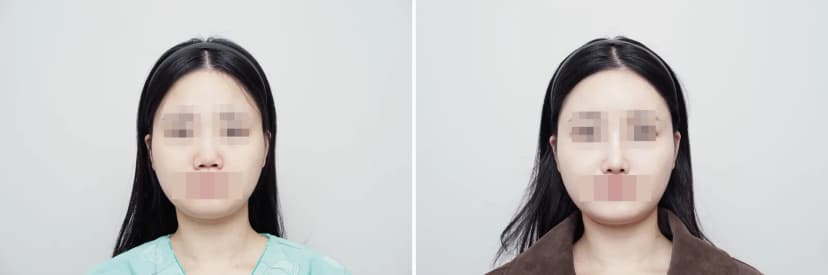
Example case (bulbous tip): front view before surgery (left) and 2 weeks after (right). Procedures: silicone bridge implant, tip with septal and donor rib cartilage, bulbous tip refinement, short-nose correction, osteotomy, columella and nasolabial angle adjustment. Results vary between individuals; swelling, bruising, asymmetry and infection are possible risks. Shared with the patient's consent; eyes and mouth are pixelated for privacy.

- Does the practice assess skin thickness and cartilage before it names a shape?
- Does it tell you whether the tip alone is enough, or whether the bridge belongs in the plan? Raising or slimming only the tip can make it look stuck on.
- Does it compare your reference photo with your anatomy and tell you which parts are reachable?
- Is the person who examines you the person who operates and follows you afterwards?
- Does it perform revision surgery, including after surgery elsewhere?
- What paperwork do you leave with if you fly home on day 7?
Here is how we answer them. We do noses only. 3D-CT maps the bone and nasal structure before surgery. I compare the photo you bring with your bone structure and set only the range that can be reached. We perform revision rhinoplasty, including difficult cases such as contracture. If you fly home on day 7, you leave with a referral letter and a surgery certificate. You can read how the photo consultation and quote work on our English rhinoplasty page.
Wondering which type your nose is?
Share your front, 45-degree and side photos — the surgeon will tell you which procedures your nose would actually need. No cost, no obligation.
Ask which procedure fits meWhat do reviews get right about bulbous tip surgery?
Forum threads and review sites about tip surgery tend to repeat the same few claims. Some hold up medically and some don't.
"Tip swelling is the last to go." Largely true. The tip has the thickest soft tissue, and the American Society of Plastic Surgeons notes that while early swelling settles within weeks, the nasal contour can take up to a year to fully refine. A tip that looks wide at week three isn't a finished result.
"With thick skin, surgery does nothing." Not accurate. Thick skin limits how sharp the tip can look, but reshaping the cartilage and giving it firmer support can still change width and projection from the front and the side.
"The surgeon who removed the most cartilage got the smallest tip." Sometimes in the short term. Over-reducing tip cartilage is a known cause of a pinched tip, notching at the nostril rim or a tip that drops later. A smaller tip that holds its shape usually needs support as well as reduction.
Which methods are on the table for a round tip?
Which one fits is decided by bone structure and what bothers you, not by what's trending. These are the options we offer for a bulbous tip:
- Bulbous tip refinement: reshaping the tip cartilage so the tip looks slimmer from the front and the side.
- Minimal-incision tip work or tip surgery without an implant: for a tip that needs only light refinement. Minimal-incision procedures tend to recover faster.
- Tip support with cartilage: septal, ear, rib or donor rib cartilage, or your own dermis and fascia, when the tip needs projection or firmer support.
- Full rhinoplasty: when the bridge is also low, a bridge implant plus tip support designed as one profile.
- Alar reduction: when the width you see comes from the nostrils rather than the tip itself.
The tip is designed together with the nasolabial angle, the angle between the columella and upper lip, so it still fits your face. If you want to see what each stage involves, the bulbous tip procedure steps in English walk through them.
Say you have thick skin, a wide tip and ten nights in Seoul
Say your bridge is fine, your tip is round and wide, your skin is on the thick, oily side, and you can take ten nights away. Here's how I would reason about it.
First, whether the tip alone is enough. If the bridge sits well with your face, I'd keep the plan to the tip. Next, how much of the width is cartilage. 3D-CT shows the structure underneath, and if the cartilage is wide, narrowing it with added support is where most of the change comes from. Then the target: with thick skin I'd aim for a tip that looks slimmer and better supported, and say plainly that it won't look razor-sharp. That conversation before surgery saves a lot of disappointment at month three.
Ten nights fits our usual advice of about 7 to 14 nights in Seoul, with at least 7. The splint and outer stitches come off around day 7 and the inner stitches around day 14; the timing varies and is confirmed at surgery. What day-by-day aftercare looks like is covered in the recovery system for bulbous tip surgery in Korea.
If that sounds like your nose, add one side photo taken in daylight and the dates you're considering to your WhatsApp message, and ask whether ten nights would cover the scope your tip likely needs.
What decides the cost for your tip?
We don't publish a fixed menu price, because two tips that look alike can need very different surgery. These are what move the cost for a round tip:
- Scope: tip only, or bridge and tip together.
- Cartilage: whether enough septal cartilage is available, or ear, rib or donor rib cartilage is needed for support.
- Your skin: thickness changes what the tip needs to hold its shape.
- Revision: a tip that was operated on before usually means more work.
- Your nights in Seoul: about 7 to 14, which shapes the travel side of your budget.
A plan that looks cheaper can end up costing more money and more trips if the tip needs correcting later, so I'd compare plans by what they include for your nose. Ask on WhatsApp what it would cost for your case, with your photos attached. A deposit is only discussed once you decide to book surgery.
If you want to see how real noses changed and how many months after surgery each photo was taken, browse TIANA's rhinoplasty case gallery before your consultation.
Risks and side effects to know
The common effects are temporary: swelling, bruising around the eyes, a blocked feeling in the nose, and numbness or stiffness of the tip skin. Bruising usually fades over the first couple of weeks, and the tip stays slightly swollen the longest. The American Society of Plastic Surgeons lists less common risks, including infection, bleeding, poor wound healing, breathing difficulty, skin discoloration, an appearance you're unhappy with and the possibility of revision surgery.
As general medicine, it is usually wiser to wait if you have an active infection or inflamed skin on the nose, a recent procedure on the nose that is still healing, pregnancy or breastfeeding, or a bleeding problem or blood-thinning medication that hasn't been reviewed by your doctor. Smoking slows healing, so plan to stop well before surgery. A nose that is still growing in the teenage years is another reason to wait.
If something feels wrong after you fly home, such as fever, spreading redness, increasing pain, discharge or sudden trouble breathing, see a local doctor promptly and take your referral letter and surgery certificate with you. The US CDC advises medical travelers to carry copies of their records and to plan follow-up care at home before they leave. Send photos of what you're seeing on WhatsApp as well. Recovery and results differ from person to person.
Summary
Pick the clinic that examines your skin thickness and tip cartilage before it promises a shape, tells you honestly whether tip work alone is enough, and can handle revision if it is ever needed. A round tip is often a skin-and-cartilage question rather than a matter of how small a gallery photo looks. More guides on bulbous nose surgery in Korea cover methods, recovery and thick skin.
Before you shortlist any clinic, send five photos (front, 45-degree and side views) on WhatsApp with the one thing that bothers you most about your tip. You can ask questions before booking anything, and the reply comes in English. When you come to Seoul, I examine your nose with 3D-CT and recommend the scope that fits it.
Frequently asked questions
Q1Can a bulbous tip be refined without an implant?
Yes. We offer tip surgery without an implant, and minimal-incision tip work for tips that need only light refinement. Whether it suits you comes down to your cartilage and skin, which are checked during the examination.
Q2How long does swelling in the nose tip last?
Bruising and most visible swelling usually settle over the first weeks, but the tip has the thickest soft tissue and refines slowly. The American Society of Plastic Surgeons notes the contour can take up to a year to fully settle.
Q3Do I need my bridge done as well as my tip?
Not always. If the bridge suits your face, the plan can stay on the tip. If the bridge is also low, full rhinoplasty with a bridge implant plus tip support may be suggested so the profile reads as one line.
Q4How many nights should I plan in Seoul for tip surgery?
Plan on about 7 to 14 nights, at least 7. The splint and outer stitches come off around day 7 and the inner stitches around day 14; timing varies and is confirmed at surgery. If you fly home on day 7, you get a referral letter and surgery certificate.
Q5Can I ask questions in English before I travel?
Yes. Message us in English on WhatsApp; the reply comes in English.
Thank you for reading to the end.
Send 5 photos (front, 45-degree and side) on WhatsApp for a free photo consultation. We reply in English with the likely scope of surgery and how the estimate is worked out.
Send my photos on WhatsAppThis article is general information about elective cosmetic surgery and is not a diagnosis. Results and recovery vary between individuals. Before-and-after photos are published with patient consent; surgery carries risks such as swelling and bruising and requires downtime. Final procedures and fees are decided after examination.