Nose Tip Getting Bigger? It's Rarely the Cartilage
“Is my nose still growing?”
30-second check
Check what your bulbous tip needs
Pick what applies. Related procedures appear, and you can send your answers straight to WhatsApp. No name or email needed.
Pick at least one concern to see the related procedures.
Send this on WhatsAppWhatsApp opens with your answers already typed. Then send 5 photos (front, both 45-degree angles, both sides) and, if you have one, a photo of the nose you would like.
Not opening? Copy the message and open WhatsAppAdd your date of birth and surgery history (booking form) →Surgeons hear that question a lot, and there's usually a quieter worry underneath it. If your nose is changing on its own, would an operation only add to the problem? Before you decide anything, you want to know why.
Nose tip getting bigger in adulthood is rarely a sign of cartilage growth. Usually the skin over the tip has thickened, or the ligaments holding the tip up have loosened so it sags and looks heavier. If you've had rhinoplasty before, swelling or scar tissue may be sitting above the tip. If the thickening comes with redness and bumpy skin, it's a skin condition, and a dermatologist should see it first.
Hello, I'm Dr. Choi Hang-seok, Head Surgeon at TIANA Plastic Surgery in Seoul.
I operate only on noses. That matters for this question, because the cause decides whether surgery should touch your tip at all. In Seoul, your final plan is set with a 3D-CT scan and an exam, which show the bone and cartilage under skin that hides them. The doctor you consult with is the doctor who operates, and he manages the anesthesia himself. You can consult in English. If you'd rather use your own language, a medical interpreter is provided at no extra charge.
Put an old photo next to a new one. Send a side photo taken today and one from five or more years ago on WhatsApp, and ask whether your tip has dropped or widened. Two photos side by side show the change more clearly than any description you could write.
Is the cartilage in my tip still growing?
Adult nasal cartilage doesn't keep enlarging the way people fear. What changes is everything around it. With age, the skin over the tip and just above it tends to thicken and carry more oil glands, so the same cartilage sits under a heavier blanket. The small ligaments that tie the tip cartilages to the cartilage above them slacken. The bone at the base of the nose, around the opening where the columella rests, slowly loses a little volume, so the tip loses part of the platform it sits on.
Think of a tent whose guy ropes have gone slack. The canvas hasn't grown, but it sags, spreads and looks bigger than it did. A tip that rotates down by even a few millimeters also makes the whole nose look longer, and the lower third of the face looks heavier from the side.
Risks and side effects to know
That droop has a side effect people rarely connect to it: the bump on the bridge stands out more. A hump that was always there can suddenly seem new, because the tip below it has dropped and no longer balances it. This is why a question about the tip often turns into a question about the bridge too.
Three causes that look the same in the mirror
From the front, a drooping tip, thick skin and post-surgery fullness can all read as "my tip got bigger". They come from different tissues, so they need different fixes.
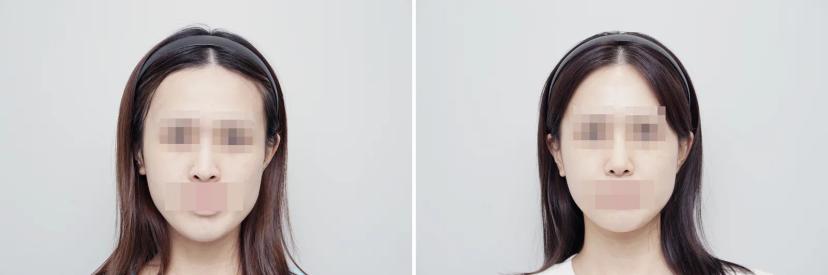
Example case (implant-free rhinoplasty, short nose): front view before surgery (left) and 2 weeks after (right). Procedures: implant-free bridge with septal cartilage, tip with septal and the patient's own rib cartilage, short-nose correction, crooked-nose correction, columella and nasolabial angle adjustment, nostril rim lowering. Results vary between individuals; swelling, bruising, asymmetry and infection are possible risks. Shared with the patient's consent; eyes and mouth are pixelated for privacy.
| What's happening | What you tend to notice | What usually helps |
|---|---|---|
| The tip has lost support and droops | Tip points down, more when you smile; nose looks longer; bridge bump shows more | Restoring tip support and angle, sometimes with a small hump reduction |
| The skin over the tip has thickened | A soft, wide, round tip; large pores; the shape underneath doesn't show | Skin care first; surgery can refine the cartilage only as far as thick skin lets it show |
| Rhinophyma, a form of rosacea | Redness, visible vessels, bumpy texture, thickening that keeps progressing | A dermatologist first; medication can slow it, and advanced tissue is removed rather than reshaped |
| Swelling or scar after a past rhinoplasty | Fullness just above the tip, months after surgery | Time and review by the operating surgeon; revision only once the tissue has matured |
Rhinophyma needs a separate warning. It's uncommon, more frequent in men, and it can keep thickening the skin of the nose over years. Medication works best early and can slow it, but it doesn't remove tissue that has already built up. It isn't a rhinoplasty problem first. I'd rather you see a dermatologist before you book any nose surgeon, me included.
Thick skin is the other cause people underestimate. It's common in East Asian noses, and the surgical literature on Asian rhinoplasty treats it as one of the main limits on how defined a tip can become. Skin like that can still be improved, but it sets the ceiling.
Wondering which type your nose is?
Share your front, 45-degree and side photos — the surgeon will tell you which procedures your nose would actually need. No cost, no obligation.
Ask which procedure fits meMy tip got bigger after rhinoplasty. Is that normal?
For the first months, mostly yes. The tip has the thickest skin on the nose and drains swelling slowly, so it's the last part to settle. I explain the reasons in more detail in why the nose tip takes longest to settle after rhinoplasty. With thick skin, that settling commonly runs to around a year and sometimes longer.
A fullness above the tip that grows instead of fading after the first few months is not normal. Surgeons call it a supratip or "pollybeak" deformity. Either scar tissue has filled the space above the tip, or the tip has lost support and sunk, so the bridge above it sticks up by comparison. Show it early to the surgeon who operated, because some causes can be managed without another operation while the tissue is still active. If a revision is needed, it's usually planned only after the skin has softened, commonly about a year after the first surgery.
A graft that has shifted, or a tip that was narrowed too far and then collapsed, can also make the tip look wider. Those need an exam, and photos from the first weeks after surgery help tell them apart.
Can surgery make a bigger-looking tip look smaller?
Often it can, but usually by adding support, not by removing cartilage. If the tip has dropped, restoring its support and angle makes it look smaller and shorter without taking much away. Cutting cartilage out under thick skin tends to backfire. The skin doesn't shrink to fit the new frame, so the tip can end up shapeless, and the weakened support may let it droop again.
Bone, cartilage and skin thickness differ a lot between people, so the same operation name can need different steps. Narrowing or lifting only the tip can leave it looking stuck onto the face, so I plan the tip against the bridge and the angle to the upper lip. Whether working on the tip alone will do is covered in is working on the tip alone enough. Sometimes the right advice is to wait, and when to say not yet to nose tip surgery explains when.
Say you're 47, you live in Austin, and over five years your tip has drifted down. Now a small bridge bump that never bothered you shows in every side photo. Shaving the bump alone would leave a drooping tip under a lower bridge, so the nose would look short on top and heavy at the bottom. Supporting the tip first, with septal cartilage or a cartilage graft, may reduce how much has to come off the bridge, or show that the bridge can stay as it is. If your skin is also thick and oily, the skin will set the limit on how refined the tip can get, and you should hear that before surgery, not after.
Doctor's note
Because I only treat noses, I can tell you at the consultation not just how far your nose can change, but where it's better not to push further. With a tip that has grown heavier over the years, that line usually sits at the skin. I'd rather give you a tip that looks like it has always been yours than a narrow one the skin can't follow.
If the bridge bump is part of what bothers you, add two straight side photos in daylight on WhatsApp, one with your face relaxed and one smiling, and ask whether the bump or the tip is the bigger problem. The smiling photo shows how far your tip drops when the lip muscles pull, which helps separate droop from width.
Will swelling, numbness or a revision follow me home?
The common reactions after tip surgery are temporary: swelling and bruising, a congested nose for the first weeks, and a tip that feels numb and stiff for months. Less common problems include infection, asymmetry, a graft that shifts, and a result that needs revision. How fast a tip settles varies from person to person, and thick skin is the slowest.
Some people should wait before having tip surgery:
- Anyone with active rosacea or untreated rhinophyma
- Anyone who has taken isotretinoin recently, since it affects how skin heals and many surgeons ask for a gap
- Anyone less than about a year past a previous nose operation
- Anyone who is pregnant or breastfeeding
- Anyone on blood-thinning medication that hasn't been reviewed
Plan on 7 to 14 nights in Seoul. Once you're home, spreading redness, fever, rising pain or bleeding mean seeing a local doctor or emergency department the same day. Bring your operation record with you, and send photos on WhatsApp too.
Questions to ask wherever your tip is examined
Whichever surgeon looks at your nose, these questions tell you a lot about the plan:
- Does the exam image the bone and cartilage, or only look at the outside?
- Has anyone told you how thick your tip skin is, and what that means for how defined it can get?
- Is the doctor you consult with the one who operates?
- Has a skin condition such as rosacea been ruled out?
- If the tip needs another look a year later, how does that work when you live abroad?
- Can you ask everything in your own language, with an interpreter in the room?
You don't have to take these questions to us. Take them to any surgeon you see. If you'd like to see how a consultation here is set up, the TIANA English consultation page lays it out. If you're already at the budgeting stage, which tip methods move the cost in Korea is the next thing to read.
If you want to see how real noses changed and how many months after surgery each photo was taken, browse TIANA's rhinoplasty case gallery before your consultation.
Where I stand on a tip that has grown heavier
A tip that has grown heavier usually needs support and balance more than it needs to be made smaller, and the skin decides the last few millimeters. If the cause is rosacea, your first appointment is with a dermatologist. None of this has to be decided this month. A nose that changes with age changes slowly, and so can your decision.
When you're ready, send five photos on WhatsApp: front, both 45-degree angles and both side profiles, plus that older photo. Then ask the question that matters for you: is this droop, thick skin, or scar from my last surgery? Photos are enough to start, and you can ask before booking anything. In Seoul, your plan will depend on how thick the skin over your tip is and how much support the tip has left, both of which the 3D-CT and exam show.
— Dr. Choi Hang-seok, Head Surgeon
Cases close to this concern
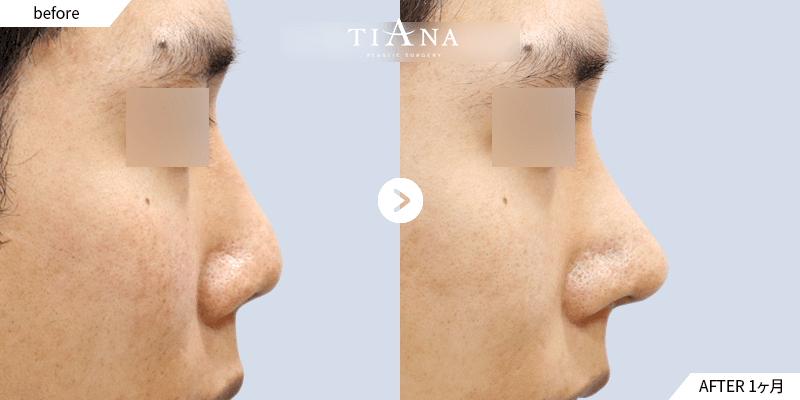
Drag the handle to compare before and after
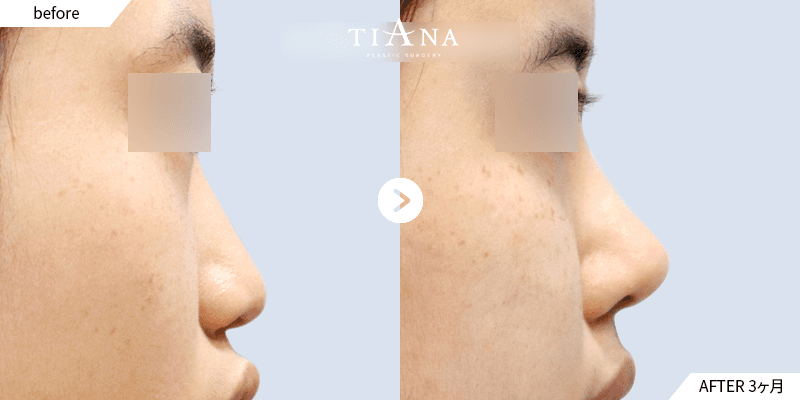
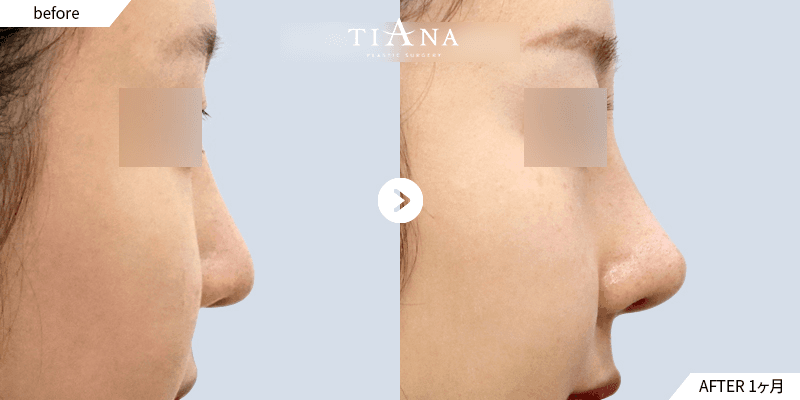
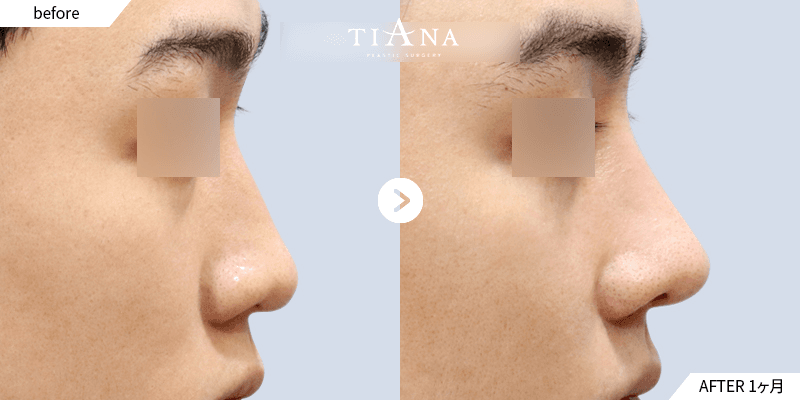
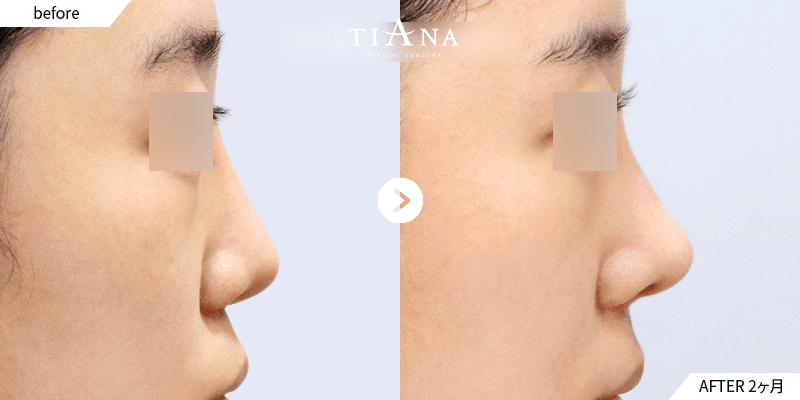
TIANA case, shared with the patient's consent. Results vary.
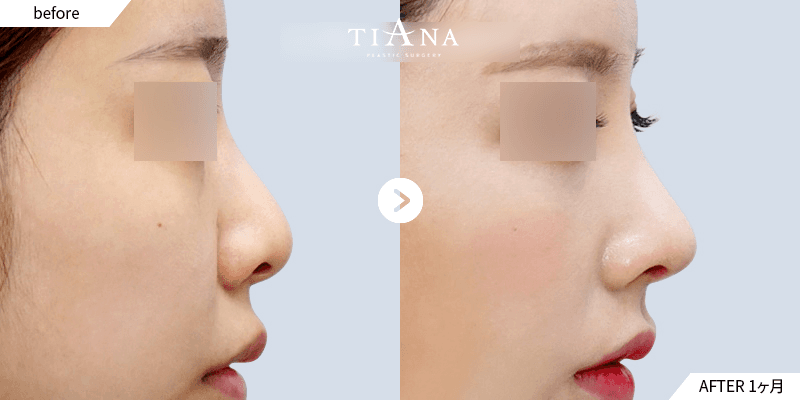
Before and after at TIANA (shared with patient consent) 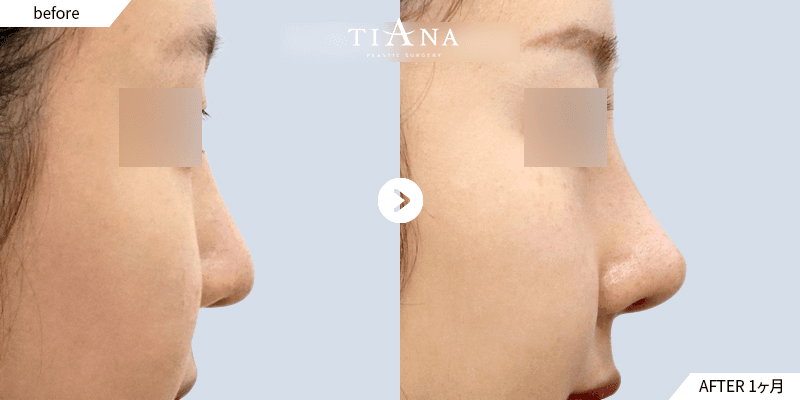
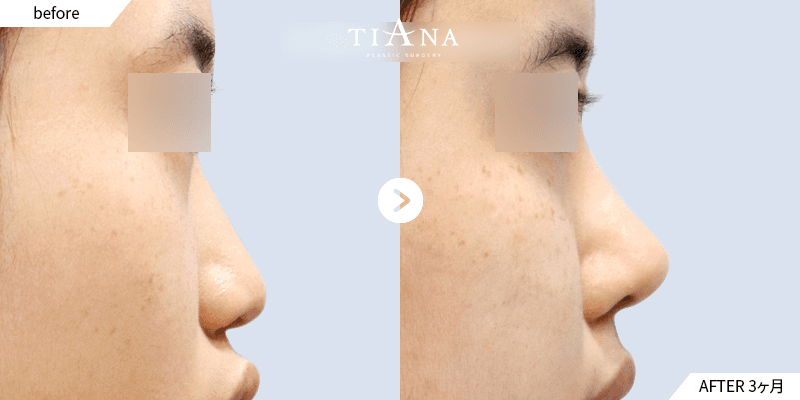
Before and after at TIANA (shared with patient consent) 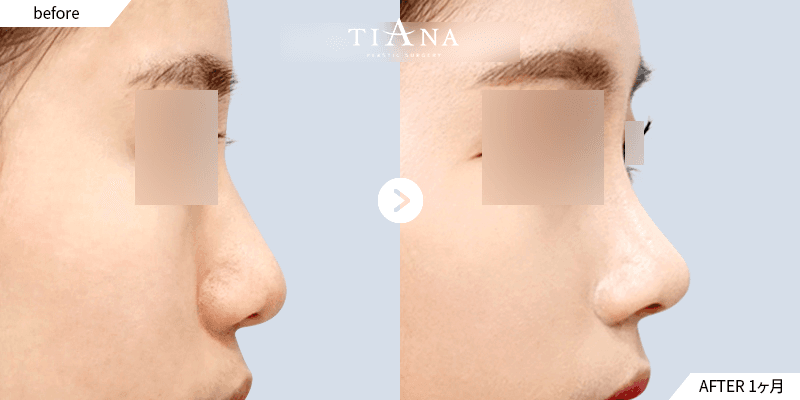
Before and after at TIANA (shared with patient consent)
* Results vary between individuals. Photos show TIANA patients.
See more cases →Korean patients talk about their surgery
Videos from Korean patients who had surgery at TIANA (Korean, YouTube). Patients from Japan, Taiwan and English-speaking countries also contact us every month on LINE and WhatsApp.


Start from your concern
Bulbous tip types and what is considered
- Current shape
- Design direction (illustration)
Illustration only, not a result and not to scale.
What to consider
Tip cartilage reshaping (suturing, trimming)
Wide, spread tip cartilage
From first message to flying home
Photo consult on WhatsApp
Send 5 photos and a photo of the nose you would like. The free reply in English explains the likely scope and how the estimate is worked out.
Video consult (optional)
On Google Meet you talk with the surgeon first, then the consultation manager explains the estimate. Free, with an interpreter.
Visit and 3D-CT
A 3D-CT scan and the surgeon's examination confirm the final plan and fee. An interpreter joins the consultation.
Surgery
The surgeon who consulted you performs the surgery and also manages the anesthesia.
Day 7 and day 14
The splint and outer stitches come off around day 7, the inner stitches around day 14. After you fly home, send progress photos on WhatsApp.
FROM THE SURGEON
A word from the surgeon
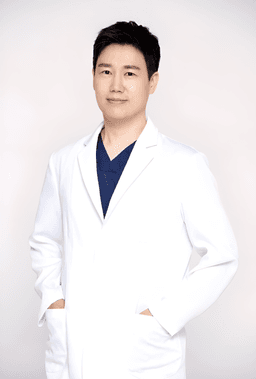
Bone, cartilage and skin thickness differ a lot between people, so the same operation name can need different steps.
Because I only treat noses, I can tell you at the consultation not just how far your nose can change, but where it is better not to push further.
Frequently asked questions
Q1Does the nose keep growing your whole life?
Many people notice their nose looks longer in later life, but most of that change comes from the soft tissue and from the tip drooping, not from cartilage growth. The bone at the base of the nose actually loses a little volume with age, which is one reason the tip loses support.
Q2Can taping or nose exercises shrink a tip that has grown?
No exercise has been shown to change cartilage or thick nasal skin. Taping is a short-term swelling measure some surgeons use in the weeks after surgery. It won't reverse a tip that has dropped because its ligaments have loosened.
Q3Can filler lift a drooping tip instead of surgery?
Some clinics use filler to lift or straighten the nose. It adds volume, so on a tip that already looks too big it can make the bulk worse. A systematic review of non-surgical rhinoplasty describes rare but serious complications from filler entering a blood vessel. I don't offer fillers. I only operate on noses.
Q4Is rhinophyma treated by a nose surgeon or a dermatologist?
Start with a dermatologist. Early on, medication can slow the thickening. In advanced cases the excess tissue is removed surgically, and it can come back, so the rosacea still needs ongoing care afterwards.
Q5How long should I wait after my first rhinoplasty before a revision for a bigger tip?
The common guideline is about a year, so swelling has settled and the scar has softened enough to show what really needs correcting. Thick skin can need longer. Fullness that is clearly increasing should be shown to the operating surgeon sooner, even if surgery waits.
Thank you for reading to the end.
Send 5 photos (front, 45-degree and side) on WhatsApp for a free photo consultation. We reply in English with the likely scope of surgery and how the estimate is worked out.
Send my photos on WhatsAppThis article is general information about elective cosmetic surgery and is not a diagnosis. Results and recovery vary between individuals. Before-and-after photos are published with patient consent; surgery carries risks such as swelling and bruising and requires downtime. Final procedures and fees are decided after examination.