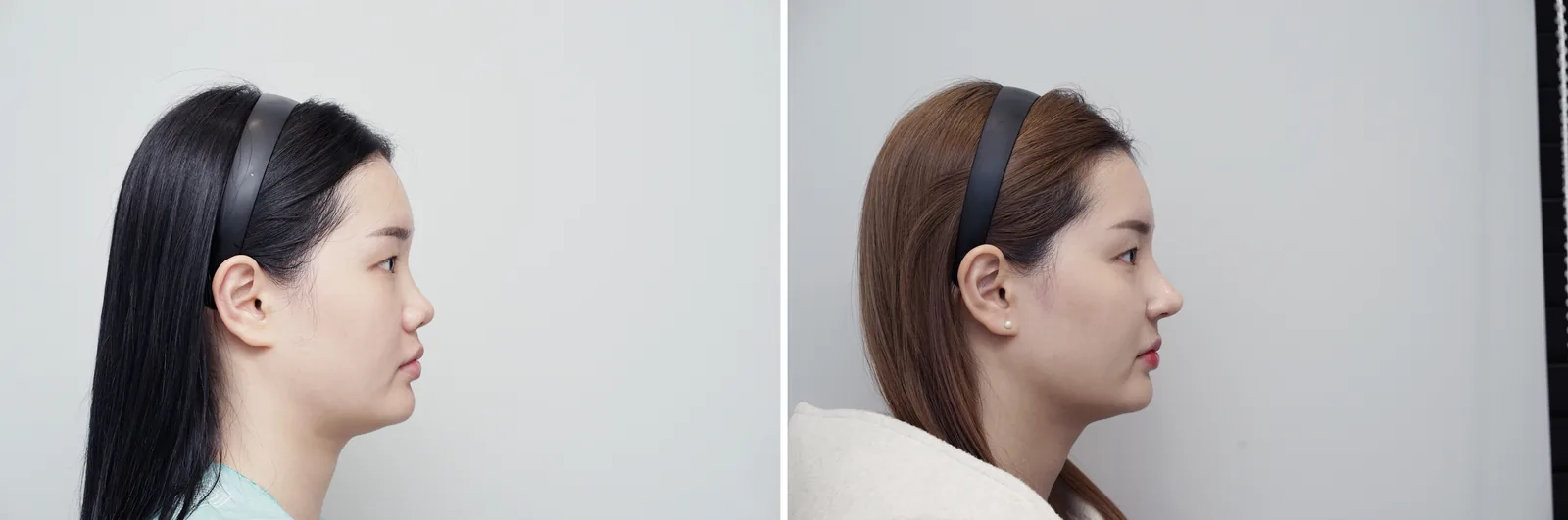
Nose Tip Lift in Korea: When It Helps and When It Doesn't
Has your nose tip drifted lower over the years, and are you wondering if a nose tip lift would bring it back up without leaving you with a nose that looks pulled?
By the end of this guide, your questions about rhinoplasty should turn into a clear next step.
Send 5 photos (front, 45-degree and side) on WhatsApp and we will reply in English with a free first assessment: the likely scope of surgery and how the estimate is worked out.
Send my photos on WhatsAppA nose tip lift helps when the tip has lost its support, and it works when kept modest: a little rotation makes the profile look rested, while too much shows the nostrils from the front and makes the nose look short. If the droop comes mainly from thick, heavy skin or a long septum, a nose tip lift alone won't fix it, and I wouldn't offer it on its own.
Hello, I'm Dr. Choi Hang-seok, Head Surgeon at TIANA Plastic Surgery in Seoul.
I operate only on noses, rhinoplasty and revision rhinoplasty, because a small change in a nose shifts the whole face. Before surgery, 3D-CT imaging maps your bone and nasal structure, which matters for a lift because a raised tip has to be anchored to something. I see you myself from the first consultation through surgery and aftercare, and an anesthesiologist is on staff.
The quickest way to see which kind of droop you have is two photos on WhatsApp: your profile in daylight with your face relaxed, and the same angle while you smile broadly. Ask whether your tip would need new support or only reshaping.
Why a tip droops after 40
The tip sits on two small curved cartilages, tied to the septum and to each other by fibrous attachments. Over decades those attachments loosen, the skin gets heavier, and the tip settles lower. From the side the nose starts to look longer, and a small bump on the bridge can look bigger than it did at 30, even though the bone hasn't changed.

There are three common reasons a tip hangs, and each needs a different answer:
- Weakened support. The cartilages are still there but no longer hold the tip at its old angle. This is where a nose tip lift with cartilage support does its job.
- Heavy or thick skin. The framework may be fine, but the skin weighs it down and blurs the shape. Surgery can raise the framework; it can't thin the skin very much.
- A long septum or a muscle that pulls down. In some people the lower edge of the septum is long. In others, a small muscle under the nose tugs the tip down every time they smile. A lift that ignores either one tends to drop back.
The smiling photo is how you can spot the third reason at home. If your tip dips clearly when you smile, mention it, because it changes the plan.
How far up is too far for a nose tip lift?
Rotation is the angle between your upper lip and the underside of your nose. Open it a few degrees and the face looks less tired. Open it too far and three things happen at once: the nostrils show from the front, the nose looks short for the face, and the result reads as an operation. In your 40s or 50s, a turned-up tip looks out of step with the rest of the face sooner than it would at 25.
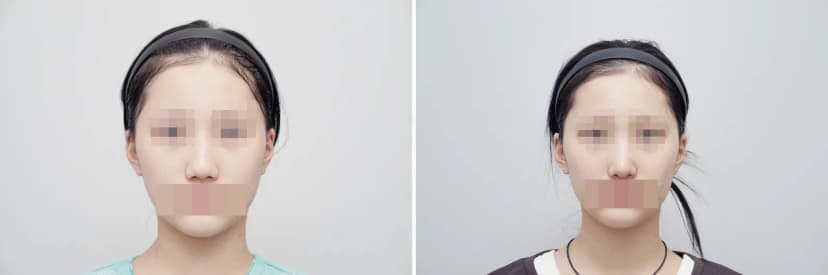
Example case (implant-free rhinoplasty, hump nose): front view before surgery (left) and 2 weeks after (right). Procedures: implant-free bridge with septal cartilage, tip with septal and donor rib cartilage, hump reduction, bulbous tip refinement, osteotomy, crooked-nose correction. Results vary between individuals; swelling, bruising, asymmetry and infection are possible risks. Shared with the patient's consent; eyes and mouth are pixelated for privacy.
I also don't lift a tip in isolation. A tip raised on its own looks like it floats away from the face, so I plan the bridge, the tip and the angle with the lip as one line. I've written separately about when working on the tip alone is enough.
Say you're 54. From the side, your tip now sits below the line of your nostrils, a small bump on the bridge has become more visible, and you'd like to look less tired in photos. If I lifted only your tip, the bump would stand out more. So I'd talk to you about a modest lift with cartilage support plus lowering that bump, so the profile reads as one line.
If you then showed me a reference photo of a sharply upturned tip, I'd compare it with your bone and cartilage and tell you the range you can reach without forcing it.
Doctor's note
If you're in your 50s, I'd rather lift your tip a little less than you hoped than push it to an angle your skin and cartilage can't keep. A tip forced past that point tends to drift, and bringing an over-rotated tip back down later is a bigger operation than the lift was. So I set the angle by what your structure can hold.
Wondering which type your nose is?
Share your front, 45-degree and side photos — the surgeon will tell you which procedures your nose would actually need. No cost, no obligation.
Ask which procedure fits meSummary: is a nose tip lift right for you?
Whether a nose tip lift fits depends on why your tip hangs. Two photos on WhatsApp, relaxed and smiling, are the quickest way to find out.
| Why the tip hangs | What it means for a nose tip lift |
|---|---|
| Weakened support | A lift with cartilage support can do its job |
| Heavy or thick skin | The framework can be raised, but the skin can't be thinned very much |
| Long septum or a muscle that pulls down | A lift that ignores it tends to drop back, so it changes the plan |
What holds a lifted tip up
A lift that is only stitched into place can relax as swelling settles and the tissue softens. What keeps a tip where it was set is structure. The options I offer run from minimal-incision tip work and tip surgery without an implant, for a light refinement, to cartilage support for a tip that has truly dropped. That cartilage can come from the septum, the ear or a rib (your own or donor rib cartilage), and dermis or fascia can smooth the surface.
When the tip needs firm control, a septal extension graft is often the tool. It is a strip of cartilage fixed to the end of the septum that sets the tip's height and angle; a review in Archives of Plastic Surgery describes it as a way to control projection and rotation that holds up better than sutures alone. The trade-off is a firmer tip, which you'll notice when you press it, and swelling that takes longer to go down.
Two things to find out before you travel. If you've ever had septum surgery for breathing, part of that cartilage may already be gone, and that changes where support has to come from. And a review of Asian rhinoplasty in Plastic and Reconstructive Surgery Global Open notes that thicker skin and smaller, softer tip cartilage are common in Asian noses, which is why cartilage grafting is used so often there.
If your bridge is low too and you're weighing an implant, my notes on how long a nose implant lasts and what can go wrong cover that side.
Over-rotation, drop-back and a stiff tip: the risks to weigh
Most of what you feel in the first weeks passes: swelling that sits heaviest at the tip, a numb or tight tip, and stuffiness while the inside heals. Tip swelling is the slowest part to fade, especially under thick skin, and the American Society of Plastic Surgeons notes that the final contour can take up to a year to refine.
The risks that belong to a lift in particular:
- Over-rotation. The nostrils show and the nose looks short. Lengthening a tip afterwards is harder than lifting it was.
- Drop-back. Some of the lift can settle over the first months, more often when the tip was held with sutures alone or the downward muscle pull wasn't dealt with.
- A stiff, wider-looking tip while the swelling lasts, more noticeable with cartilage grafts.
On top of these come the general risks that society lists for any rhinoplasty, including bleeding, infection, numbness, difficulty breathing through the nose and the possibility of another operation.
Think about waiting if you smoke (tip skin heals poorly with it), if there's an infection or a skin flare on your nose, or if you had nose surgery within the last year. If you take blood thinners or have a condition that affects healing, tell me before planning dates rather than stopping anything on your own. And if what you want most is a sharp, narrow tip under very thick skin, read where thick skin sets the limit first.
Plan on 7 to 14 nights in Seoul, at least 7. The splint and outer stitches come off around day 7 and the inner stitches around day 14; the exact timing is confirmed at surgery and differs a little from person to person. If you fly home on day 7, you leave with a referral letter and a surgery certificate, so a doctor at home can take out the inner stitches knowing exactly what was done.
Back home, swelling that gets worse after the first week, spreading redness, fever or tip skin turning dark means seeing a local doctor that day, and sending me photos on WhatsApp as well.
If you've had any nose surgery before, even years ago for breathing, write the year and what you were told was done when you send your photos, and ask whether there's enough septal cartilage left to hold a lift. That one detail decides which plan is realistic for you.
If you want to see how real noses changed and how many months after surgery each photo was taken, browse TIANA's rhinoplasty case gallery before your consultation.
Fitting the trip around the consultation
The clinic is open weekdays 10:00 to 19:00 and Saturdays 10:00 to 16:00, and closed on Sundays and public holidays. If you land on a Saturday evening, your consultation will be Monday, so count that day into your 7 to 14 nights. A medical interpreter for your language is available at no extra charge if you'd rather not do the consultation in English. For the wider picture of the clinic, see TIANA's English rhinoplasty page.
Once the splint is off, the tip goes through its own slower healing, which I describe in how the nose tip changes in the weeks after surgery.
When you're ready, send the relaxed and the smiling profile photos on WhatsApp with the weeks you could travel, and ask one thing: would my tip need support, and would the bridge need anything to match it? At the exam in Seoul, the first thing I check is how your tip moves when you smile and what the 3D-CT shows of your bone and septum, and the plan starts from there.
Frequently asked questions
Q1Is lifting a drooping tip the same as fixing an upturned nose?
No, they go in opposite directions. A drooping tip is rotated upward; an upturned nose usually needs the tip brought down and lengthened, often with a septal extension graft and columella work. Both use cartilage support, but the design is reversed.
Q2Will a lifted tip drop again over time?
A small amount of settling in the first months is common as swelling goes down. Tips held with cartilage support tend to keep their angle better than tips held with sutures alone, and dealing with a muscle that pulls the tip down when you smile also helps.
Q3Can a mildly drooping tip be lifted with minimal incisions?
Sometimes. Minimal-incision tip work and tip surgery without an implant are options for a light refinement, and they tend to recover faster. A tip that has lost real support usually needs cartilage, which means a more involved operation.
Q4Should a man's tip be lifted as much as a woman's?
Usually less. A strongly rotated tip tends to look out of place on a male face, so men's tip lifts are generally kept more conservative, with more attention to a straight bridge line.
Q5Will a tip lift affect my breathing?
Stuffiness is normal while the inside heals. If you already have trouble breathing through one side, mention it beforehand, because a lift that uses septal cartilage changes the septum, and breathing problems can be addressed in the same operation.
Thank you for reading to the end.
Send 5 photos (front, 45-degree and side) on WhatsApp for a free photo consultation. We reply in English with the likely scope of surgery and how the estimate is worked out.
Send my photos on WhatsAppThis article is general information about elective cosmetic surgery and is not a diagnosis. Results and recovery vary between individuals. Before-and-after photos are published with patient consent; surgery carries risks such as swelling and bruising and requires downtime. Final procedures and fees are decided after examination.