Does a Nose Job Hurt? Bone Work, Packing and Red Flags
Does a nose job hurt enough to spoil a trip you've saved up for, or keep you stuck in a hotel room in Seoul for a week?
30-second check
Check what your bridge needs
Pick what applies. Related procedures appear, and you can send your answers straight to WhatsApp. No name or email needed.
Pick at least one concern to see the related procedures.
Send this on WhatsAppWhatsApp opens with your answers already typed. Then send 5 photos (front, both 45-degree angles, both sides) and, if you have one, a photo of the nose you would like.
Not opening? Copy the message and open WhatsAppYou won't feel the operation itself. Afterward, most people describe pressure and a blocked nose more than sharp pain. If bone is narrowed to take down a hump, add soreness and bruising around the eyes. That usually peaks over the first two or three days and then eases through the first week.
Hello, I'm Dr. Choi Hang-seok, Head Surgeon at TIANA Plastic Surgery in Seoul.
How much a nose hurts afterward depends on how much is done to it, so who makes that call matters. I operate only on noses, and I'm the one who sees you from the consultation through surgery to aftercare. An anaesthesiologist is on staff. Your plan is set with a 3D-CT scan, which shows the bone under your hump and whether it needs narrowing at all. A medical interpreter for your language is provided at no extra charge.
If the bone part is what you dread, send five photos on WhatsApp (front, both three-quarter angles and both side profiles) and ask whether your bridge looks wide enough to need narrowing.
What the anaesthesia covers, and what it doesn't
While you're under anaesthesia, you don't feel the incisions, the shaving of a hump or the bone cuts. That's the part people picture when they worry, and it's the part that hurts least.
Risks and side effects to know
The discomfort starts as the anaesthesia wears off. Expect a heavy, full feeling across the middle of your face and a nose you can't breathe through. By morning your mouth will be dry from breathing through it all night. Gauze and swelling inside the nose cause the blockage. The gauze comes out at the check after surgery, and breathing often gets easier that day.
Small things help more than you'd expect. Bring lip balm and a water bottle with a straw. Use two pillows or a folded duvet so your head stays above your heart. A hot shower before bed makes a dry hotel room a little more humid. None of it is clever, but it makes the first night shorter.
Does a nose job hurt more with bone work?
A little, and in a different place. Shaving down a hump can leave the top of the bridge slightly flat and wide. Narrowing the nasal bones closes that gap. Those bone cuts at the sides of the nose cause the bruising under the eyes and the tenderness along the cheeks. Tip work feels different: tight and numb, sore if you touch it, and rarely throbbing.
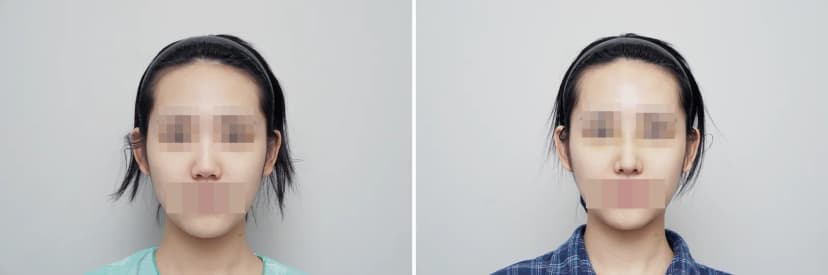
Example case (hump nose, bulbous tip): front view before surgery (left) and 2 weeks after (right). Procedures: silicone bridge implant, tip with septal and donor rib cartilage, hump reduction, bulbous tip refinement, short-nose correction, osteotomy. Results vary between individuals; swelling, bruising, asymmetry and infection are possible risks. Shared with the patient's consent; eyes and mouth are pixelated for privacy.
Where cartilage comes from also changes how it feels. Septal cartilage is taken from inside the nose, so there's no extra wound to feel. Ear cartilage leaves a sore spot behind the ear for a few days. Rib cartilage is used mostly in revisions, when cartilage is short or the nose has contracted. It means a sore chest, which some people notice more than the nose, especially when they laugh or cough.
Say you're 28, teaching English in Daegu, with a hump that shows in every side photo and a week of leave plus a weekend to work with. If your 3D-CT shows the bones are already narrow, taking down the hump without bone cuts may be enough. That usually means less bruising. If the bridge is wide as well, the bones need narrowing. In that case I'd tell you to treat the first three days as indoor days, and to keep at least seven nights in Seoul free instead of squeezing the trip.
Doctor's note
I don't add bone work to make a nose look more changed. A tiny difference in the nose shifts the whole face, so I recommend only the scope your anatomy needs. A smaller operation is also the most reliable way to keep the pain smaller. Raising only the tip can leave it looking detached from the face, though, so doing less still has to give a nose that fits together.
If only your tip bothers you, read when a nose tip lift helps and when it doesn't before you assume you need the full operation.
Wondering which type your nose is?
Share your front, 45-degree and side photos — the surgeon will tell you which procedures your nose would actually need. No cost, no obligation.
Ask which procedure fits meHow long does the pain last?
For many people the sore, throbbing stretch is mostly over by the end of day three. By day seven, what's left is tenderness to the touch, stuffiness and fading bruises. Does a nose job hurt for weeks? Rarely. Swelling lasts far longer than pain, and swelling is what shapes your plans.
| When | What you usually feel | What changes |
|---|---|---|
| Surgery day | Pressure, blocked nose, grogginess | Head raised; rest at the hotel |
| Days 1–3 | Peak soreness and bruising, mouth-breathing | Prescribed medication; gauze removed at the check |
| Days 4–6 | Tender to the touch, bruises turning yellow | Short walks; no bending or heavy lifting |
| Day 7 | Brief tugging as tape comes off | Cast and outer stitches removed |
| Days 8–14 | Stuffiness, a stiff tip, little pain | Inner stitches out on day 14, in Seoul or at home |
| After two weeks | A numb or firm tip, an occasional ache in the cold | Mostly swelling now, not pain |
Swelling is the slow part. The American Society of Plastic Surgeons notes that initial swelling goes down within a few weeks, but the final contour can take up to a year to refine. After surgery we offer high-concentration oxygen care to help swelling settle. I won't give you a fixed number of days for the swelling. I'd rather guide you by what your nose is doing at each check.
Bleeding, infection, breathing: pain that means you should call
In short, these are common and temporary: blood-tinged ooze for the first day or two, stuffiness, bruising that drifts down toward the cheeks as it fades, a numb or firm tip, and headaches from breathing through your mouth. They're part of healing, not signs of trouble.
These are less common and worth a call the same day:
- pain that gets worse after day three instead of better
- one side much more swollen, hot or red than the other
- a fever
- bleeding that soaks through the gauze and doesn't slow when you sit up with your head tilted forward
- a sudden, painful swelling inside the nose
- any change in your vision
The ASPS list of rhinoplasty risks includes bleeding, infection, difficulty breathing through the nose, numbness and, rarely, a hole in the septum, along with the risks of anaesthesia. How strongly any of this shows up differs from one person to the next.
Who should wait before booking
As general medicine, wait or rethink if you have an active sinus infection or a cold, if you've knocked your nose recently, or if you're pregnant or breastfeeding. Blood thinners and some supplements raise the risk of bleeding. Tell your surgeon everything you take, and don't stop a prescribed medicine on your own. Smoking slows healing. If your face may still be growing, the timing question comes before the pain question. The post on what age you can get a nose job explains why.
If you fly home on day 7, you leave with a referral letter and a surgery certificate. A doctor at home can then take out the inner stitches and see exactly what was done. For heavy bleeding, fever or trouble breathing, go to a local emergency department first instead of waiting for a message.
Do you take blood thinners, or have you had a nose injury or an earlier nose surgery? Put that in your first WhatsApp message, with one side-profile photo taken in daylight. Each of those changes how the first week is likely to feel, so they're the questions to ask first.
If you want to see how real noses changed and how many months after surgery each photo was taken, browse TIANA's rhinoplasty case gallery before your consultation.
Can you still enjoy Seoul with a sore nose?
Yes, if you plan the days around it. The stay is 7 to 14 nights. Day one is the in-person consultation, the final design and then surgery. Keep the next three days close to your hotel. Days four to six suit short walks, cafés and museums. Day seven is when the cast and outer stitches come off, and after that most people feel comfortable going out.
Here's a tip worth checking before you buy flights. The clinic is open weekdays 10:00–19:00 and Saturdays 10:00–16:00, and closed on Sundays and public holidays. Count seven days forward from your surgery date before you book. If day seven lands on a Sunday or a Korean public holiday, move the surgery by a day.
On the flight home, pressure changes during descent can make a swollen nose feel fuller for a while. Drink water, keep your head up when you can, and don't blow your nose. To see how these days fit around limited annual leave, read recovery days compared with your leave. If you're budgeting for the nights as well, read how a nose job quote in Korea is built. Cases and consultation steps are on TIANA's English rhinoplasty page.
Then ask the question you actually care about: does my hump need the bones narrowed, and how many of my nights would be indoor days? Your final plan is made in Seoul with the 3D-CT and my examination. For this question, the width of your nasal bones on that scan is what I'll be reading.
Cases close to this concern
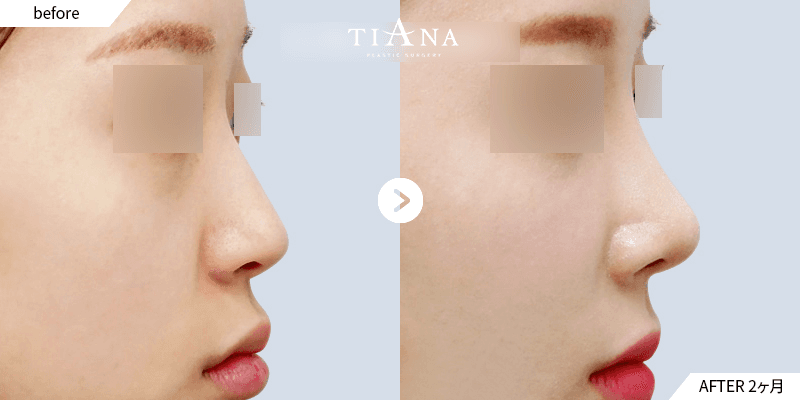
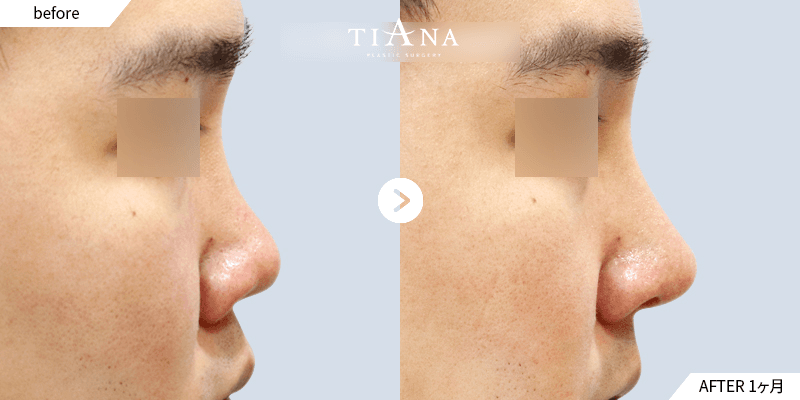
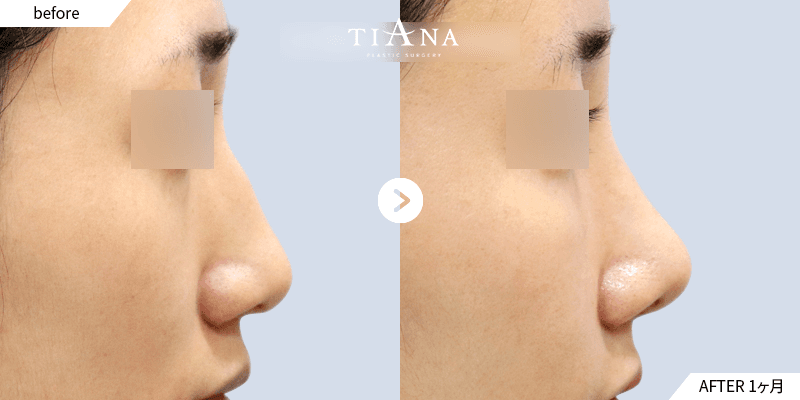
Before and after at TIANA (shared with patient consent) 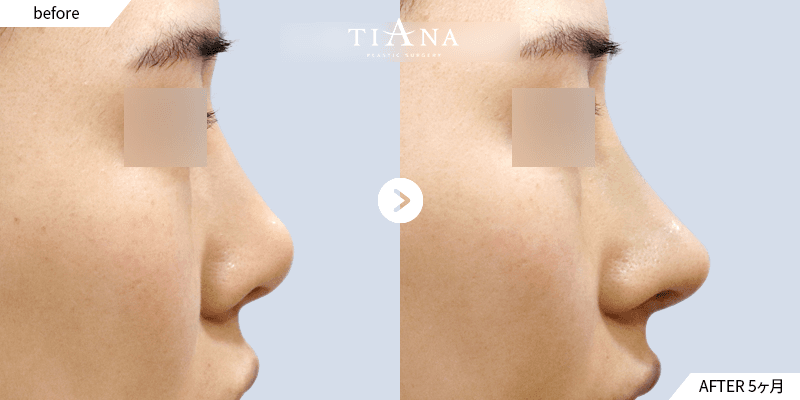
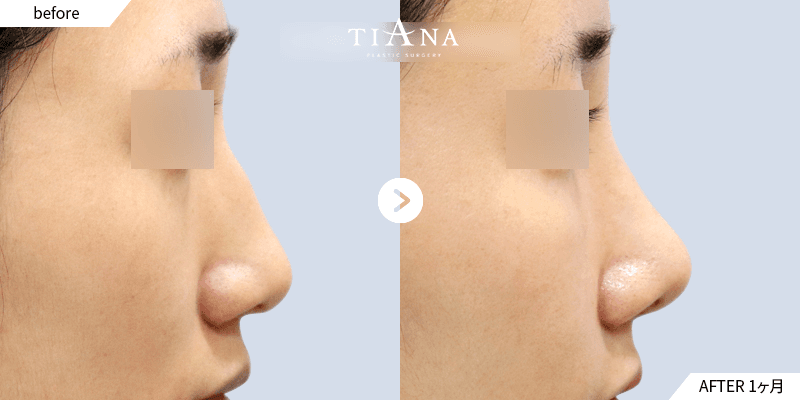
Before and after at TIANA (shared with patient consent) 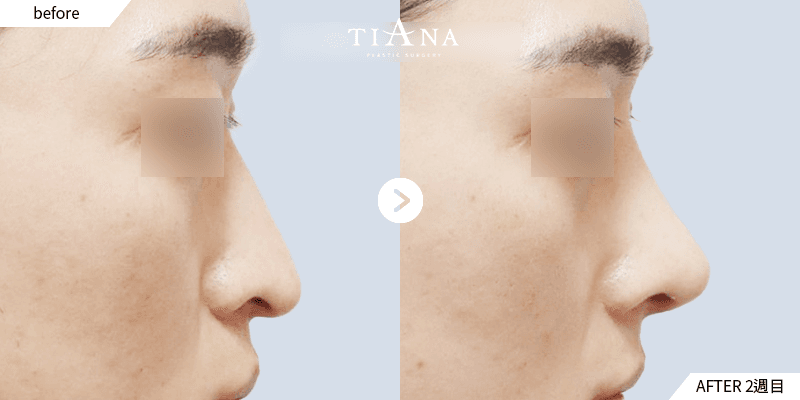
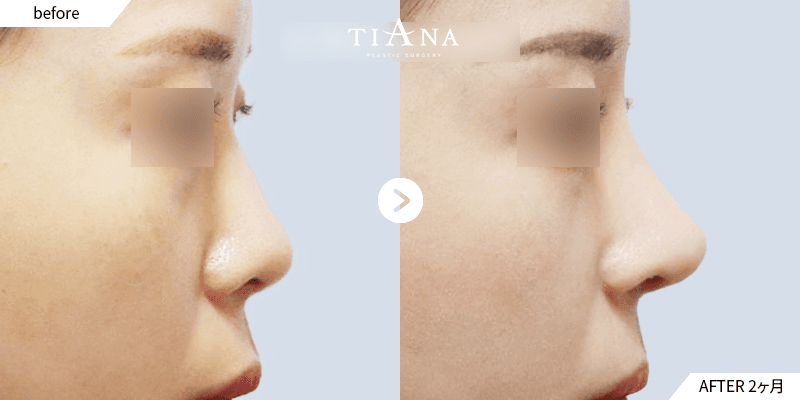
Before and after at TIANA (shared with patient consent) 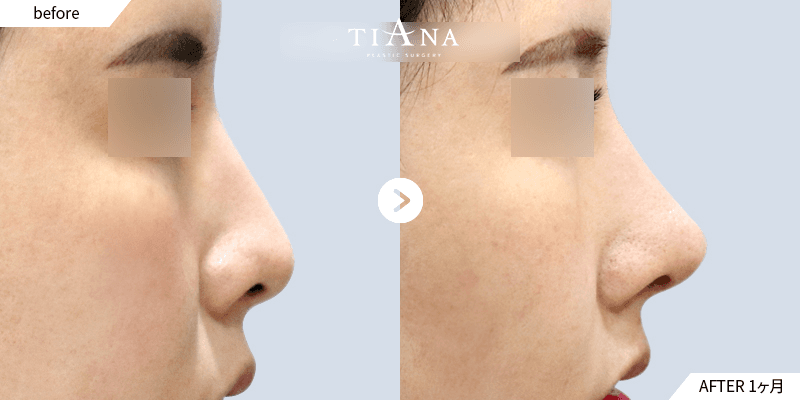
Before and after at TIANA (shared with patient consent)
* Results vary between individuals. Photos show TIANA patients.
Korean patients talk about their surgery
Videos from Korean patients who had surgery at TIANA (Korean, YouTube). Patients from Japan, Taiwan and English-speaking countries also contact us every month on LINE and WhatsApp.


Read TIANA reviews on Google Maps
From first message to flying home
Photo consult on WhatsApp
Send 5 photos and a photo of the nose you would like. The free reply in English explains the likely scope and how the estimate is worked out.
Video consult (optional)
On Google Meet you talk with the surgeon first, then the consultation manager explains the estimate. Free, with an interpreter.
Visit and 3D-CT
A 3D-CT scan and the surgeon's examination confirm the final plan and fee. An interpreter joins the consultation.
Surgery
The surgeon who consulted you performs the surgery and also manages the anesthesia.
Day 7 and day 14
The splint and outer stitches come off around day 7, the inner stitches around day 14. After you fly home, send progress photos on WhatsApp.
Frequently asked questions
Q1Does taking the gauze out of my nose hurt?
It's a strange pulling feeling that lasts a few seconds. Most people find it odder than painful, and breathing usually improves right away.
Q2Will I be awake during the operation?
You won't feel the surgery itself. An anaesthesiologist is on staff at TIANA. At your consultation, ask which type of anaesthesia is planned for your operation and how long you need to fast beforehand.
Q3Is a revision more painful than a first nose job?
Often a little. Scar tissue makes the operation longer, and if rib cartilage is needed you'll also have a sore chest for a while. For a revision, it's sensible to plan toward the longer end of the 7 to 14 nights.
Q4My tip still feels numb weeks later. Is that normal?
Numbness of the tip and sometimes the upper lip is common after rhinoplasty. Feeling usually comes back gradually over months as the small nerves recover. Tell your surgeon if the numbness spreads or turns painful.
Q5Can I bring my usual pain relievers from home?
Bring a list rather than the bottles you plan to use. Some common over-the-counter pain relievers and supplements such as fish oil or vitamin E can increase bleeding around surgery. After surgery, use the medication prescribed at your check.
Thank you for reading to the end.
Send 5 photos (front, 45-degree and side) on WhatsApp for a free photo consultation. We reply in English with the likely scope of surgery and how the estimate is worked out.
Send my photos on WhatsAppThis article is general information about elective cosmetic surgery and is not a diagnosis. Results and recovery vary between individuals. Before-and-after photos are published with patient consent; surgery carries risks such as swelling and bruising and requires downtime. Final procedures and fees are decided after examination.