How to Choose a Revision Rhinoplasty Clinic in Korea
Searching for Korea revision rhinoplasty how to choose a clinical center feels like a second gamble after a first nose job that didn't hold up. How do you pick one without ending up paying for a third operation?
30-second check
Check whether rib cartilage is likely for you
Pick what applies. Related procedures appear, and you can send your answers straight to WhatsApp. No name or email needed.
Pick at least one concern to see the related procedures.
Send this on WhatsAppWhatsApp opens with your answers already typed. Then send 5 photos (front, both 45-degree angles, both sides) and, if you have one, a photo of the nose you would like.
Not opening? Copy the message and open WhatsAppIt comes down to what the clinic can rebuild with and who stays with you: whether it does nose revision surgery after a first operation elsewhere, including contracture, whether it can use rib cartilage grafts, including donor rib cartilage, when your septal cartilage has already been used, and whether the surgeon who examines you also operates and follows up. The American Society of Plastic Surgeons also publishes general advice on checking a surgeon's credentials.
Hello, I'm Dr. Choi Hang-seok, Head Surgeon at TIANA Plastic Surgery in Gangnam, Seoul.
I operate only on noses, and revision rhinoplasty, also called secondary rhinoplasty or a nose job revision, after surgery at other clinics, contracture included, is part of that work.
3D-CT diagnosis maps your bone structure and nasal cavity before anything is planned. I manage the anesthesia myself, and I'm the surgeon who examines you, operates and handles your aftercare.
Before you message any clinic, ask the one that did your first surgery for whatever record it will give you: the date, and whether a silicone implant (prosthesis) or your own (autologous) ear, septal or rib cartilage was used. Then send five photos on LINE (front, both diagonal angles and both sides) along with that record for a free photo consultation.
Is a revision a smaller job than the first surgery?
Usually the opposite. A first rhinoplasty works in tissue nobody has touched. A revision works through scar tissue, around a changed blood supply, often with less of your own septal cartilage left, and sometimes around the capsule that formed over an old implant. Taking something out and rebuilding it takes more planning than building it the first time.
That's why, for Korea revision rhinoplasty, how to choose a clinical center comes down to what it can rebuild with, more than how soon it can fit you in. The touch-up belief is also where tight budgets get hurt. A plan that looks cheaper ends up costing more money and more trips if it has to be fixed again, which is the outcome you're trying to avoid.
What is contracture, and why can it pull your tip up?
After a silicone implant, the body forms a thin capsule of scar around it. In some noses that capsule tightens over months or years.
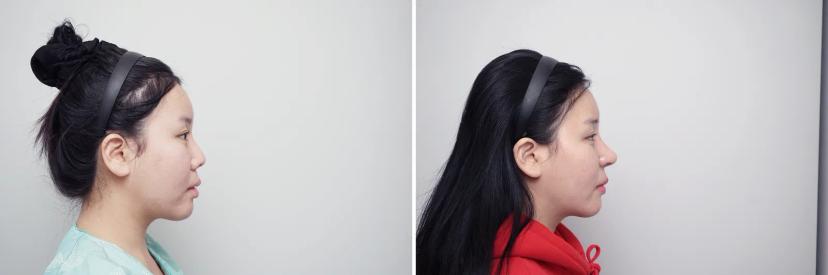
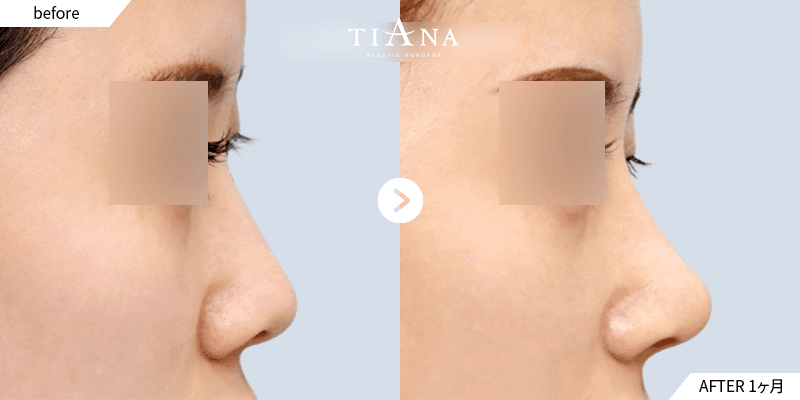
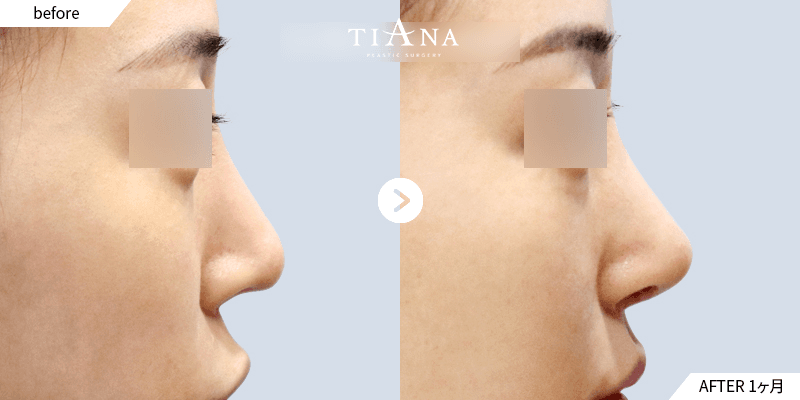
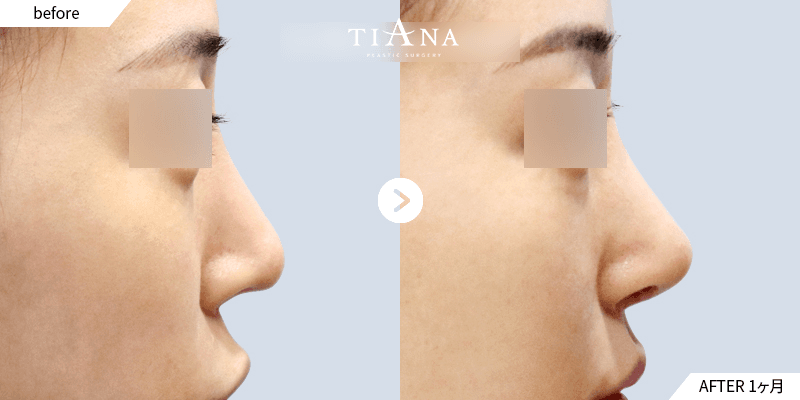
Example case (revision rhinoplasty): side view before surgery (left) and 2 weeks after (right). Procedures: revision rhinoplasty, silicone bridge implant, tip with septal and donor rib cartilage, bulbous tip refinement, short-nose correction, osteotomy. Results vary between individuals; swelling, bruising, asymmetry and infection are possible risks. Shared with the patient's consent.
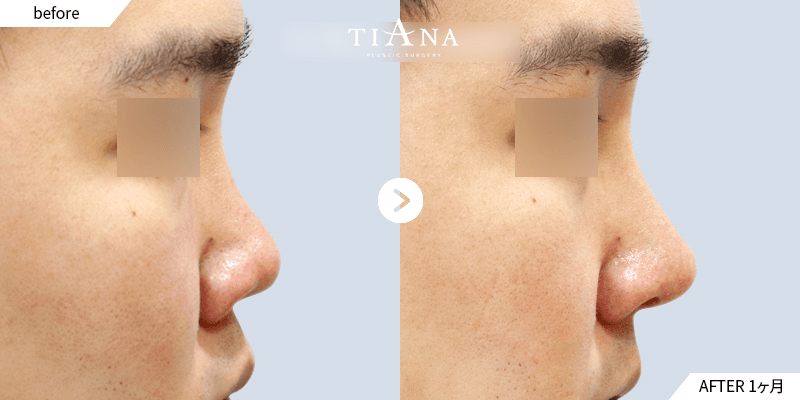
The tip is drawn upward, the nose looks shorter, and the skin over it can turn shiny, red or tight. That's contracture, and it rarely settles on its own.
Fixing it usually means removing the implant, releasing the scar and rebuilding the length the scar took away. In contracture revisions after surgery elsewhere, I often rebuild with rib cartilage, because the tissue needs structure strong enough to resist the scar pulling again. I've laid out how a revision proceeds, step by step in a separate post.
One exception to waiting: if the skin over an implant is thinning, turning red or the implant looks like it could come through, don't sit on it for a year. See a surgeon at home promptly.
Wondering which type your nose is?
Share your front, 45-degree and side photos — the surgeon will tell you which procedures your nose would actually need. No cost, no obligation.
Ask which procedure fits meKorea revision rhinoplasty how to choose a clinical center: where does the cartilage come from?
A revision is only as good as the material available for it. The options I use are septal cartilage, ear cartilage, rib cartilage (your own or donor rib), and your own dermis and fascia.
| Material | What it's good for | The trade-off |
|---|---|---|
| Septal cartilage | Straight, firm support for the tip | Often already used in the first surgery |
| Ear cartilage | Small tip grafts and soft shaping | Curved and soft, weak as main support |
| Your own rib | Large, strong grafts for contracture | A small chest incision and soreness |
| Donor rib | Strength without a chest incision | Some surgeons see more warping over time |
A clinic that can only work with implants and ear cartilage has fewer ways to rebuild a nose that is short and scarred. A review of Asian rhinoplasty in Plastic and Reconstructive Surgery Global Open discusses implant complications and the role of your own cartilage, rib included, in reconstruction. So as you work out Korea revision rhinoplasty how to choose a clinical center, one direct question to put to any clinic is: if my septum is used up, where would support come from?
Summary
- Ask whether the clinic does nose revision surgery (secondary rhinoplasty) after surgery elsewhere, contracture included.
- Ask where support would come from if your septal cartilage is already used, and whether a rib cartilage graft is an option.
- Check that the surgeon who examines you also operates and handles your aftercare.
- Get whatever record the first clinic will give you (date, silicone implant or own cartilage) and send it with five photos.
What can case photos tell you, and what can't they?
The gallery with the biggest changes isn't the one to choose by. More useful signs are whether a clinic shows revision rhinoplasty cases, profiles as well as front views, and unretouched selfies taken in everyday light, which is what TIANA publishes. Those tell you a clinic is used to your kind of problem.
What no gallery shows is what's under your skin. Two revisions that look alike from outside can need very different rebuilding, such as contracture or too little cartilage, which is why your own photos, 3D-CT scan and records matter more than anyone else's.
Waiting a year can feel like lost time
Swelling and scar tissue keep changing long after the splint comes off; the American Society of Plastic Surgeons notes that the contour can take up to a year to refine. Revising before the tissue settles means cutting through scar that is still active. If your last operation was less than a year ago, use the time: get your records, take monthly photos in the same light, and plan your leave around a date that's past the one-year mark.
Doctor's note
If your first surgery was done on a tight budget, I understand wanting the second one to be quick as well. In a revision I'd rather rebuild enough support the first time back than add height to skin that an implant has already stretched thin. What you bring as a reference photo, I compare with your anatomy, and I'll tell you which parts of it can be reached without forcing the tissue.
How long do you stay in Seoul before the flight home?
Plan on 7 to 14 nights, at least 7. The splint and outer stitches come off around day 7 and the inner stitches around day 14, with the timing confirmed at surgery. If you need to fly home on day 7, you get a referral letter and a surgery certificate so a doctor at home can remove the inner stitches knowing exactly what was done. I go through flight timing in more detail in planning your flight around a revision, and how many nights a revision usually takes covers the stay. If your first surgery was closed rhinoplasty, when you can fly after closed rhinoplasty is a useful comparison.
The clinic is open weekdays 10:00 to 19:00 and Saturdays 10:00 to 16:00, closed on Sundays and public holidays, so don't land the night before a Sunday consultation. An interpreter joins your in-person consultation. The deposit and payment method are settled after the consultation, so put both on your list of questions before you lock in dates. Everything else about the clinic is on TIANA's English rhinoplasty page.
If you want to see how real noses changed and how many months after surgery each photo was taken, browse TIANA's rhinoplasty case gallery before your consultation.
What are the risks of revision: scar tissue, the rib donor site, another operation?
Expect swelling that lasts longer than after your first surgery, a numb or tight tip, and, if rib cartilage is used, soreness at the chest for a while. The American Society of Plastic Surgeons lists the risks of any rhinoplasty, including infection, bleeding, numbness, difficulty breathing through the nose, unsatisfactory appearance and the possibility of revision surgery; a revision carries those risks again, on tissue that has less reserve.
Wait, or rethink, if you smoke, if there's an active infection in or on the nose, if your last nose operation was under a year ago, or if what you want is a flawless nose rather than a fixed problem. Tell me about blood thinners or conditions that affect healing before you book. How quickly a revised nose settles differs between people, so I give timings as ranges.
Once home, swelling that grows after the first week, spreading redness, fever, or skin over the tip turning dark or thin needs a local doctor the same day, with your referral letter in hand. Send photos on WhatsApp too.
If breathing is part of what's wrong, say so in your message: which side is blocked, and since when. Functional rhinoplasty is something I can fold into the same operation, and knowing it early changes the plan.
If you remember one thing about Korea revision rhinoplasty, how to choose a clinical center starts with your own record, not the clinic's gallery. Send your photos, the year of the first surgery and the month you could take leave on WhatsApp, and ask: is it too soon for me, and would my nose need rib cartilage? At the exam in Seoul, the first thing I look at is how much the scar has tightened the skin over your tip, then what the 3D-CT shows of your bone and septum.
Cases close to this concern
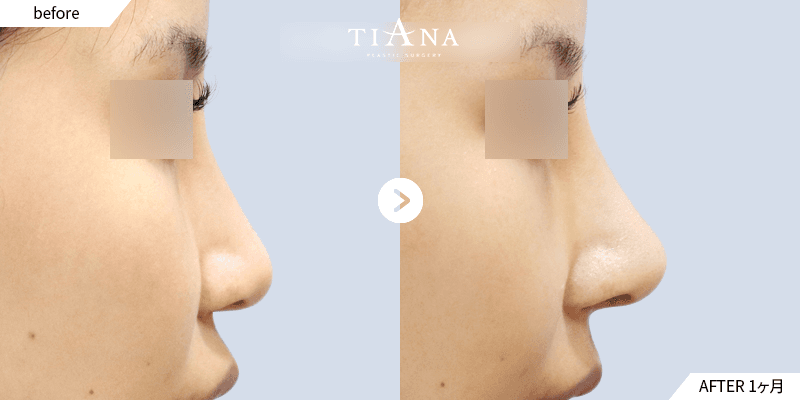
Drag the handle to compare before and after
TIANA case, shared with the patient's consent. Results vary.
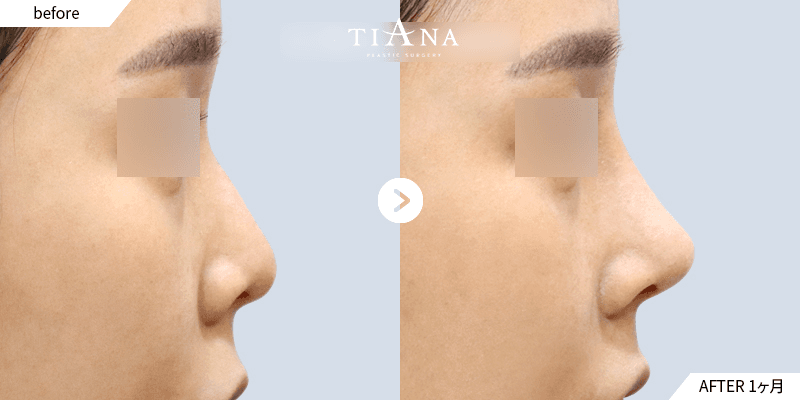
Before and after at TIANA (shared with patient consent) 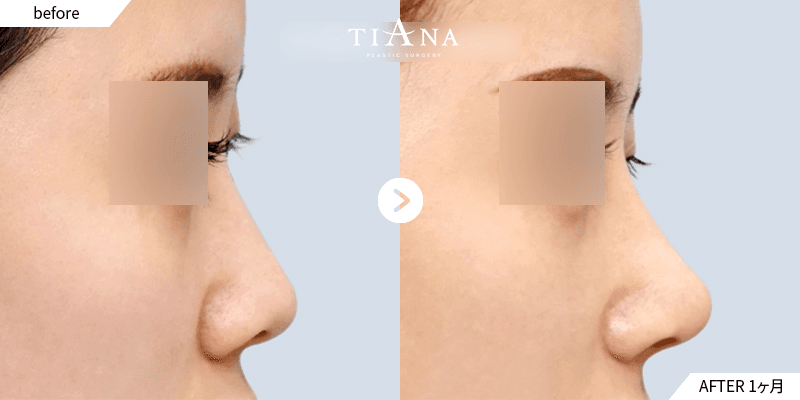
Before and after at TIANA (shared with patient consent) 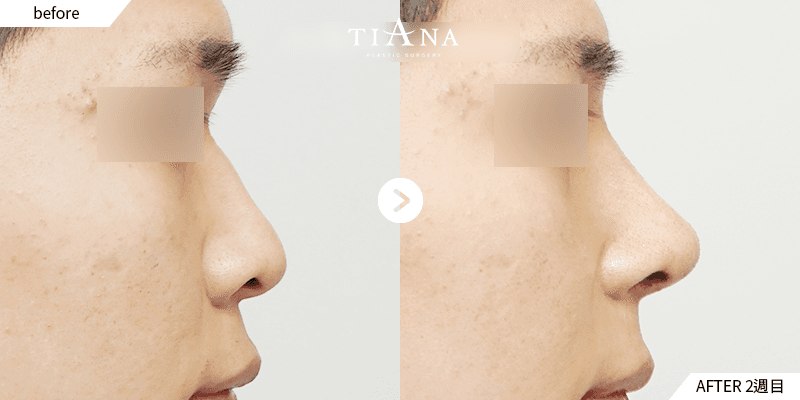
Before and after at TIANA (shared with patient consent)
* Results vary between individuals. Photos show TIANA patients.
See more cases →Korean patients talk about their surgery
Videos from Korean patients who had surgery at TIANA (Korean, YouTube). Patients from Japan, Taiwan and English-speaking countries also contact us every month on LINE and WhatsApp.


Read TIANA reviews on Google Maps
Start from your concern
When rib cartilage is considered
- Current shape
- Design direction (illustration)
Illustration only, not a result and not to scale.
What to consider
Revision with rib cartilage to rebuild length and support
Contracted nose after earlier surgery
From first message to flying home
Photo consult on WhatsApp
Send 5 photos and a photo of the nose you would like. The free reply in English explains the likely scope and how the estimate is worked out.
Video consult (optional)
On Google Meet you talk with the surgeon first, then the consultation manager explains the estimate. Free, with an interpreter.
Visit and 3D-CT
A 3D-CT scan and the surgeon's examination confirm the final plan and fee. An interpreter joins the consultation.
Surgery
The surgeon who consulted you performs the surgery and also manages the anesthesia.
Day 7 and day 14
The splint and outer stitches come off around day 7, the inner stitches around day 14. After you fly home, send progress photos on WhatsApp.
FROM THE SURGEON
A word from the surgeon
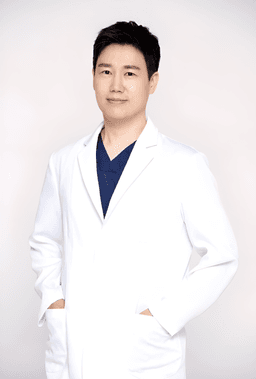
Bone, cartilage and skin thickness differ a lot between people, so the same operation name can need different steps.
Because I only treat noses, I can tell you at the consultation not just how far your nose can change, but where it is better not to push further.
Frequently asked questions
Q1Should I go back to the surgeon who did my first nose job?
Some people do, and it can work. What matters is whether that clinic offers what your nose needs now, such as contracture release or rib cartilage. Either way, ask for your operative record first, because any surgeon planning the revision needs it.
Q2Can I just have the old implant taken out?
You can, but removal alone often leaves the nose shorter or flatter than before, especially if contracture has pulled the tip up. Most revisions after implant problems combine removal with rebuilding support from your own tissue.
Q3Is donor rib cartilage a reasonable choice?
It is widely used and avoids a chest incision. Some surgeons find it warps or is absorbed a little more over time than your own rib. Which suits you depends on your nose and how much support is needed, and it's discussed after the exam.
Q4Can a revision be done with ear cartilage only?
For small tip corrections, sometimes. Ear cartilage is curved and soft, so when a revision needs firm support to lengthen a short nose, septal or rib cartilage is usually needed.
Q5Does a second revision take longer to heal than the first?
Often, yes. Scar tissue holds swelling longer, and the tip can feel firm for months. Plan your return to photos and events with more margin than you did the first time.
Thank you for reading to the end.
Send 5 photos (front, 45-degree and side) on WhatsApp for a free photo consultation. We reply in English with the likely scope of surgery and how the estimate is worked out.
Send my photos on WhatsAppThis article is general information about elective cosmetic surgery and is not a diagnosis. Results and recovery vary between individuals. Before-and-after photos are published with patient consent; surgery carries risks such as swelling and bruising and requires downtime. Final procedures and fees are decided after examination.