Rhinoplasty Cost South Korea USD? Reviews and Methods
Want a rhinoplasty cost South Korea USD figure you can actually plan around, without it growing once you're in Seoul?
By the end of this guide, your questions about rhinoplasty should turn into a clear next step.
Send 5 photos (front, 45-degree and side) on WhatsApp and we will reply in English with a free first assessment: the likely scope of surgery and how the estimate is worked out.
Send my photos on WhatsAppRead this before you convert a quote or book a flight.
By the end you'll know what decides the cost, what reviews get right and wrong, which methods change the scope, and how recovery days shape the trip. That lets you tell which plan fits your nose and your budget.
Hello, I'm Dr. Choi Hang-seok, Head Surgeon at TIANA Plastic Surgery in Gangnam, Seoul, and a board-certified plastic surgeon in Korea.
TIANA does rhinoplasty and revision rhinoplasty only. I see you one-to-one from consultation through surgery and aftercare, I manage the anesthesia as well, and before surgery 3D-CT imaging maps your bone and nasal structure.
I'm writing this because a plan that looks lower in dollars can cost more in the end if it leaves part of the nose untreated and you need a revision and a second flight.
There isn't one dollar price for rhinoplasty in Korea. The fee follows the scope of surgery, your cartilage and skin, the material and whether it's a revision, and TIANA quotes it for your nose, starting from photos.
If you'd like a first estimate, send your photos on WhatsApp (front, 45-degree and side) and ask one thing: which parts of my nose would this plan cover?
Rhinoplasty cost South Korea USD: why one dollar figure misleads
Every dollar number in a forum thread or an ad banner describes someone else's nose. One person had the tip refined through a minimal incision. Another had a hump reduced, the nasal bones narrowed and the tip lengthened with cartilage. Both get called a nose job, and both get converted into dollars the same way.
Then there's the conversion itself. If a quote is written in Korean won, the dollar amount on your card statement moves with the exchange rate on the day you pay, and your bank may add a foreign transaction fee. Check that with your bank before you line two numbers up side by side.
What I can explain from the operating side is what makes the scope bigger or smaller. For a longer breakdown of those drivers, there's a separate piece on what moves the cost of rhinoplasty in South Korea.
What decides the cost for your nose?
Five things move the fee. Roughly in order of weight:
- Scope of surgery. Tip only, bridge and tip together (full rhinoplasty: a bridge implant plus tip support), hump reduction with osteotomy, or septal extension to change the tip's length and angle. Each step added means more operating time and more structure to rebuild.
- Material. The bridge can be raised with a silicone implant or your own tissue: ear, septal or rib cartilage (or donor rib cartilage), dermis or fascia. Taking your own ear or rib cartilage adds a second surgical site to the same operation.
- First surgery or revision. Revision after surgery elsewhere, especially with contracture, usually means removing old material and rebuilding support, which is slower work than a first operation.
- Anesthesia time. A longer, more involved plan needs a longer anesthetic, and that is part of the fee.
- Nights in Seoul and the flights around them. Plan on about 7 to 14 nights. Hotel, meals and flights sit outside the clinic's fee but inside your dollar budget.
A photo-based figure is a first estimate. The final fee is confirmed after examination, once 3D-CT and the consultation show what your nose needs.
If an all-in package is on your list, read when a South Korea rhinoplasty package is the wrong fit for what to check inside it. For your own figure, ask on WhatsApp what it would cost for your nose, with your photos attached.
Wondering which type your nose is?
Share your profile and front photos — the surgeon will tell you which procedures your nose would actually need. No cost, no obligation.
Ask which procedure fits meWhich method does your nose actually need?
Which plan fits is decided by your bone structure and what bothers you, not by what is trending. Here is how the concern usually maps to the procedure:
- A low, flat bridge: full rhinoplasty, a bridge implant plus tip support.
- A bump on the bridge or a wide bony bridge: hump reduction and osteotomy.
- A round, heavy tip: bulbous tip correction, bringing the tip cartilage together.
- A short nose or an upturned tip: septal extension to bring the tip down.
- A long nose with a drooping tip: adjusting the tip's height and angle.
- Only a light refinement of the tip: minimal-incision tip work, which tends to recover faster.
- A nose from a previous surgery you're unhappy with: revision rhinoplasty.
Raising only the tip can make it look stuck on, separate from the rest of the face. That's why I design the bridge, tip and nasolabial angle as one profile. The same thinking runs through why black rhinoplasty in Korea should keep your own nose: the design starts from your anatomy. You can also see how each nose type is laid out on our rhinoplasty in Korea page.
Say you're 52, with a hump and a tip that droops
Say you're flying from Denver. What bothers you is a bump on the bridge that has become more noticeable over the years, and a tip that now sits lower when you smile. You budgeted for tip surgery because it was the shortest line on the list.
Looking at photos like that, I'd be thinking about two separate structures: the hump on the bridge, and the tip support that has weakened with age. Lifting the tip alone would leave the hump, and the profile could look less balanced than before. A plan covering hump reduction, osteotomy if the bony bridge is also wide, and tip angle adjustment is a bigger scope and a bigger fee than tip work. It is also the plan less likely to send you back for a second operation.
So I recommend only the scope your nose needs, and I confirm it at examination, so you don't find out in Seoul that the plan you budgeted for doesn't cover it.
Doctor's note
When two quotes are on the table, compare the scope line by line before you compare the totals. A plan that looks lower but needs revising later means another operation, another stay and another pair of flights. In dollars, that second trip is the cost people most often leave out.
If your situation looks like this, message the dates you're considering with a side photo taken in daylight, and ask whether the hump belongs in the plan.
What do reviews get right about cost and recovery?
Most rhinoplasty cost South Korea USD figures you'll meet come from review threads, and the same few claims repeat. Some hold up medically and some don't.
'The online quote is what I paid.' Sometimes. Photos show the outside of the nose, while cartilage strength, the septum and skin thickness only become clear at examination and on CT. Treat a photo estimate as a first number.
Risks and side effects to know
'Swelling is gone in a week.' The splint usually comes off around day 7, and you may look ready to be seen in public. Still, the American Society of Plastic Surgeons notes that initial swelling settles over a few weeks, while the final contour can keep refining for up to a year.
'Thick skin means the tip can't change.' Partly true. Thick skin limits how fine the tip can look and slows the swelling, so it sets a ceiling on how much change shows.
'A revision is just a touch-up.' Rarely. Scar tissue and missing or bent cartilage often make revision a rebuild, which is why it weighs on the fee.
How many nights, and how does recovery change the budget?
Plan on about 7 to 14 nights in Seoul, at least 7. The splint and outer stitches come off around day 7 and the inner stitches around day 14; the timing varies and is confirmed at surgery. If you fly home on day 7, you get a referral letter and a surgery certificate to take to a doctor at home.
The clinic is open weekdays 10:00–19:00 and Saturdays 10:00–16:00, and closed on Sundays and public holidays, so check your arrival day against those hours. The clinic also has high-concentration oxygen care, used after surgery as a recovery aid for swelling.
In budget terms, every extra night is hotel and meals, and your return date decides whether you'll be paying to change a flight. Swelling settles at a different pace for each person, so I don't give one fixed downtime period. Build a margin into your leave instead. If you'd like the trip laid out in days, a big nose Korean rhinoplasty trip, week by week walks through one.
What can go wrong, and who should wait?
The common temporary effects are swelling, bruising around the eyes, a blocked nose that has you breathing through your mouth for the first days, and numbness at the tip. For most people these fade over the following weeks.
The less common risks listed by the American Society of Plastic Surgeons include infection, bleeding, poor wound healing, anesthesia risks, difficulty breathing through the nose, and an appearance you're unhappy with that may need revision surgery. Healing and the final shape differ from person to person.
As a general rule, it's wiser to wait or talk it through first if you:
- are pregnant or breastfeeding
- have an infection or skin problem on the nose
- take blood thinners or supplements that affect bleeding
- have a heart, lung or blood-pressure condition that isn't under control
- smoke and can't stop around the surgery, since smoking slows healing
If you notice heavy bleeding, fever, rising pain or redness, or trouble breathing after you fly home, see a doctor locally straight away and bring the referral letter and surgery certificate. Then message the clinic on WhatsApp with photos. The CDC's medical tourism guidance also recommends lining up follow-up care at home before you travel and keeping copies of your records.
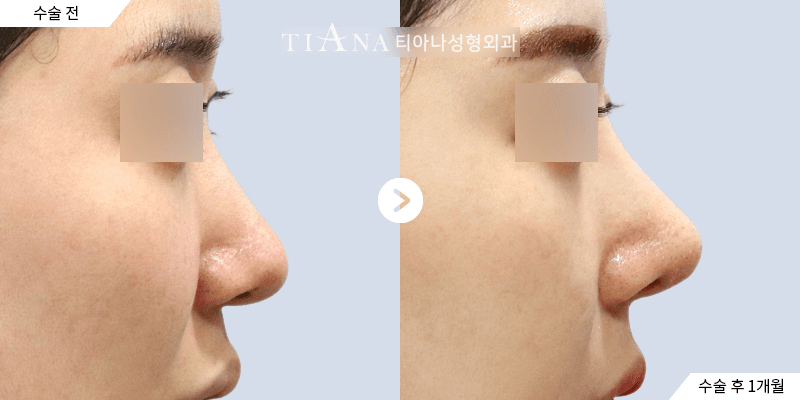
If you want to see how real noses changed and how many months after surgery each photo was taken, browse TIANA's rhinoplasty case gallery before your consultation.
Before you book anything
One message with your photos and the dates you're looking at is enough to start. Ask what it would cost for your nose and which parts that covers. You can write in English, and you can ask before booking anything. When you come to Seoul, I examine your nose with 3D-CT and recommend the plan that fits it.
Frequently Asked Questions
Q1Can I get the quote in US dollars?
Ask on WhatsApp which currency the quote is written in. If it is in Korean won, the dollar amount you actually pay moves with the exchange rate on the day and with any foreign transaction fee your bank charges.
Q2Is a deposit required before surgery?
A deposit is asked for only when you book surgery. Ask on WhatsApp about the amount and the terms before you commit to dates.
Q3Is revision rhinoplasty quoted differently from a first surgery?
Yes. Whether it is a revision is one of the factors in the quote, together with the scope, your cartilage and skin thickness. TIANA performs revision rhinoplasty after surgery elsewhere, including cases with contracture.
Q4Can I fly home on day 7?
Many people plan around 7 to 14 nights, at least 7. If you fly home on day 7, you receive a referral letter and a surgery certificate for a doctor at home. The timing of splint and stitch removal is confirmed at surgery.
Q5Do I need to speak Korean to ask about cost?
No. You can message in English on WhatsApp and send photos, and the reply comes in English.
Thank you for reading to the end.
Send 5 photos (front, 45-degree and side) on WhatsApp for a free photo consultation. We reply in English with the likely scope of surgery and how the estimate is worked out.
Send my photos on WhatsAppThis article is general information about elective cosmetic surgery and is not a diagnosis. Results and recovery vary between individuals. Before-and-after photos are published with patient consent; surgery carries risks such as swelling and bruising and requires downtime. Final procedures and fees are decided after examination.