How Bad Is Rhinoplasty Recovery? A Seoul Surgeon Explains
How bad is rhinoplasty recovery when you have two weeks of leave, a nose that was broken years ago and called complicated at home, and a return flight you need to book this month?
30-second check
Check which procedure fits your nose
Pick what applies. Related procedures appear, and you can send your answers straight to WhatsApp. No name or email needed.
Pick at least one concern to see the related procedures.
Send this on WhatsAppWhatsApp opens with your answers already typed. Then send 5 photos (front, both 45-degree angles, both sides) and, if you have one, a photo of the nose you would like.
Not opening? Copy the message and open WhatsAppThe hardest stretch is usually the first few days: a blocked nose, a dull pressure ache, and swelling and bruising that build before they fade. The day after surgery I take out the gauze inside the nose and check the swelling, and around day 7 the cast and outer stitches come off. How fast the swelling goes down differs a lot from person to person, so I don't promise one fixed timeline; I go through your progress photos with you instead.
Hello, I'm Dr. Choi Hang-seok, Head Surgeon at Tiana Plastic Surgery in Seoul.
I operate only on noses, and I stay with you one to one from the consultation through surgery and aftercare. Before surgery, a 3D-CT shows your bones and nasal cavity in three dimensions, which matters with an old fracture, and I manage the anaesthesia myself.
So how bad is rhinoplasty recovery for a nose like yours? It depends on the plan, and on the bones most of all. The final plan is set in Seoul after the 3D-CT and an examination.
What do the first few days actually feel like?
Heavy and blocked more than sharp. You wake from anaesthesia with a splint on the outside and gauze inside, breathing through your mouth. Most people describe the pain as pressure across the middle of the face, like a bad head cold, and it is managed with the medication you are prescribed.
The next day or soon after, you come back to the clinic: the gauze inside your nose comes out, the swelling is checked, and you get your prescription and aftercare instructions. Gauze removal is a strange pulling for a few seconds, then the first breath through your nose since surgery. The clinic also has high-concentration oxygen care, used to support recovery from swelling. What the first evening looks like, from the recovery room to the hotel room, is worth reading before you choose where to stay.
The days right after that usually look the worst. If bone work was done, bruising spreads under the eyes and peaks around now. Stay close to the hotel, keep your head up, use cold compresses on the cheeks rather than on the splint, don't bend down to pick things up, and don't blow your nose.
Up to day 7: the splint comes off
Swelling starts leaving the cheeks and eyelids first, and bruises turn yellow-green.
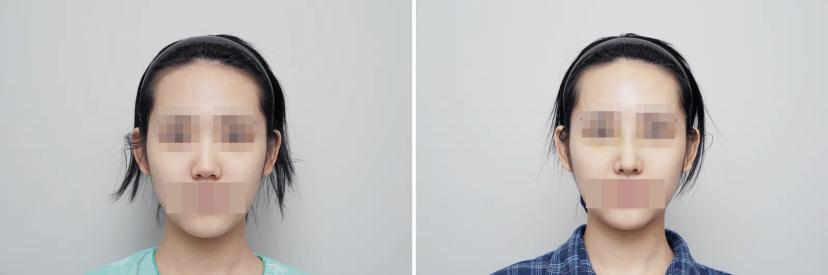
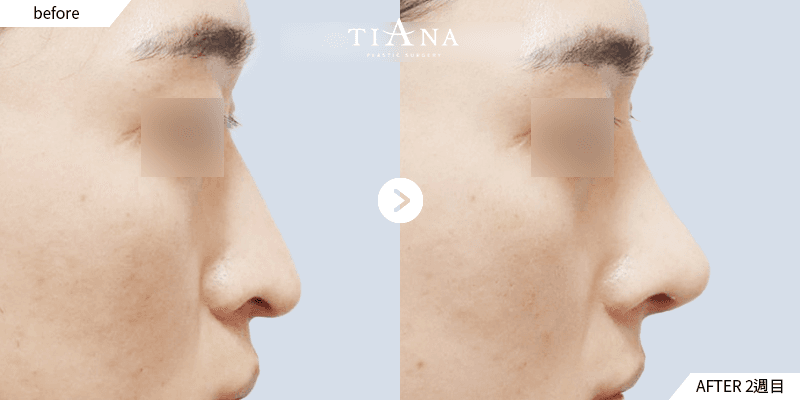
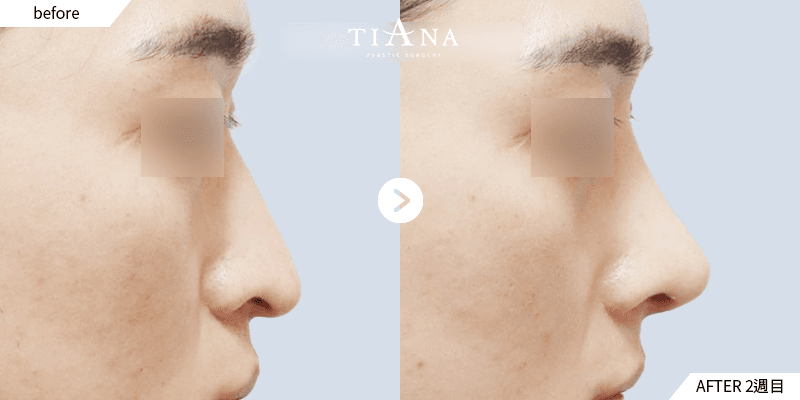
Example case (hump nose, bulbous tip): front view before surgery (left) and 2 weeks after (right). Procedures: silicone bridge implant, tip with septal and donor rib cartilage, hump reduction, bulbous tip refinement, short-nose correction, osteotomy. Results vary between individuals; swelling, bruising, asymmetry and infection are possible risks. Shared with the patient's consent; eyes and mouth are pixelated for privacy.
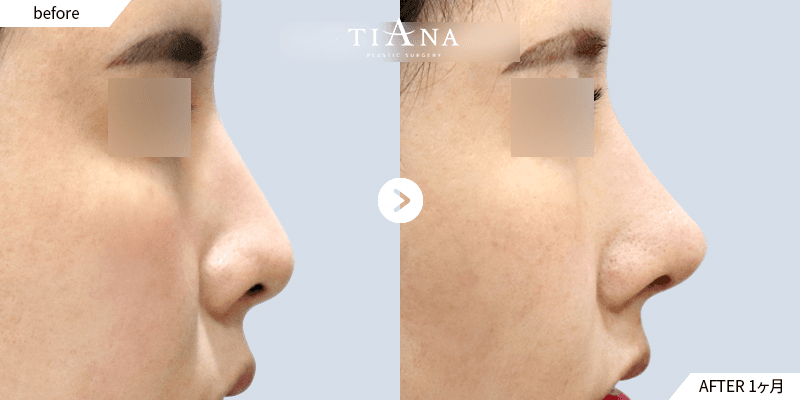
The first look in the mirror unsettles people. The tip often looks wider and higher than planned and the skin a little shiny. That is swelling, and it sits longest over the tip where the skin is thickest; a recovery timeline that runs from Seoul to the months back home shows how that settles.
By now most people feel well enough for a café, a walk, a museum. Two things to avoid: rush-hour subway carriages, where an elbow at face height is common, and sunglasses resting on a bridge that was just reshaped. A cap does the job of hiding bruises without touching your nose.
Wondering which type your nose is?
Share your front, 45-degree and side photos — the surgeon will tell you which procedures your nose would actually need. No cost, no obligation.
Ask which procedure fits meDay 7 or day 14: which flight should you book?
The stay I give for rhinoplasty is 7 to 14 nights. The inner stitches come out around day 14, so the real choice is where that happens.
| Step | Fly home around day 7 | Stay to day 14 |
|---|---|---|
| Splint and outer stitches | Removed in Seoul before you fly | Removed in Seoul |
| Inner stitches | Removed by a doctor at home, with the referral letter and surgery certificate you take with you | Removed in Seoul |
| Bruising on the flight | Yellow traces are possible, usually coverable with makeup | Fainter |
| Who sees your nose in week two | A doctor at home | Me, in Seoul |
Say you're 41, you broke your nose playing football at 19, the bridge leans left and there's a hump. A plan like that often means moving bone, so I'd expect more bruising early on than with tip work alone. If your leave allows, I'd lean toward the longer stay so the day-14 visit happens here. If it doesn't, a day-7 flight works, as long as you've booked the doctor at home before you leave; a GP or ENT who is comfortable removing stitches inside the nose is what you need. Whether 7 nights or 14 suit your trip also depends on what else you planned in Seoul.
If you're torn between the two flights, send your leave dates on WhatsApp and say whether you already have a doctor at home who could take out nasal stitches, then ask what a day-7 return would mean for the kind of surgery you're considering.
What makes one recovery harder than another
The same calendar feels very different depending on what was done:
Bruising and swelling: what to watch for
- Bone work (hump removal, narrowing a wide or crooked bridge): more bruising and swelling around the eyes in the first week.
- Rib cartilage: a second wound on the chest that aches when you cough or laugh for the first days. The difference between implant, rib cartilage or tip-only recovery is often bigger than people expect.
- Thick skin over the tip: holds swelling the longest, sometimes for many months.
- Revision: scar tissue from the first surgery tends to slow the settling.
- Tip work with minimal incisions: tends to recover faster than open surgery.
The full list of what I do, from hump and bone work to septal extension and revision, is on Tiana's English rhinoplasty page.
Doctor's note
With a nose that was broken years ago, I won't decide from photos how much bone needs to move. The 3D-CT shows how the bones healed and where the septum sits, and that decides whether your first week is mostly bruising or mostly a blocked nose. I'd rather plan a slightly smaller change that keeps you breathing well than chase a straight line the old fracture can't support.
Bleeding, numbness, swelling that comes back: which are normal?
The expected ones: a stuffy nose for days to weeks, a numb tip and a stiff upper lip, bruising, and swelling that is worse in the morning. The American Society of Plastic Surgeons notes that swelling may come and go and worsen in the morning during the first year, and the NHS says bruises, swelling and redness may have faded by three weeks.
Infection and risks: what to watch for
As general medicine, some people should wait or talk it through first: anyone with a cold or sinus infection in the weeks before surgery, anyone on blood thinners or supplements that affect bleeding (tell your surgeon, don't stop them on your own), anyone pregnant or breastfeeding, and teenagers whose nose may still be growing. The risks the American Society of Plastic Surgeons lists include bleeding, infection and breathing difficulty.
Not normal: heavy bleeding that won't stop after 15 minutes upright and still, fever, redness spreading across the cheeks, pain on one side that worsens after it had improved, or a new bend after a knock. Once you're home, the NHS advice is to contact the clinic where you had the operation as soon as possible for severe pain or unexpected symptoms; heavy bleeding goes to a local emergency department first. How fast swelling fades varies with your skin, the work done and how you heal, which is why comparing your progress with someone else's is rarely useful.
If you want to see how real noses changed and how many months after surgery each photo was taken, browse TIANA's rhinoplasty case gallery before your consultation.
When will other people stop noticing?
Sooner than you will.
The swelling only you notice is slower. The NHS gives up to six months for it to go completely, and the American Society of Plastic Surgeons says it may take up to a year for the contour to fully refine. Glasses are the daily irritation: many surgeons ask you to keep heavy frames off the bridge for several weeks, so pack contact lenses if you wear them.
Before you book anything, message on WhatsApp with front and side photos, your leave dates, and anything a doctor at home has already told you about your nose, and ask how long your first week in Seoul is likely to be. You can write in English and ask before booking anything. In Seoul, the final plan is set with the 3D-CT and an examination, and with an old fracture that scan is where our conversation starts.
Cases close to this concern
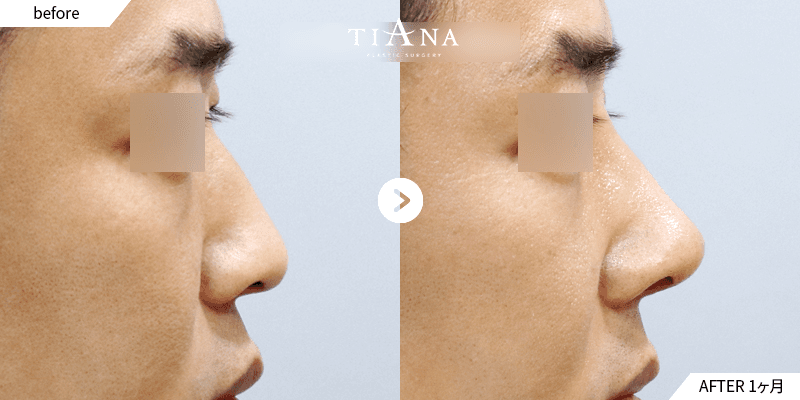
Drag the handle to compare before and after
TIANA case, shared with the patient's consent. Results vary.
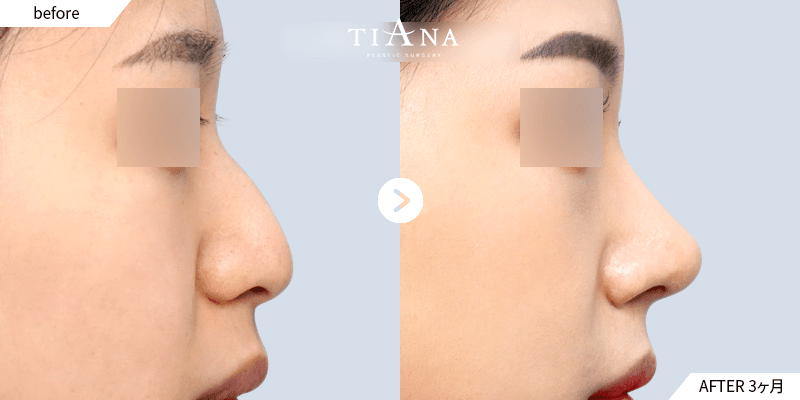
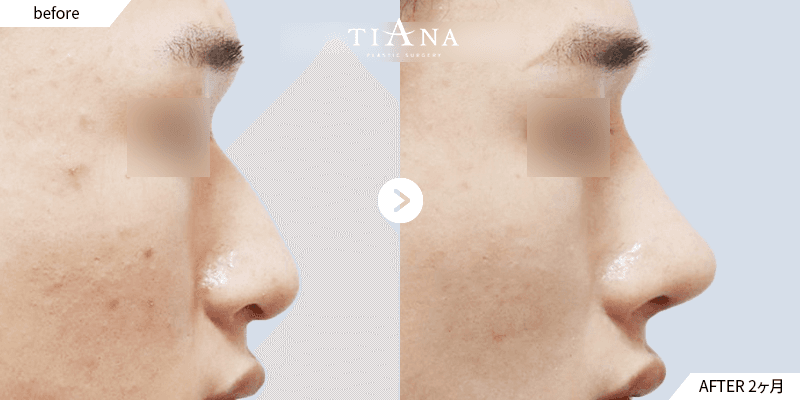
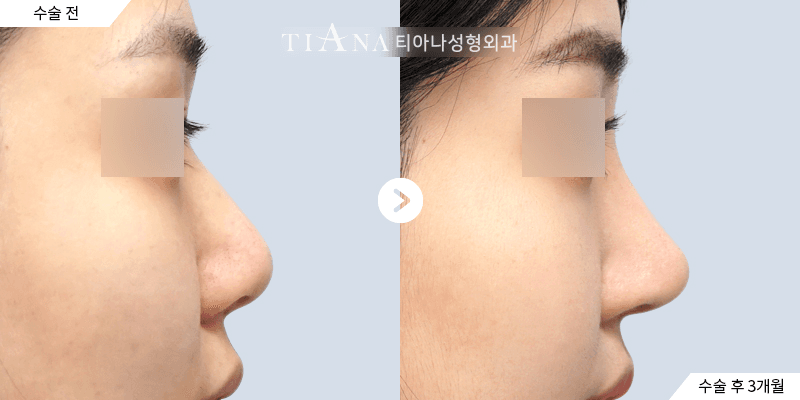
Before and after at TIANA (shared with patient consent) 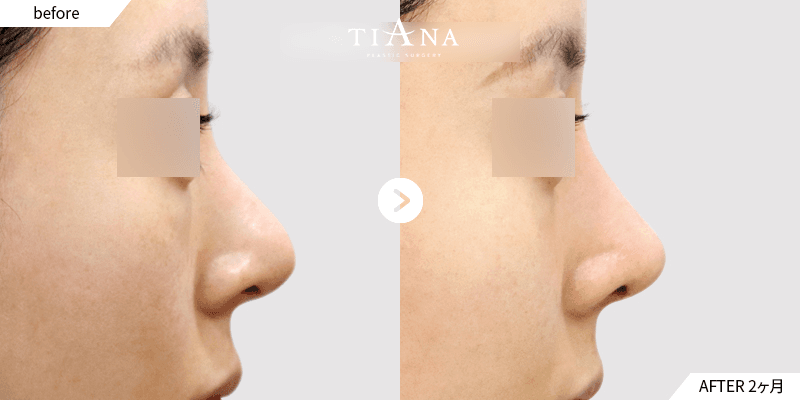
Before and after at TIANA (shared with patient consent) 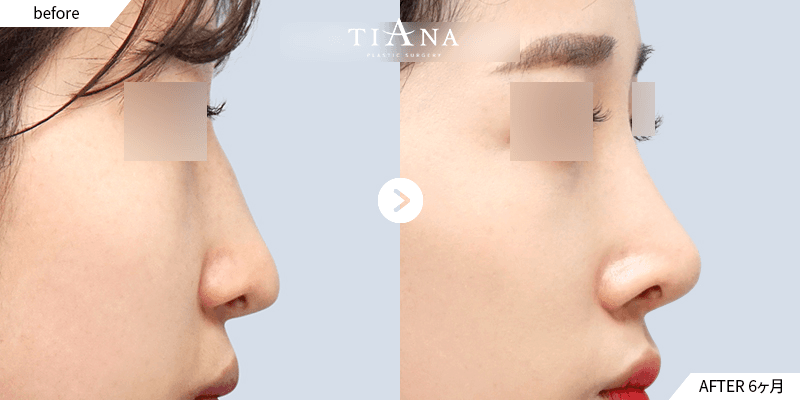
Before and after at TIANA (shared with patient consent)
* Results vary between individuals. Photos show TIANA patients.
See more cases →Korean patients talk about their surgery
Videos from Korean patients who had surgery at TIANA (Korean, YouTube). Patients from Japan, Taiwan and English-speaking countries also contact us every month on LINE and WhatsApp.


Read TIANA reviews on Google Maps
Start from your concern
Bridge concerns and what is considered
- Current shape
- Design direction (illustration)
Illustration only, not a result and not to scale.
What to consider
Silicone implant or own tissue
Low, flat bridge
From first message to flying home
Photo consult on WhatsApp
Send 5 photos and a photo of the nose you would like. The free reply in English explains the likely scope and how the estimate is worked out.
Video consult (optional)
On Google Meet you talk with the surgeon first, then the consultation manager explains the estimate. Free, with an interpreter.
Visit and 3D-CT
A 3D-CT scan and the surgeon's examination confirm the final plan and fee. An interpreter joins the consultation.
Surgery
The surgeon who consulted you performs the surgery and also manages the anesthesia.
Day 7 and day 14
The splint and outer stitches come off around day 7, the inner stitches around day 14. After you fly home, send progress photos on WhatsApp.
FROM THE SURGEON
A word from the surgeon
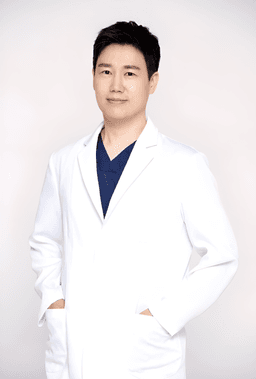
Bone, cartilage and skin thickness differ a lot between people, so the same operation name can need different steps.
Because I only treat noses, I can tell you at the consultation not just how far your nose can change, but where it is better not to push further.
Frequently asked questions
Q1Is recovery harder the second time, after a revision?
Often the visible swelling lasts longer, because scar tissue from the first surgery holds fluid and the skin is less elastic. The splint and stitch timing in Seoul is broadly the same, so the trip length doesn't automatically double.
Q2Can I fly while I still have bruising?
Bruising on its own isn't a reason to delay a flight once the splint is off. Keep your head up, drink water against the dry cabin air, and keep your face off the window wall.
Q3How long does the numbness at the tip last?
Usually weeks to a few months, returning gradually as small nerves recover. A tip that feels wooden when you touch it in month two is common; new numbness after a knock is a reason to send photos.
Q4Do I need someone with me in Seoul?
It helps for the first night after anaesthesia, for errands and company. If you travel alone, choose a hotel close to the clinic so the next-day visit is a short trip, and keep food and water in the room.
Thank you for reading to the end.
Send 5 photos (front, 45-degree and side) on WhatsApp for a free photo consultation. We reply in English with the likely scope of surgery and how the estimate is worked out.
Send my photos on WhatsAppThis article is general information about elective cosmetic surgery and is not a diagnosis. Results and recovery vary between individuals. Before-and-after photos are published with patient consent; surgery carries risks such as swelling and bruising and requires downtime. Final procedures and fees are decided after examination.