Types of Noses: 9 Common Nose Shapes and How to Tell Yours
The short answer: most noses fit one or more of nine common types: straight, Roman (hooked), bulbous, button, upturned, wide (often called Nubian), low or flat bridge, crooked, and droopy tip. Each shape comes from three layers, the bone, the cartilage and the skin, and two noses with the same label can have different causes underneath.
30-second check
Check which procedure fits your nose
Pick what applies. Related procedures appear, and you can send your answers straight to WhatsApp. No name or email needed.
Pick at least one concern to see the related procedures.
Send this on WhatsAppWhatsApp opens with your answers already typed. Then send 5 photos (front, both 45-degree angles, both sides) and, if you have one, a photo of the nose you would like.
Not opening? Copy the message and open WhatsAppAdd your date of birth and surgery history (booking form) →Have you ever looked at a nose shape chart and still not been sure which one is yours? That's common. Most real noses are a mix, and photos taken at the wrong angle make it harder.
Hello, I'm Dr. Choi Hang-seok, Head Surgeon at TIANA Plastic Surgery in Gangnam, Seoul. TIANA performs only rhinoplasty and revision rhinoplasty, and I handle each patient one-to-one, from consultation through surgery, anesthesia and aftercare. This guide walks through the types of noses, how to tell yours, and what surgery can and can't change for each one.
What are the 9 common types of noses?
Here is the overview. Find the row that sounds closest to the feature you notice in the mirror.
| Nose type | What it looks like | Main layer behind it | What surgery usually involves |
|---|---|---|---|
| Straight | Even line from forehead to tip | Balanced bone and cartilage | Often nothing; sometimes small tip work |
| Roman (hooked) | A bump on the bridge in profile | Bone and cartilage hump | Hump reduction, sometimes osteotomy |
| Bulbous | Round, wide tip | Spread tip cartilage, thick skin | Tip surgery with cartilage support |
| Button | Small, short, slightly rounded | Short septum, small tip | Usually left alone; length if wanted |
| Upturned | Tip points up, nostrils show from the front | Tip position and support | Septal extension graft |
| Wide (Nubian) | Wide base and nostrils | Wide nostril base, flared alar | Alar base reduction, tip support |
| Low or flat bridge | Little height between the eyes | Low bridge bone and cartilage | Bridge augmentation (implant or cartilage) |
| Crooked | Bridge or tip leans to one side | Nasal bone, septum or tip cartilage | Osteotomy, septum straightening |
| Droopy tip | Tip hangs down, worse when smiling | Weak tip support, long septum | Tip support, sometimes septum shortening |
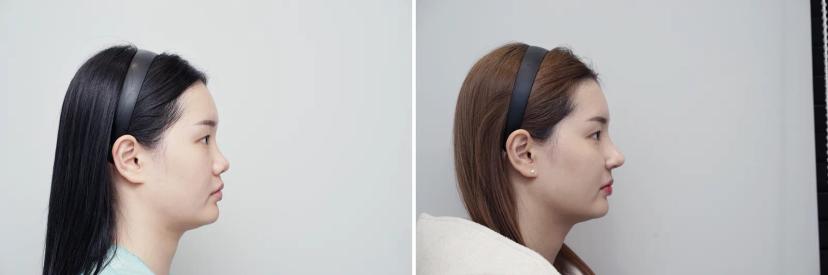
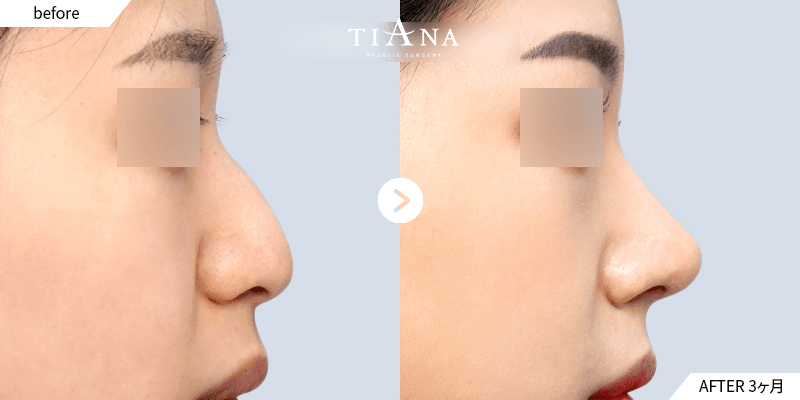
Example case (bulbous tip, short nose): side profile before surgery (left) and 3 months after (right). Procedures: silicone bridge implant, tip with septal and donor rib cartilage, bulbous tip refinement, short-nose correction, osteotomy, columella and nasolabial angle adjustment. Results vary between individuals; swelling, bruising, asymmetry and infection are possible risks. Shared with the patient's consent.
What is my nose shape? How to tell from photos
The most reliable way to work out your nose shape is a set of photos, not a single selfie. Use daylight and keep the camera level with your face.
- Front view: is the bridge centered, how wide is it, how round is the tip, can you see your nostrils?
- 45-degree views: how the bridge line runs into the tip
- Side profile: any bump on the bridge, the height between the eyes, the angle where the tip meets the upper lip
- From below: nostril width, shape and any difference between the two sides
A front camera held close makes the middle of the face look bigger, and a mirror flips left and right. Compare a few photos before deciding. Which 5 photos to send for a rhinoplasty consultation shows the angles in detail.
Wondering which type your nose is?
Share your front, 45-degree and side photos — the surgeon will tell you which procedures your nose would actually need. No cost, no obligation.
Ask which procedure fits meEach nose type: what causes it and what can change
Straight nose
A straight nose runs in an even line from the forehead to the tip, with no clear bump or dip. Many people with a straight bridge still notice something else, such as a round tip or wide nostrils, so the "type" can sit alongside another one.
Roman or hooked nose
A Roman nose has a bump on the bridge, seen best from the side. The bump is made of bone and cartilage; it isn't because the nose is "too high." Small humps can be smoothed. Larger ones often need an osteotomy as well, because shaving the bump can leave the bridge looking wide from the front. Hump nose surgery and when it's worth fixing explains the trade-offs.
Bulbous nose
A bulbous nose has a round, wide tip. Two causes usually overlap: the tip cartilages sit far apart, and the skin over the tip is thick. Cartilage can be reshaped and supported; thick skin limits how fine the tip can become. Read more in bulbous nose causes and how tip surgery refines it, or see TIANA's bulbous nose page.
Button nose
A button nose is small and short with a softly rounded tip. Many people like this shape and keep it. When someone wants more length or definition, the work usually focuses on tip support rather than making the nose bigger overall.
Upturned nose
An upturned nose points up at the tip, so the nostrils show from the front. A slight upturn can suit many faces; a strong one can make the nose look short. Bringing the tip down usually needs a septal extension graft to build new support. Upturned nose causes and how septal extension helps covers it.
Wide or Nubian nose
A wide nose, often called a Nubian nose, has a broad base and wide nostrils, often with a lower bridge. Alar base reduction narrows the nostrils, and tip support can add definition. The aim is balance with your face, not removing your ethnic features. Ethnic rhinoplasty: what it is and who it suits and alar base reduction scars and recovery go further.
Low or flat bridge
A low bridge has little height between the eyes, so the nose looks flat in profile. Height comes from bridge augmentation with a silicone implant or cartilage. How high it can safely go depends mostly on skin thickness, which is explained in how high a Korean nose bridge can go. A wide-looking bridge is sometimes simply a low one; see wide nose bridge: bone, skin or low bridge.
Crooked nose
A crooked nose leans to one side from the front. The cause can be the nasal bones, the septum (the wall inside the nose) or the tip cartilage, and often more than one. A blocked side when breathing usually points to the septum. Crooked nose surgery: causes and limits explains which layer is usually responsible.
Droopy tip
A droopy tip hangs downward and often drops further when you smile. It usually comes from weak tip support or a long septum. Surgery strengthens the support so the tip sits at a better angle, sometimes with a small change to the septum.
Is there an ideal nose shape?
Search for "the perfect nose" and you'll find angles and ratios. In consultation I care more about balance than numbers. The same bridge height looks different with a strong forehead than with a flat one, and the right tip angle depends on your lips and chin.
Doctor's note
Many patients tell me "I have a bulbous nose" when the tip is only part of the story. Often the bridge is low, which makes the tip look bigger than it is. That's why I look for the layer that causes the shape before I think about the name. I check with 3D-CT before deciding what to change.
There is also no single "Korean nose" or "Western nose" that suits everyone. Korean nose job: who it suits, decided by nose type explains how I match the plan to the nose in front of me.
What if my nose is more than one type?
Most noses are. These combinations come up often in my consultations:
- Low bridge + bulbous tip: the low bridge makes the round tip stand out more
- Roman + wide bridge: removing the bump can leave the bridge looking wider from the front
- Upturned + wide nostrils: visible nostrils make the base look bigger
- Crooked + blocked breathing: a bent septum affects both shape and airflow
When types overlap, changing only one feature can make the other more noticeable. The order of the work is decided from photos and examination together.
Recovery and risks of changing your nose shape
Whatever the type, the stitch schedule at TIANA is similar. The splint and outer stitches usually come off around day 7, and the stitches inside the nose around day 14. Plan 7 to 14 nights in Seoul, and at least 7. If you fly home around day 7, you leave with a referral letter and a surgery certificate so a local doctor can remove the inner stitches. Swelling and bruising settle at a pace that varies between people.
Possible risks include:
- Swelling and bruising, especially around the eyes after osteotomy
- Asymmetry, either remaining from before or new
- Contracture or visible edges, mainly when implants or grafts are used
- Infection; contact the clinic quickly if redness, swelling or pain keeps increasing
The American Society of Plastic Surgeons lists the general risks of rhinoplasty. More articles are in all Korean rhinoplasty articles.
Summary
- The nine common types of noses are straight, Roman (hooked), bulbous, button, upturned, wide (Nubian), low bridge, crooked and droopy tip.
- Each shape comes from bone, cartilage and skin; the same label can have different causes.
- Tell your nose shape with front, 45-degree, side and from-below photos, not a single selfie.
- No single shape suits every face; balance with the forehead, lips and chin matters more.
- Most noses combine two or more types, which changes the order of any surgery.
Not sure which type your nose is? Send five photos on WhatsApp (front, both 45-degree angles and both side profiles). You'll get a reply in English on the shape it's closest to and what could change. If you'd like to share your surgery history first, use the photo consultation and booking form. You can read about the surgeon on Dr. Choi Hang-seok's profile.
Cases close to this concern
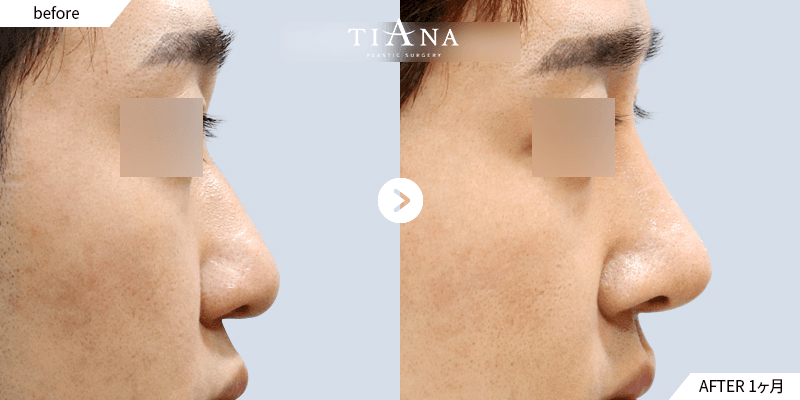
Drag the handle to compare before and after
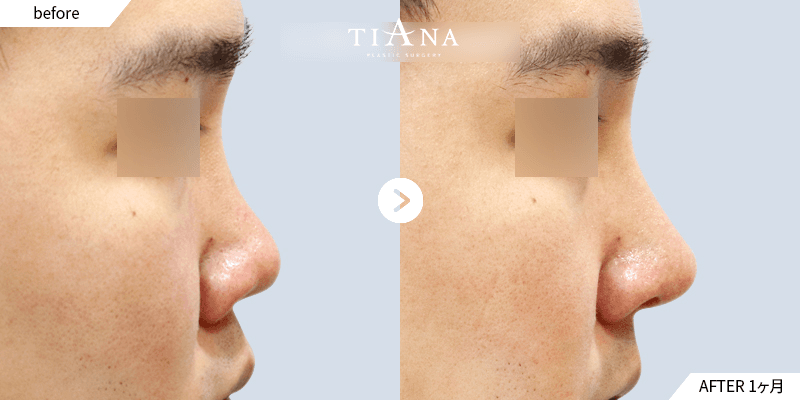
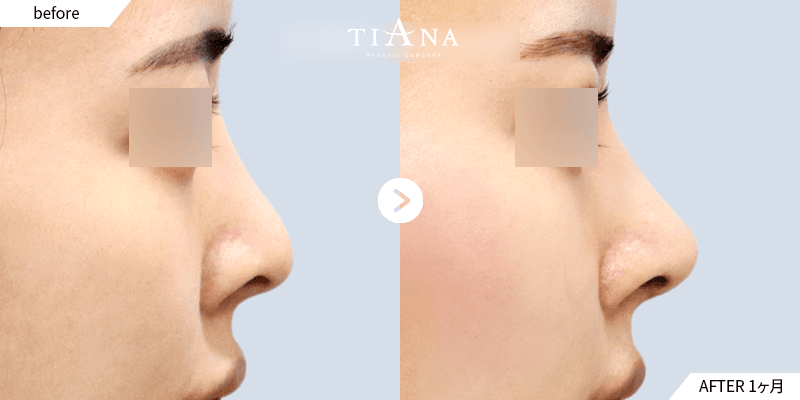
TIANA case, shared with the patient's consent. Results vary.
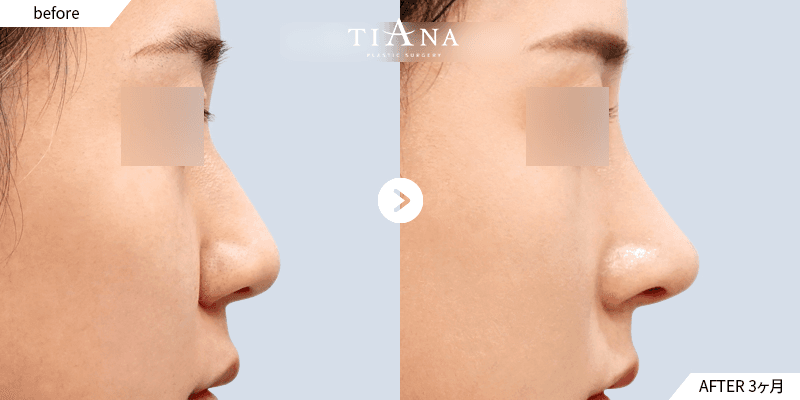
Before and after at TIANA (shared with patient consent) 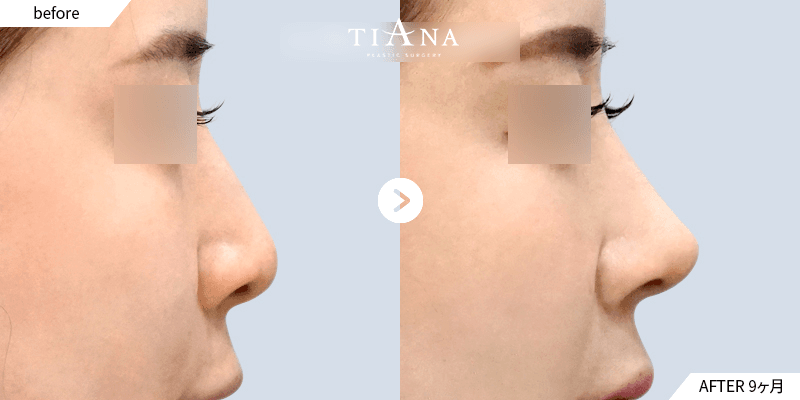
Before and after at TIANA (shared with patient consent) 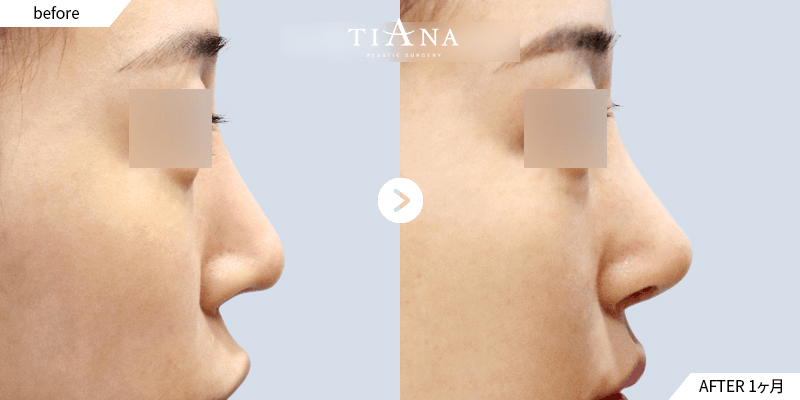
Before and after at TIANA (shared with patient consent)
* Results vary between individuals. Photos show TIANA patients.
See more cases →Korean patients talk about their surgery
Videos from Korean patients who had surgery at TIANA (Korean, YouTube). Patients from Japan, Taiwan and English-speaking countries also contact us every month on LINE and WhatsApp.


Start from your concern
Bridge concerns and what is considered
- Current shape
- Design direction (illustration)
Illustration only, not a result and not to scale.
What to consider
Silicone implant or own tissue
Low, flat bridge
From first message to flying home
Photo consult on WhatsApp
Send 5 photos and a photo of the nose you would like. The free reply in English explains the likely scope and how the estimate is worked out.
Video consult (optional)
On Google Meet you talk with the surgeon first, then the consultation manager explains the estimate. Free, with an interpreter.
Visit and 3D-CT
A 3D-CT scan and the surgeon's examination confirm the final plan and fee. An interpreter joins the consultation.
Surgery
The surgeon who consulted you performs the surgery and also manages the anesthesia.
Day 7 and day 14
The splint and outer stitches come off around day 7, the inner stitches around day 14. After you fly home, send progress photos on WhatsApp.
FROM THE SURGEON
A word from the surgeon

Bone, cartilage and skin thickness differ a lot between people, so the same operation name can need different steps.
Because I only treat noses, I can tell you at the consultation not just how far your nose can change, but where it is better not to push further.
Frequently asked questions
Q1How many types of noses are there?
There is no single official list. Surgeons and anatomy guides usually describe around nine common shapes: straight, Roman (hooked), bulbous, button, upturned, wide (Nubian), low or flat bridge, crooked, and droopy tip. Most real noses combine two or more of them.
Q2How do I find out my nose shape?
Take photos in daylight with the camera at face height: front, both 45-degree angles and both side profiles. The front view shows width and any tilt, the side view shows bumps and tip angle, and a view from below shows the nostrils. Compare several photos rather than relying on one selfie.
Q3Which nose shape is the most attractive?
No single shape is right for every face. Whether a nose looks balanced depends on the forehead, eyes, lips and chin around it. A good surgeon plans changes that fit your face and keep your ethnic features, rather than copying one ideal shape.
Q4Can you change your nose shape without surgery?
Massage, clips and exercises cannot change bone or cartilage. Makeup contouring can change how a nose looks in photos. Changing the structure itself needs surgery. TIANA performs surgery only and does not offer filler or other injections.
Q5Can TIANA tell me my nose type before I fly to Korea?
Yes. Send five photos on WhatsApp (front, both 45-degree angles and both side profiles) and you'll get a reply in English on which shape your nose is closest to and what could change. You can also book a free video consultation on Google Meet with an interpreter (Dr. Choi first, then our consultation manager for the quote).
Thank you for reading to the end.
Send 5 photos (front, 45-degree and side) on WhatsApp for a free photo consultation. We reply in English with the likely scope of surgery and how the estimate is worked out.
Send my photos on WhatsAppThis article is general information about elective cosmetic surgery and is not a diagnosis. Results and recovery vary between individuals. Before-and-after photos are published with patient consent; surgery carries risks such as swelling and bruising and requires downtime. Final procedures and fees are decided after examination.