How Long Does a Nose Job Take? Hours, Then 7 Nights
How long does a nose job take once you count everything: the hours asleep, the day at the clinic, and the nights before you can fly home?
30-second check
Check which procedure fits your nose
Pick what applies. Related procedures appear, and you can send your answers straight to WhatsApp. No name or email needed.
Pick at least one concern to see the related procedures.
Send this on WhatsAppWhatsApp opens with your answers already typed. Then send 5 photos (front, both 45-degree angles, both sides) and, if you have one, a photo of the nose you would like.
Not opening? Copy the message and open WhatsAppThe operation itself usually runs about 1.5 to 3 hours. The trip is the longer part. Plan 7 to 14 nights in Seoul, because the cast and outer stitches come off around day 7 and the stitches inside the nose around day 14.
Hello, I'm Dr. Choi Hang-seok, Head Surgeon at TIANA Plastic Surgery in Seoul.
We do rhinoplasty and revision rhinoplasty and nothing else, so every hour I spend operating is spent on a nose. I'm the doctor who consults with you and the one who operates, I manage the anesthesia myself for the hours you're asleep, and a 3D-CT shows your bone and nasal cavity before we settle the plan. If language is part of the worry, an interpreter joins your in-person consultation.
If your leave is already fixed, send those dates on WhatsApp with a side photo of your nose, and ask which of those days would be surgery day and which would be cast-removal day.
How many hours does the operation itself take?
For most first-time nose jobs, about 1.5 to 3 hours. That's the figure Britain's NHS gives for rhinoplasty, and it matches what surgeons generally see. Revisions and operations that need rib cartilage sit at the long end or beyond it.
That range is wide for a reason. "Nose job" covers narrowing a round tip, building a low bridge, shaving a hump and resetting the bones, or all of these in one sitting. Bone, cartilage and skin thickness differ a lot between people, so the same operation name can need different steps, and different steps mean a different length.
A short operation is no sign of a small result, and a long one is no sign of a better one. The hours follow the list of steps your nose needs.
What makes one nose job longer than another?
The number of structures being changed, and where the building material comes from. These are the things that add time in the operating room.
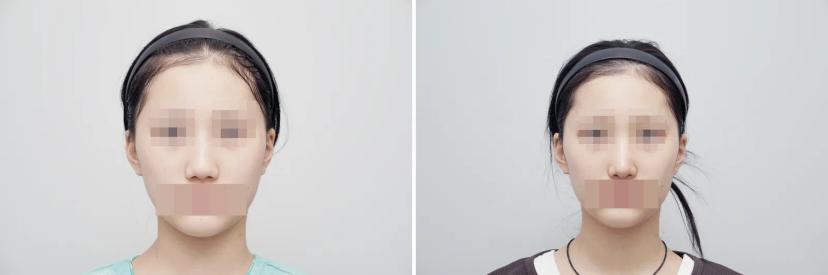
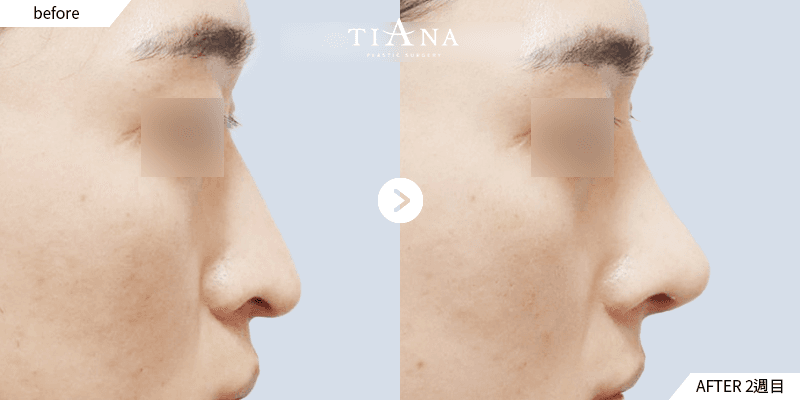
Example case (implant-free rhinoplasty, hump nose): front view before surgery (left) and 2 weeks after (right). Procedures: implant-free bridge with septal cartilage, tip with septal and donor rib cartilage, hump reduction, bulbous tip refinement, osteotomy, crooked-nose correction. Results vary between individuals; swelling, bruising, asymmetry and infection are possible risks. Shared with the patient's consent; eyes and mouth are pixelated for privacy.
| What's being done | Why it adds time |
|---|---|
| Tip only, or bridge plus tip | A full rhinoplasty designs the bridge and the tip together, so there are two areas to shape and balance |
| Hump shaving and bone narrowing | Bone work is a separate stage from cartilage work |
| Septal or ear cartilage for the tip | The cartilage has to be taken and carved before it's placed |
| Rib cartilage | A second surgical site on the chest, used when a revision lacks cartilage and in most contracted noses |
| Revision after earlier surgery | Scar tissue from the first operation has to be released before anything is rebuilt |
The same list moves the estimate. Scope, the condition of your nose and whether it's a revision are the three things that decide cost here, and I've laid out how a nose job quote is built in Korea separately.
Doctor's note
When someone asks me to add a step "while I'm in there," I ask what problem it solves. I recommend only the scope your nose needs, and I'd sooner tell you at the consultation where it's better to stop than add an hour that changes nothing you can see. Extra steps mean more swelling to wait out afterward.
Wondering which type your nose is?
Share your front, 45-degree and side photos — the surgeon will tell you which procedures your nose would actually need. No cost, no obligation.
Ask which procedure fits mePlan the whole day for surgery, even if the operation is short
The hours under anesthesia are only the middle of the day. Before them comes the consultation, and after them comes waking up, which takes its own time.
At TIANA, day 1 is the in-person consultation, tests where they're needed, and agreeing the design and the cost. Surgery follows. The final plan is set here in Seoul from the 3D-CT and the examination, which is why the photos you send beforehand can only show the likely scope.
After IV sedation, most people feel drowsy and a little unsteady for the rest of the day. Don't book dinner, a hotel change or a long subway ride for that evening. Have someone with you or a short taxi ride back, and a hotel bed with extra pillows so you can sleep with your head raised.
If what you're dreading is the feeling more than the clock, I've written about how much a nose job hurts, including bone work and packing.
How many nights in Seoul does that add up to?
Seven to fourteen nights, depending on what was done and on which stitches you want removed here. The operation is like pouring a concrete step: the pour takes an afternoon, and then nobody stands on it for days. For a nose, the first of those waiting points is the cast coming off around day 7.
| Day | What happens | What it means for your trip |
|---|---|---|
| Day 1 | Consultation, tests if needed, design and cost agreed, surgery | Nothing else planned that day |
| Days 2 to 6 | Check-ups from the next day: gauze inside the nose removed, swelling checked, medication and aftercare instructions | Stay near the clinic; short walks, no sightseeing marathons |
| Day 7 | Cast and outer stitches removed, after checking how you're healing | The earliest day to fly home |
| Days 8 to 13 | No fixed appointment; swelling keeps settling | Extra nights if you'd like to stay until day 14 |
| Day 14 | Stitches inside the nose removed | In Seoul, or at home if you left on day 7 |
If you fly home on day 7, you leave with a referral letter and a surgery certificate, and a doctor at home removes the inner stitches around day 14. Find that doctor before you fly out, not after you land.
One thing people miss when counting: we're open weekdays 10:00 to 19:00 and Saturdays 10:00 to 16:00, and closed on Sundays and Korean public holidays. Count forward from your surgery date and check that your cast-removal day doesn't land on a closed day before you buy a ticket home. The longer version of this arithmetic is in my post on staying 7 to 14 nights for Korean rhinoplasty, and the clinic's own overview is on the rhinoplasty in Korea for foreigners page.
What if you only have ten days of leave?
Then the trip fits, with one job handed to a doctor at home. Take a man of 52 flying from Toronto with ten days off, who wants a hump smoothed and a drooping tip supported. Two of those days go to flights, which leaves eight nights in Seoul.
In his place I'd put surgery on the first clinic day and keep everything after it empty. Cast and outer stitches come off around day 7, he flies the next day with his referral letter and surgery certificate, and his own doctor takes out the inner stitches around day 14. What I wouldn't do is shorten the stay below cast removal to fit a cheaper flight.
If he had fourteen nights, both sets of stitches would come out here and he'd carry less paperwork home. Neither plan changes the operation. They change who handles day 14.
Before you choose between them, send your outbound and return dates on WhatsApp along with five photos: front, both 45-degree angles and both sides. The reply comes in English and explains the likely scope of surgery and how the estimate is worked out, which tells you whether you're looking at the short end of the hours or the long one.
When does the nose stop looking operated on?
Later than the day the cast comes off, and I don't give one number for it. How fast swelling goes down differs too much between people, so I guide it from your progress photos instead of a calendar.
Bruising and swelling: what to watch for
As general medicine, the bruising and the heaviest swelling fade over the first few weeks, while the last of the swelling, mostly at the tip, can take months to go. Thick skin and revision surgery tend to be slower. Closed, minimal-incision tip work tends to recover faster. Here we also use high-concentration oxygen care after surgery to support recovery from swelling.
So there are really several clocks running, and I've separated them in the four kinds of healing after rhinoplasty. For planning a trip, the one that matters is day 7.
Bleeding, infection and blocked breathing: what to watch after you fly home
Swelling, bruising around the eyes, a stuffy nose and a numb tip are expected in the first weeks and settle on their own. Slight unevenness between the two sides often evens out as swelling goes down.
Redness and infection: what to watch for
The problems that need a doctor are less common: bleeding that doesn't stop with gentle pressure, fever with spreading redness or worsening pain, which can mean infection, and breathing that gets worse instead of better. A longer operation, such as a revision with rib cartilage, means more tissue has been handled, so swelling lasts longer and there's a chest site to look after as well.
Some people should wait before booking at all. In general that includes anyone whose blood pressure isn't controlled, anyone on blood-thinning medication who hasn't cleared a pause with their own doctor, smokers who can't stop around surgery, anyone who is pregnant, and anyone whose last nose surgery is still too recent for the tissue to have softened.
If one of those warning signs appears at home, do two things the same day. See a local doctor and show them your surgery certificate, so they know what was done. And send a photo on WhatsApp so the surgeon who operated sees the same thing they do.
Questions about time worth asking any clinic
Wherever you have this done, the answers to these tell you more than the advertised surgery time. It doesn't have to be us you ask.
- Is the surgeon I consult with the one who operates?
- Who looks after the anesthesia while I'm asleep?
- On which day does the cast come off, and is the clinic open that day?
- If I fly before the inner stitches are out, what documents do I carry for the doctor at home?
- Is there an interpreter in the room on surgery day, and does it cost extra?
If you want to see how real noses changed and how many months after surgery each photo was taken, browse TIANA's rhinoplasty case gallery before your consultation.
What are the risks if my nose needs more time than the nights I planned?
A fraction of a millimeter changes a face, which is why I work on noses alone, and why I won't promise anyone a fast operation. I'd rather the hours follow your anatomy than a schedule, because swelling settles differently in every patient. The part of the timing you control is the trip: enough nights to reach cast removal, and a doctor at home lined up if you leave before day 14.
None of this has to be decided this month. A nose that has waited years can wait until your dates and your questions are clear.
You can ask before booking anything. One side photo and the month you're thinking of traveling are enough to start a WhatsApp chat, with one question: for a nose like mine, how many nights should I hold? Once you're here, the 3D-CT of your bone and the thickness of your skin are what set the final list of steps, and with it the hours.
— Dr. Choi Hang-seok, Head Surgeon
Cases close to this concern
Drag the handle to compare before and after
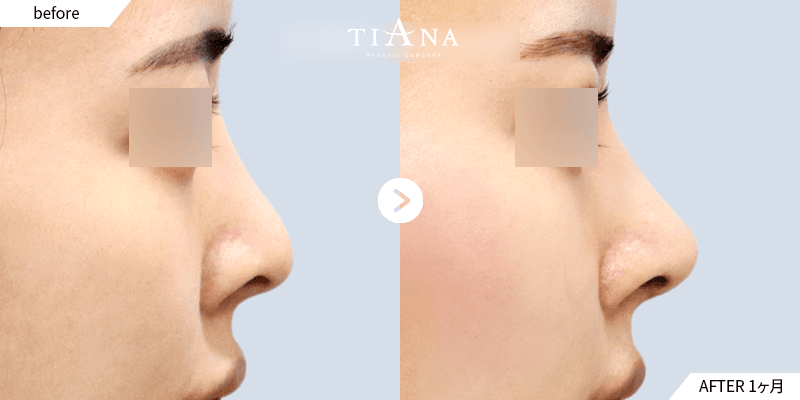
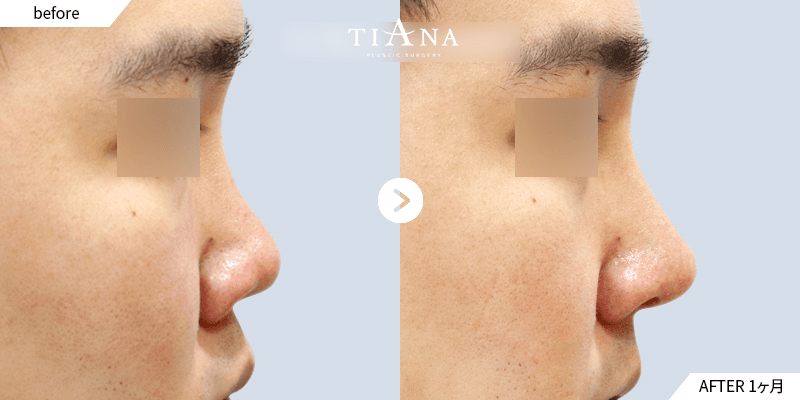
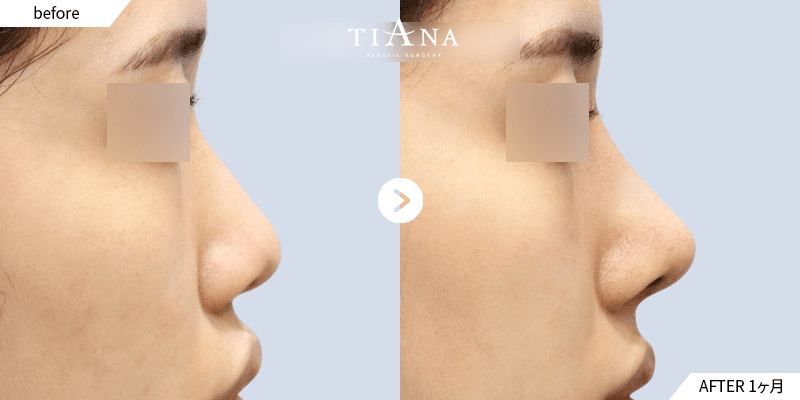
TIANA case, shared with the patient's consent. Results vary.
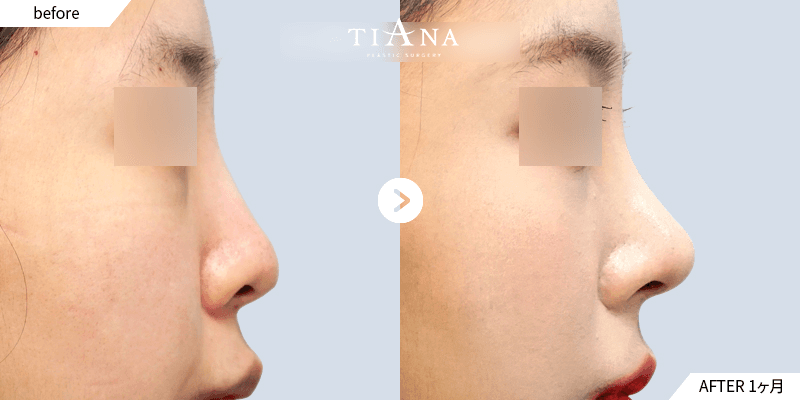
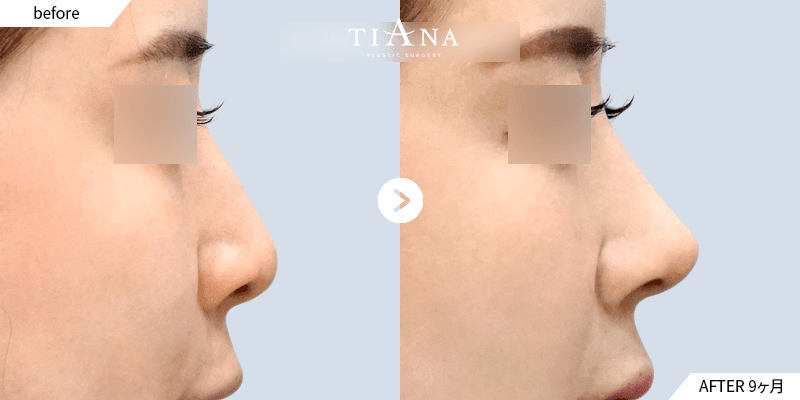
Before and after at TIANA (shared with patient consent) 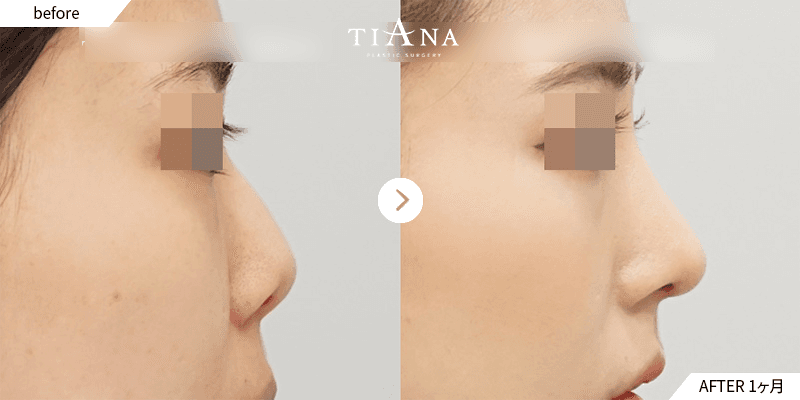
Before and after at TIANA (shared with patient consent) 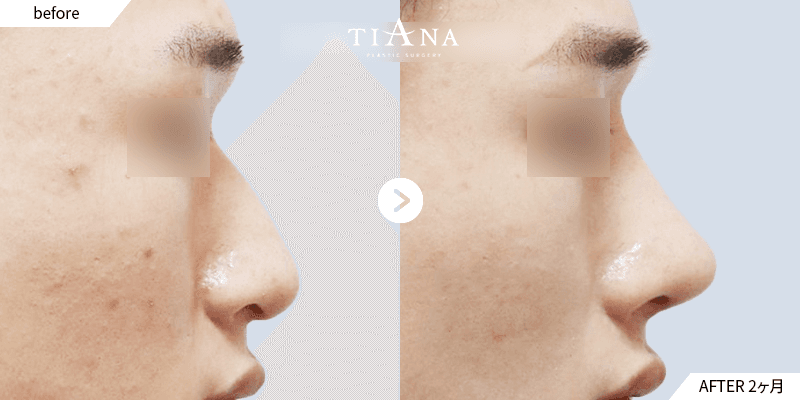
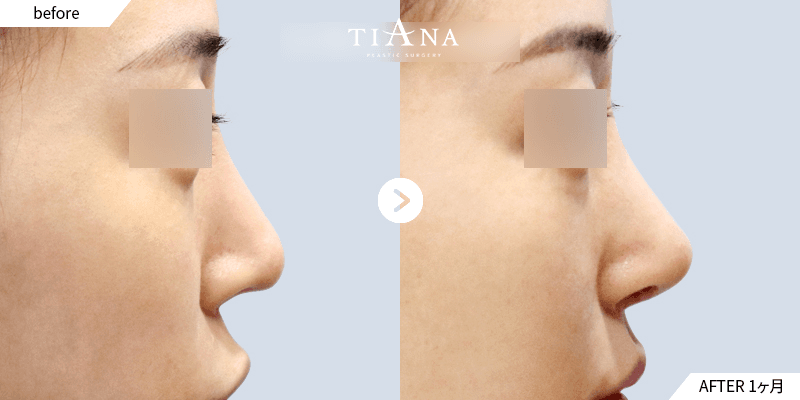
Before and after at TIANA (shared with patient consent)
* Results vary between individuals. Photos show TIANA patients.
See more cases →Korean patients talk about their surgery
Videos from Korean patients who had surgery at TIANA (Korean, YouTube). Patients from Japan, Taiwan and English-speaking countries also contact us every month on LINE and WhatsApp.


Read TIANA reviews on Google Maps
Start from your concern
Bridge concerns and what is considered
- Current shape
- Design direction (illustration)
Illustration only, not a result and not to scale.
What to consider
Silicone implant or own tissue
Low, flat bridge
From first message to flying home
Photo consult on WhatsApp
Send 5 photos and a photo of the nose you would like. The free reply in English explains the likely scope and how the estimate is worked out.
Video consult (optional)
On Google Meet you talk with the surgeon first, then the consultation manager explains the estimate. Free, with an interpreter.
Visit and 3D-CT
A 3D-CT scan and the surgeon's examination confirm the final plan and fee. An interpreter joins the consultation.
Surgery
The surgeon who consulted you performs the surgery and also manages the anesthesia.
Day 7 and day 14
The splint and outer stitches come off around day 7, the inner stitches around day 14. After you fly home, send progress photos on WhatsApp.
FROM THE SURGEON
A word from the surgeon
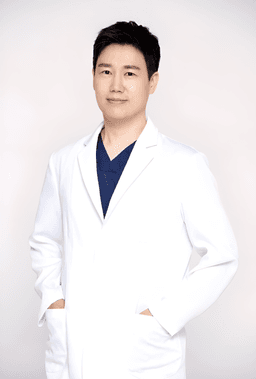
Bone, cartilage and skin thickness differ a lot between people, so the same operation name can need different steps.
Because I only treat noses, I can tell you at the consultation not just how far your nose can change, but where it is better not to push further.
Frequently asked questions
Q1Is a nose job done under general anesthesia or sedation?
At TIANA, rhinoplasty is done under IV sedation combined with local anesthesia, managed by Dr. Choi himself. The details for your operation are settled at the in-person consultation along with the surgical plan.
Q2Do I stay overnight in a hospital after the operation?
Practice differs by country and clinic; some health systems keep patients in for a night or two. Ask on WhatsApp where you would spend the first night for the operation being considered, and book a hotel close to the clinic either way, because check-ups begin the next day.
Q3Can the consultation and the surgery happen on the same day?
Yes. Day 1 at TIANA is the in-person consultation, tests where needed, and agreeing the design and cost, followed by surgery. Arrive rested, and keep the evening clear.
Q4Does a revision nose job take longer than a first one?
Usually, yes. Scar tissue from the earlier surgery has to be released first, and if there isn't enough septal cartilage left, rib cartilage may be needed, which adds a second surgical site. Mention the year of your last surgery in your first message, since tissue needs time to soften before a revision.
Q5Who removes the inner stitches if I leave Seoul on day 7?
A doctor at home, around day 14. You're given a referral letter and a surgery certificate to take with you. Arrange that appointment before you travel so you aren't searching for a clinic with stitches still in.
Q6Does a longer operation mean a longer stay in Korea?
Not by itself. The 7 to 14 night range is set by the cast and outer stitches around day 7 and the inner stitches around day 14, and it varies with what was done. Operations with more steps, such as rib cartilage revisions, tend to swell longer, so people having them often choose the longer end.
Thank you for reading to the end.
Send 5 photos (front, 45-degree and side) on WhatsApp for a free photo consultation. We reply in English with the likely scope of surgery and how the estimate is worked out.
Send my photos on WhatsAppThis article is general information about elective cosmetic surgery and is not a diagnosis. Results and recovery vary between individuals. Before-and-after photos are published with patient consent; surgery carries risks such as swelling and bruising and requires downtime. Final procedures and fees are decided after examination.